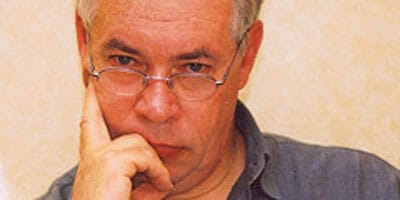
Kay calls for philosophical shift

In an interview with conexust1f.flywheelstaging.com, John Kay, economist and author of the UK government-commissioned enquiry into long termism and the UK equity markets, has said it is “fanciful to imagine large number of trustees will have the skills and knowledge to have long-term relationships with corporates”.

Kay says the key players in the UK equity chain are funds managers, and while 20 years ago the role of pension and insurance companies would have been emphasised, that is not so today.


Embrace the complexity of ownership


In Kay’s review, the emphasis was on funds managers, who he says have a critical role in the buy-and-sell decisions of shares as well as voting.

He says semantics around the word “owner” are not particularly helpful and get in the way of the discussion.

Sponsored Content

“There are different characteristics of ownership,” he says, adding that funds managers need to see themselves more as owners in order to alter their behaviour.

The recent so-called Shareholder Spring, when many institutional investors and funds managers voted down executive-pay issues, was a step in the right direction, according to Kay.

However, he says, in the long run he would like to see more engagement.

“Corporate governance has become about stopping people doing bad things. The Shareholder Spring was prompted by the excesses of executive pay, but I’d like to see more focus on things like concentrated portfolios that are differentiated from each other.

“There is a high degree of closet indexation and pre-occupation with tracking error. I’d like to see a a different structure in funds management.”


The culture of singular excess

The number of intermediaries and the cost of intermediation in the UK market is excessive, he says.

One of the findings he emphasised was a move to reduce the role of transactions and trading, and move to a relationship-based culture.

“This is a philosophical shift that will take place over a long time. But I’d like institutions to feel more comfortable giving long-term mandates, for example.”

Kay believes one of the more important recommendations from his review is to form an institutional investors’ forum in the UK to facilitate collective action.

“There needs to be an emphasis on fiduciary duty to encourage asset managers to change their actions. This could be through giving asset owners the ability to give long-term mandates that are more absolute-return focused.”

The next step in the reform process is for the government to respond to the review. This is expected to happen in November.


 

One response to “Kay calls for philosophical shift”

  1. Tim MacDonald

    Mr. Kay is right that Institutional trustees cannot be expected to manage relationships with the enterprises their Institutions are invested in. These Institutions are trusts chartered to provide for the present and future financial security of their beneficiaries in the prescribed ways. The trustees need to be focused on their charters of trust.

    So, we do need a large class of skilled investment professionals who can present choices and make selections on behalf of chartered trusts, just as we need lawyers, accountants, auditors and other knowledgable experts to apply their specialized skills for the benefit of these Institutions within their respective domains.

    Mr Kay’s idea that we impose the duties of a trustee on those professionals seems to me problematic. Like all professionals, we must hold these actors to high standards of competency and integrity when applying the knowledge and skills of their profession for the benefit of their clients. But they are professional service providers, not chartered trustees.

    There is more promise in the move to reduce trading activity using money obtained from institutions of chartered trust.

    All trading is speculative, and speculation has from the very beginning been seen as inappropriate for institutions of chartered trust. We have been experimenting for some decades now with Modern Portfolio Theory as a pattern for making speculation on share prices — and the prices of other financial assets — appropriate for Institutions. The results of this experiment are less-than-expected.

    We need to discover and develop new investment choices that can give Institutions the equity-like returns they need to realize their charters of trust, with debt-like protections of principal in perpetuity, evolving their portfolios as the economy evolves, through change and adaptation to change that is the real story of human history, and the true engine of our prosperity.

    And we need investment professionals skilled and experienced in using those architectures. Some professionals will need to specialize in applying these architectures to construct new investment choices that are purpose-built to meet the multiple needs of a chartered trust, including: principal protection; programmed performance; threshold returns; constancy; transparency; alignment of interest; sustainability; and social responsibility. Others will need to specialize in selecting from among the available choices.

    You cannot be both judge and advocate. These roles have to be kept separate.

    This is problematic when the blind pool construct popular for selecting institutional investments in Public Equities gets ported over to what are called today “alternative asset classes”. Too often, these pool operators become both judge and advocate of the investment opportunities they themselves originate. That is not be good. Witness, the debacle with the Spanish toll roads.

    There are other complications associated with the construct of the blind pool that need to be addressed, but Mr. Kay is right. None of the new architectures we choose to will eliminate, or even reduce, the need for investment professionals.

    The world that we live in has changed. We need to adapt.

    These are exciting times!

Leave a Comment

Sort content by

Swiss referendum: funds’ headache or investor utopia?

The idea of referendums setting the agenda for institutional investors may be a frightening pipe dream in much of the world, but Switzerland’s unique brand of direct democracy is set to revolutionise its funds’ priorities. Swiss funds are due to be anointed as no less than the country’s official guardians against “rip-off” executive salaries. That

Siguler: buy good quality companies

As the world and companies globalise, George Siguler, managing director and founding partner of private equity firm, Siguler Guff, has a simple recommendation for investors. “My recommendation for stock investors is to look at great global companies,” he says. “Look at companies like Johnson and Johnson, Unilever or Boeing. They all have great balance sheets

A series of shorts
don’t make a long

It is easy for long-term investors to avoid short termism, and the solution lies in avoiding momentum and conducting risk analysis using cash flows – not market pricing. “Diversification is a joke. Diversification and risk analysis relies on pricing, but pricing is distorted because it’s driven by momentum,” says Paul Woolley, chairman of the Paul

ShareAction mainstreams responsible investment

“ShareAction has become the premier organisation to give voice to those who wish to invest their values as well as their assets,” enthused former vice president of the United States Al Gore, speaking to a packed audience at ShareAction’s annual lecture in London’s Guildhall last week. ShareAction is only a tiny pressure group but Gore’s

Cass creates principles
for DC model

As almost every market in the world looks to move from defined benefit to some sort of defined contribution model, academics at the Pensions Institute of the Cass Business School, City University London have developed a set of 15 principles for designing a defined contribution model. The principles, consistent with the recently published OECD guidelines, are based

Pension funds reject EU financial transaction tax

When the European Commission announced plans on February 14 to introduce a Financial Transaction Tax (FTT) by the start of 2014, it planted a bomb under Europe’s pension funds. That is not, of course, the view of Algirdas Šemeta (pictured below right), the EU’s commissioner for taxation. He says the proposed tax is “unquestionably fair

Previous




