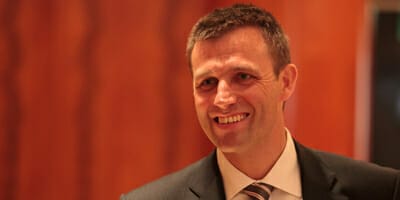

Investors need to revamp portfolio construction

Investors should re-consider their investment processes in order to achieve the needed “step-change in efficient portfolio construction” in a low return environment, the chief executive of the A$109 billion ($83 billion) Future Fund, David Neal, says.

“It is the investment process that turns the universe of opportunities into a portfolio, and right now that process needs to be as efficient and effective as it can be,” he said.

Specifically Neal said that long-term investors should look beyond the traditional characteristics of a long-term investor – the ability to take on greater levels of market risk and the ability to accept the risk of not being able to sell.

“If the reward for the higher risk is not there, it doesn’t make sense to accept that risk,” he said, urging investors to think critically about the risk/reward trade-off, not blindly accept it.

In addition he points out that just because there should be a return for illiquidity doesn’t mean a return premium is always there in practice.

Neal advocates that investors “add to their armour” and the first thing to think about is not just where to take risk, but when to take it.

Sponsored Content

“One advantage of being a long term investor is that the task is to generate the return over the long term, which means that the portfolio does not have to be constructed to achieve that target return all the time. If the reward for risk is low, it is perfectly reasonable to take lower risk (and accept an even lower return) for a while, waiting for the time when the reward for risk is once again higher,” he said.

“This introduces the concept of inter-temporal risk management – allocating your risk taking through time.”

In addition he says the way pension funds (specifically superannuation funds in Australia) organise themselves, places considerable constraints on the allocation process which leads to less efficient portfolios.

He said the tradition of strategic asset allocation, and asset buckets, is restrictive.

“I would encourage all funds to think deeply about their processes. Do they have this ability to identify great strategic opportunities, and if so, do they have the ability to right-size them in the context of the total portfolio?”

The Future Fund has a target return, but adopts a benchmark unaware approach with no strategic allocations to individual asset classes.

Its sits alongside NZ Super and the Canadian Pension Plan Investment Board in this way of thinking, allocating assets according to a total portfolio view.

An example of how this works, is that a property investment is not thought of in terms of filling a real estate allocation, but whether it is better than staying in equities.

This approach allows investors to be opportunistic. Neal says after the global financial crisis, banks were capital constrained and so companies were finding it hard to get financing.

“With the help of our managers and other relationships, we were able to identify the opportunity and build a specific private lending strategy. This didn’t appear in any benchmark, but it forms a large proportion of our debt allocation (we have $4 billion in this strategy).”

Neal says that the process evolution he is advocating requires substantial internal resources.

“This is not an argument for building internal sector implementation which is more about cost reduction. That is fine but won’t on its own deliver a step change in efficient portfolio construction.”

At the end of December 2014, the Future Fund’s asset allocation was Australian equities 8.8 per cent, developed market equities 20.9 per cent, emerging market equities 9.4 per cent, private equity 9.5 per cent, property 6.3 per cent, infrastructure and timberland 7.4 per cent, debt securities 10.8 per cent, alternative assets 14 per cent, cash 12.8 per cent.

David Neal was speaking at the ASFA Investment Interchange.

Asset Owner:Future Fund

Leave a Comment

Sort content by

CalPERS urged to pull back commodities risk

CalPERS’ internal commodities team should enforce a tracking error limit for the portfolio it manages, and prepare to boost headcount and resources as investment opportunities evolve and funds under management grow, the fund’s primary asset consultant, Wilshire Associates, found in a review. mrec4inarticleinline Sponsored Content scnative1 scnative2 scnative3

Corporate US plans expect too much

US corporate defined-benefit plans are still severely underfunded, with an artificially high return expectation contributing to the situation, according to a report of the funding status of 308 US corporate defined benefit plans by Wilshire Consulting. mrec4inarticleinline Sponsored Content scnative1 scnative2 scnative3

Global instos collaborate on measuring water risks

Norges Bank Investment Management is leading a consortium of more than 130 institutions globally in a disclosure project aimed at providing investors with a comprehensive assessment of the water risks of the companies they invest in. mrec4inarticleinline Sponsored Content scnative1 scnative2 scnative3

Wilshire survives and retains CalPERS consulting tender

Wilshire Associates has survived another competitive tender, trumping RogersCasey in the interview scoring process to retain the position of CalPERS’ lead general investment consultant, a position it has held since 1983. mrec4inarticleinline Sponsored Content scnative1 scnative2 scnative3

Pension funds unite: you can double returns

Paul Woolley insists that he is pro market forces; he is not some sort of Trotskyite. A cursory glance at some of the research work he is either doing or financing might prompt scepticism. But this urbane Londoner who established the top-shelf GMO quant shop in Europe is mainly concerned about inefficiencies and mispricing. And

What investors really want

While the models of expected returns are evolving, they still do not recognise the role of expressive and emotional characteristics. In this guest editorial in the Financial Analysts Journal, Meir Statman, Glenn Klimek Professor of Finance at Santa Clara University, California, proposes including characteristics such as affect, social responsibility, status and patriotism in models of

Previous




