
Innovation to align investors with the social good

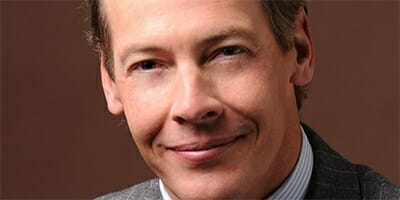
The CFA Institute’s president John Rogers, believes there is evidence of innovation in investment products that meet the needs of asset owners in a more sustainable, longer-term way, and points to the work of professors and advisors to the CFA , Andrew Lo of MIT and Robert Shiller of Yale.


One of the main thrusts of the CFA Institute’s Future of Finance project is around retirement security – shining a light at the systemic level on what constitutes a sustainable retirement system. Connected, and separate to that, is a focus on innovation.

“We want to ensure that the global financial crisis doesn’t lead to reduced innovation, the industry still needs health innovation,” Rogers says. “This means investment products that meet the needs of asset owners in a more sustainable, longer-term way.”

Rogers points to the work of professor Andrew Lo, from MIT, who is an advisor to CFA Institute has applied the concepts of pooling risk in the insurance industry to a fund that would generate double-digit returns as well as invest in orphan drug development.

Lo’s fund idea is that it pools a large number of drug development efforts into a single financial entity or “mega-fund.” With the lower risk that comes from investing in multiple drug trials simultaneously, the fund yields a more attractive risk-adjusted return on the investment and a higher likelihood of success in finding cures for diseases. This, in turn, enables the fund to raise money by issuing “research-backed obligations” or RBOs, bonds guaranteed by the portfolio of possible drugs and their associated intellectual property. Because RBOs are structured as bonds, they appeal to fixed-income investors, who collectively represent a much larger pool of capital and who have traditionally not been able to participate in investments in early-stage drug development.

Sponsored Content

In his paper, Financing drug discovery for orphan diseases, numerical simulations suggest that an orphan disease mega-fund of only $575 million can yield double-digit expected rates of return with only 10–20 projects in the portfolio.

It’s an example that Rogers says uses innovation to generate returns for investors as well as align them with society and the economy at large, which is the missing link, and criticism of the finance industry – that it exists in a silo with little concern for, or even recognition of, the wider economy and society.

Similarly the work of Nobel Prize winner, Robert Shiller from Yale, produces “hard headed” solutions for social purpose, such as bonds, making them attractive to investors.

Rogers believes in an era of fiduciary capitalism, where asset owners and other institutional investors regain the power and direction of where, how and at what cost their assets are invested.

“It is hard work for institutional investors, much of their time is spent on investing and administering their portfolios in an efficient way. Asset owners should feel good, they’ve insourced and indexed to ground down costs. It is commendable but unfortunately not the whole job,” he says. “It is hard for large asset owners to move in and out of investments which leads to them owning all of the externalities, positive and negative, of the companies they own, because they are universal owners.”

He believes there is an opportunity, and challenge, for investors to engage more effectively with governance and individual issues, across industry sector and public policy debates.

“It is a really difficult task and it is too often left to simply hiring a high quality proxy firm, but that is not enough,” he says. “There are enormous business opportunities for fund managers willing to provide engagement with asset owners.”


Leave a Comment

Sort content by

Abu Dhabi looks starwards with space tourism investment

Aabar Investments, an investment company backed by an Abu Dhabi sovereign wealth fund, has become the first external investor in commercial space carrier Virgin Galactic, buying a 32 per cent stake for $280 million. mrec4inarticleinline Sponsored Content scnative1 scnative2 scnative3

Active management under pressure as US funds underperform

The alpha from active funds management was a massive -1.2 per cent before fees for US funds in 2008, a figure eight times below the average of 15 bps over 18 years, according to research by CEM Benchmarking. mrec4inarticleinline Sponsored Content scnative1 scnative2 scnative3

Focus on income generation will yield most alpha: McCulley

Institutional investors should be looking to garner alpha from income-generating investments, rather than growth, as the “new normal” dictates that return expectations will be equal to about nominal GDP, according to managing director, Pimco, Paul McCulley. mrec4inarticleinline Sponsored Content scnative1 scnative2 scnative3

Why emerging markets aren’t a tactical bet

Pension funds no longer view the emerging markets as a tactical play, instead considering the region a strategic allocation within their portfolios. Murray Davey, managing director and chief investment officer – global emerging markets at UK-based Rexiter tells Kristen Paech why.   mrec4inarticleinline Sponsored Content scnative1 scnative2 scnative3

Abu Dhabi SWF sends $1bn to Malaysia

The $14.7 billion Mubadala Development of Abu Dhabi is believed to be slating co-investments totalling $1 billion in the Malaysian energy, real estate and hospitality industries with a newly formed sovereign wealth fund from the Asian nation. mrec4inarticleinline Sponsored Content scnative1 scnative2 scnative3

US instos call for new authority on market risk

The Investors’ Working Group (IWG) has urged the US Government to set up an independent authority to monitor the activities and risk exposures of dominant financial institutions and advise regulators on ways to mitigate current and emerging risks in the financial system. mrec4inarticleinline Sponsored Content scnative1 scnative2 scnative3

Previous




