
Innovation to align investors with the social good

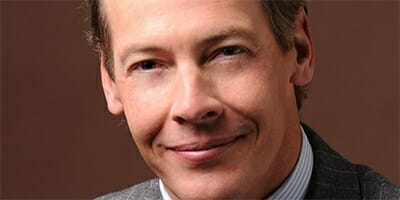
The CFA Institute’s president John Rogers, believes there is evidence of innovation in investment products that meet the needs of asset owners in a more sustainable, longer-term way, and points to the work of professors and advisors to the CFA , Andrew Lo of MIT and Robert Shiller of Yale.


One of the main thrusts of the CFA Institute’s Future of Finance project is around retirement security – shining a light at the systemic level on what constitutes a sustainable retirement system. Connected, and separate to that, is a focus on innovation.

“We want to ensure that the global financial crisis doesn’t lead to reduced innovation, the industry still needs health innovation,” Rogers says. “This means investment products that meet the needs of asset owners in a more sustainable, longer-term way.”

Rogers points to the work of professor Andrew Lo, from MIT, who is an advisor to CFA Institute has applied the concepts of pooling risk in the insurance industry to a fund that would generate double-digit returns as well as invest in orphan drug development.

Lo’s fund idea is that it pools a large number of drug development efforts into a single financial entity or “mega-fund.” With the lower risk that comes from investing in multiple drug trials simultaneously, the fund yields a more attractive risk-adjusted return on the investment and a higher likelihood of success in finding cures for diseases. This, in turn, enables the fund to raise money by issuing “research-backed obligations” or RBOs, bonds guaranteed by the portfolio of possible drugs and their associated intellectual property. Because RBOs are structured as bonds, they appeal to fixed-income investors, who collectively represent a much larger pool of capital and who have traditionally not been able to participate in investments in early-stage drug development.

Sponsored Content

In his paper, Financing drug discovery for orphan diseases, numerical simulations suggest that an orphan disease mega-fund of only $575 million can yield double-digit expected rates of return with only 10–20 projects in the portfolio.

It’s an example that Rogers says uses innovation to generate returns for investors as well as align them with society and the economy at large, which is the missing link, and criticism of the finance industry – that it exists in a silo with little concern for, or even recognition of, the wider economy and society.

Similarly the work of Nobel Prize winner, Robert Shiller from Yale, produces “hard headed” solutions for social purpose, such as bonds, making them attractive to investors.

Rogers believes in an era of fiduciary capitalism, where asset owners and other institutional investors regain the power and direction of where, how and at what cost their assets are invested.

“It is hard work for institutional investors, much of their time is spent on investing and administering their portfolios in an efficient way. Asset owners should feel good, they’ve insourced and indexed to ground down costs. It is commendable but unfortunately not the whole job,” he says. “It is hard for large asset owners to move in and out of investments which leads to them owning all of the externalities, positive and negative, of the companies they own, because they are universal owners.”

He believes there is an opportunity, and challenge, for investors to engage more effectively with governance and individual issues, across industry sector and public policy debates.

“It is a really difficult task and it is too often left to simply hiring a high quality proxy firm, but that is not enough,” he says. “There are enormous business opportunities for fund managers willing to provide engagement with asset owners.”


Leave a Comment

Sort content by

Agent provocateur

Paul Smith, the Hong Kong based chief executive of the Global CFA Society is on an evangelical mission to change the culture within the investment industry. Not only is he looking to curb the frequency of excess behaviour that leaves the public cynical of high paid finance professionals, but he is a persuasive advocate for

Do long-term mandates produce better results?

About 11 years ago, the Towers Watson’s Thinking Ahead Group came up with the concept of investors appointing managers for 10-year mandates. The consulting arm then started talking to clients about it in 2004/05 and the early mandates have now matured. So did it work? Do longer-term mandates produce outperformance, better behaviour and more security?

GRESB infrastructure launch

A new infrastructure sustainability benchmark has been developed by a group of eight institutional investors, alongside GRESB, to enable systematic evaluation and industry benchmarking of the sustainability performance of their infrastructure assets.   Despite large and widespread allocations by Canadian and Australian pension funds to infrastructure, institutional investors globally do not have large allocations to

Frozen by the entanglement of risk

Equity prices in continental Europe and emerging markets, including China, are below fair value, and present an opportunity for investors, but the ‘entanglement of risk’ in current markets is making Brian Singer, partner and head of dynamical allocation strategies team, William Blair cautious. William Blair typically targets around 10 per cent volatility in its portfolios,

Exchanges need to adapt to institutional demands: Norges

Institutional investors now dominate the free float holdings of listed companies and exchanges need to adapt to this enduring change in market structure and investor needs, according to Norges Bank Investment Management, manager of the $818 billion Norwegian sovereign wealth fund. Norges Bank, which itself owns around 1 per cent of the world’s listed stock,

Dalio says Fed should focus on secular forces

The US Federal Reserve is not paying enough attention to secular forces affecting the market, according to chairman and founder of Bridgewater, Ray Dalio, who says the “risks of the world being at or near the end of its long-term debt cycle are significant”. In an opinion piece posted on LinkedIn, The Dangerous Long Bias

Previous




