
Systemic risk measurement an early warning for investors

Systemic risk could be the silver bullet everyone is looking for in portfolio management, with high systemic risk in markets proven to be a precursor to heightened tail risk.

The measure of systemic risk is useful for separating a fragile from a resilient market and, while it doesn’t tell you about an individual tail-risk event, it gives an indication of when it may be approaching so portfolios can be positioned to cushion the blow. Similarly if the systemic risk measures shows markets are resilient, portfolios can be positioned to take advantage of that.

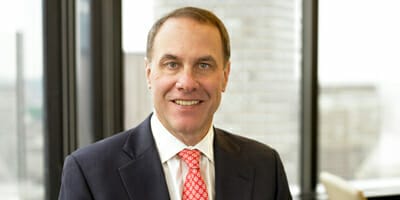
Chief investment officer of Windham Capital Management, professor of finance at Massachusetts Institute of Technology and co-founder of State Street Associates, Mark Kritzman says implied systemic risk, or the absorption ratio, is a measure of how tightly coupled or unified the markets are.

When they are tightly coupled, or there is a high absorption ratio, then markets are more fragile in the sense that negative shocks propagate more quickly and broadly than when markets are loosely linked.

“We have done a lot of work to show the degree of systemic risk is very important to managing a portfolio; it’s very informative. Returns on average are lower when systemic risk is high,” Kritzman says.


Sponsored Content

Backed up by research

Principal Components as a Measure of Systemic Risk – research by Kritzman, Yanzhen Li, Sebastien Page and Roberto Rigobon – shows that the absorption ratio captures market fragility.

Specifically the paper shows that most significant US stock market drawdowns have been preceded by spikes in the absorption ratio; that stock prices, on average, have depreciated significantly following spikes in the absorption ratio and on average appreciated significantly in the wake of sharp declines in the absorption ratio.

It also showed that the absorption ratio was a leading indicator of US housing market bubble; the absorption ratio systemically rose in advance of market turbulence; and that important milestones throughout the global financial crisis coincided with shifts in the absorption ratio.

“In short, the absorption ratio appears to serve as an extremely effective measure of systemic risk in financial markets,” the paper states.

Kritzman has done some work with the US government on the predictive power of the absorption ratio.

“We have demonstrated that the absorption ratio of the US housing market provided early signs of the emergence of a national housing bubble, long before the Fed recognised that fact.”

According to Kritzman, a company’s vulnerability to failure is partly due to its connectivity to other entities and how risky those other entities are, which policymakers have shown interest in.

“Our calculation is just a residual of the math without the politics,” he says. “The Financial Stability Board came up with a list of 29 companies in two years, we have the same list in a few days.”

At the moment he thinks the most important sectors are financials, energy, and technology. Within the financial sector, Fritzman says the most systemically important individual financial institutions are Bank of America and Citibank.

“Lehman on average was not systemically important but it was at the time of the collapse.”

Windham looks at the world according to a proprietary Investment Risk Cycle, which describes how systemic risk and financial turbulence interact with each other and how that interaction impacts asset values.

The manager identifies six states of the world, each with “high” or “low” ratings for systemic risk and turbulence. In building portfolios, investors need to be cognisant that assets behave differently to each other within those different states.

According to Kritzman, in the first part of 2012, systemic risk has come back down.

“The first part of 2011, systemic risk judged the markets to be resilient. Then it became relatively fragile, moving up to about a five out of six, but news was positive so market didn’t sell off. Now systemic risk has come back down, and markets are relatively resilient,” he says.

To put this into perspective, the global financial crisis was off the scale with a measure more like an eight.

Straddling the academic and professional worlds, Kritzman has won prestigious awards, sits on several advisory and editorial boards, and teaches a graduate course in financial engineering at MIT.


Leave a Comment

Sort content by

Alecta doubles down on governance, risk management and culture

Sweden’s largest pension fund, the $126 billion Alecta, has spent much of the last year continuing to work on improving governance, risk management, competence and culture in the wake of a $2 billion loss in 2023 attributable to investments in US regional banks, including Silicon Valley Bank, turning sour.

Japan’s trifecta of challenges

After 18 years working with Japan’s leading pension funds and asset managers Chris Battaglia, president of the Global Fiduciary Symposium in Japan, is well placed to observe the pressures on the country’s retirement system and observes its evolution. mrec4inarticleinline Sponsored Content scnative1 scnative2 scnative3

日本が直面する3つの課題

グローバル・フィデューシャリー・シンポジウム代表を務めるクリス・バッタリア氏は、日本の大手年金基金や資産運用会社と18年間仕事をする中で、日本の退職金制度の課題、その進化を観察してきた。 mrec4inarticleinline Sponsored Content scnative1 scnative2 scnative3

A lot of regulation incoming for crypto, predicts former Fed governor

Former Federal Reserve governor Randall Kroszner argues crypto assets are mislabelled as “currencies”, and said digital currencies like China’s digital Renminbi could one day challenge the primacy of the US dollar, in a wide-ranging conversation.

Portfolios of the future

This session drew on themes of the conference and discuss with asset owners what the portfolios of the future will look like, particularly examining how investors plan to build robust portfolios to meet changing investment regimes.

Fiona Reynolds joins Conexus as CEO

Conexus Financial, publisher of Top1000funds.com, further cements its position as a global influencer with the appointment of Fiona Reynolds as chief executive.




