
Canadian pensions form research hub

The largest pension funds in Canada are among the founding members of a National Pension Hub that will match research topics with academics to search for innovative solutions to industry problems.

Members of the NPH include: Alberta Investment Management Corporation, British Columbia Investment Management Corporation, Caisse de dépôt et placement du Québec, Canada Pension Plan Investment Board, Ontario Municipal Employees Retirement System, Ontario Teachers’ Pension Plan, and Public Sector Pension Investments, plus a diverse group including McKinsey & Co, Mercer and KPMG.

Members of the NPH will have input on the topics chosen for research, along with access to the results and their industry applications.

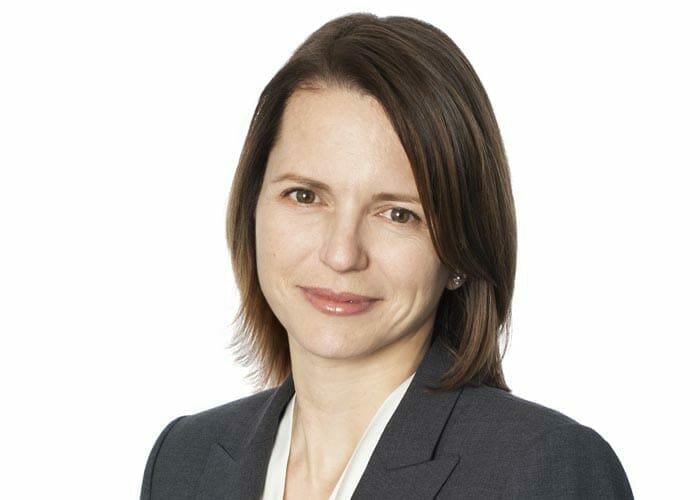
Barbara Zvan, chair of the hub and chief risk and strategy officer at Ontario Teachers’, said topics under consideration include items related to investments, governance, pension design and regulation; for example, portfolio construction, risk in private assets, liquidity risk and leverage, retirees’ spending habits and the impact of different discount rates.

“We are looking at research that can lead to solutions,” she said. “If we look at how to think of an asset mix for a pension fund with a very long horizon, that will [involve] more than one research piece.”

The pension industry has been grappling with a number of evolving challenges over the last decade, including an ageing population, finite resources in which to invest, more complex regulations, greater market volatility, and the need to generate strong returns in a slower economy. The NPH aims to be an incubator for outcome-based research that addresses these problems.

Sponsored Content

The hub will be implemented by the Global Risk Institute, which has a proven model for creating value from research, including setting milestones for delivery and governance oversight.

“GRI has the approach and processes down pat; this is one of the reasons we chose them,” Zvan explained. “They know the academic community and will act to match the topics [with] academics. That’s a big difference; this is not a call for papers.”

The 15 members of the NPH had their first meeting in November and the GRI, in consultation with the group, is now ranking the topics in terms of importance. It aims to fund projects in the first quarter of 2018.

Zvan said some of the research would be made available outside the member funds.


Leave a Comment

Sort content by

Do long-term mandates produce better results?

About 11 years ago, the Towers Watson’s Thinking Ahead Group came up with the concept of investors appointing managers for 10-year mandates. The consulting arm then started talking to clients about it in 2004/05 and the early mandates have now matured. So did it work? Do longer-term mandates produce outperformance, better behaviour and more security?

GRESB infrastructure launch

A new infrastructure sustainability benchmark has been developed by a group of eight institutional investors, alongside GRESB, to enable systematic evaluation and industry benchmarking of the sustainability performance of their infrastructure assets.   Despite large and widespread allocations by Canadian and Australian pension funds to infrastructure, institutional investors globally do not have large allocations to

Frozen by the entanglement of risk

Equity prices in continental Europe and emerging markets, including China, are below fair value, and present an opportunity for investors, but the ‘entanglement of risk’ in current markets is making Brian Singer, partner and head of dynamical allocation strategies team, William Blair cautious. William Blair typically targets around 10 per cent volatility in its portfolios,

Exchanges need to adapt to institutional demands: Norges

Institutional investors now dominate the free float holdings of listed companies and exchanges need to adapt to this enduring change in market structure and investor needs, according to Norges Bank Investment Management, manager of the $818 billion Norwegian sovereign wealth fund. Norges Bank, which itself owns around 1 per cent of the world’s listed stock,

Dalio says Fed should focus on secular forces

The US Federal Reserve is not paying enough attention to secular forces affecting the market, according to chairman and founder of Bridgewater, Ray Dalio, who says the “risks of the world being at or near the end of its long-term debt cycle are significant”. In an opinion piece posted on LinkedIn, The Dangerous Long Bias

Is the financial services sector serving the public interest?

Fiduciary law, which creates the boundaries and rules for asset owners managing other people’s money, is evolving. The short-termism, misaligned incentives and complex and over-supply of services that characterises financial services, is under fire. Regulators around the world are increasingly looking at how to change the behaviour and supply chain dynamics in the industry, and

Previous




