
Canadian pensions form research hub

The largest pension funds in Canada are among the founding members of a National Pension Hub that will match research topics with academics to search for innovative solutions to industry problems.

Members of the NPH include: Alberta Investment Management Corporation, British Columbia Investment Management Corporation, Caisse de dépôt et placement du Québec, Canada Pension Plan Investment Board, Ontario Municipal Employees Retirement System, Ontario Teachers’ Pension Plan, and Public Sector Pension Investments, plus a diverse group including McKinsey & Co, Mercer and KPMG.

Members of the NPH will have input on the topics chosen for research, along with access to the results and their industry applications.

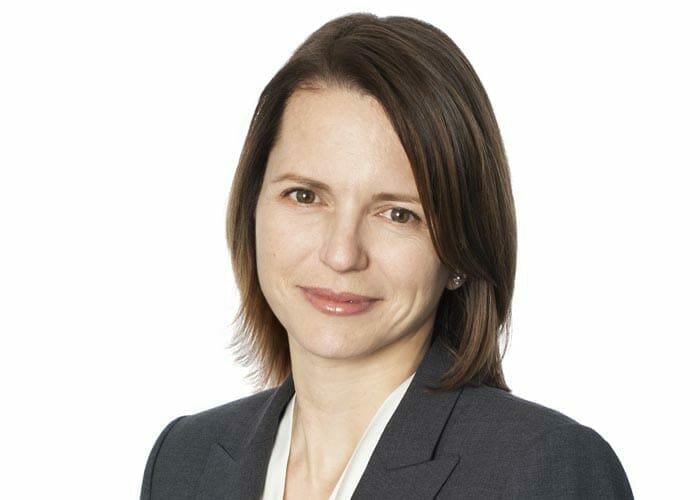
Barbara Zvan, chair of the hub and chief risk and strategy officer at Ontario Teachers’, said topics under consideration include items related to investments, governance, pension design and regulation; for example, portfolio construction, risk in private assets, liquidity risk and leverage, retirees’ spending habits and the impact of different discount rates.

“We are looking at research that can lead to solutions,” she said. “If we look at how to think of an asset mix for a pension fund with a very long horizon, that will [involve] more than one research piece.”

The pension industry has been grappling with a number of evolving challenges over the last decade, including an ageing population, finite resources in which to invest, more complex regulations, greater market volatility, and the need to generate strong returns in a slower economy. The NPH aims to be an incubator for outcome-based research that addresses these problems.

Sponsored Content

The hub will be implemented by the Global Risk Institute, which has a proven model for creating value from research, including setting milestones for delivery and governance oversight.

“GRI has the approach and processes down pat; this is one of the reasons we chose them,” Zvan explained. “They know the academic community and will act to match the topics [with] academics. That’s a big difference; this is not a call for papers.”

The 15 members of the NPH had their first meeting in November and the GRI, in consultation with the group, is now ranking the topics in terms of importance. It aims to fund projects in the first quarter of 2018.

Zvan said some of the research would be made available outside the member funds.


Leave a Comment

Sort content by

Shared fund objectives key to investor success

The practice of benchmarking the salaries of senior executives of institutional funds with reference to external financial services firms, instead of the shared objectives of the fund, is a major barrier to their success, according to Professor Gordon Clark of Oxford University and director of Smith School of Enterprise and the Environment. Clark sees the

PGGM halves CO2 footprint in investments

Ahead of the COP21 in Paris, the second largest Dutch fund with €161 billion ($160 billion), Pensioenfonds Zorg en Welzijn (PFZW), has announced it will halve the CO2 footprint of its investments by 2020. After an in-depth study with its fund manager, PGGM, the fund has decided its capital should be focused on companies that

Mercer’s seven tools for risk management reflect evolving landscape

Mercer Investments is using its deep insurance and environmental, social and governance (ESG) skills, contacts and processes to evolve its tools for advising clients on investment risk assessment, analysis and reporting – a move that reflects the evolving landscape for risk faced by investors. Partner and global head of responsible investment at Mercer, Jane Ambachtsheer,

OTPP advises on climate risk mitigation

Ontario Teachers’ Pension Plan (OTPP), an investor known for its advanced risk-management tools and processes, considers that the common tools available to investors to mitigate carbon risk for investors – portfolio carbon footprints and thematic divestment – provide incomplete risk management. The fund has suggested macro- and microanalysis is necessary to understand a company’s complete

PRI to consider new principle focusing on systemic risks

The UN-backed Principles for Responsible Investment (PRI) is considering a seventh principle that will focus on broad financial system systemic risks. The six principles were written before the global financial crisis and are focused on environmental, social and governance (ESG) integration. Now, a decade after their creation, consideration of systemic risks is on the agenda and

Agent provocateur

Paul Smith, the Hong Kong based chief executive of the Global CFA Society is on an evangelical mission to change the culture within the investment industry. Not only is he looking to curb the frequency of excess behaviour that leaves the public cynical of high paid finance professionals, but he is a persuasive advocate for

Previous




