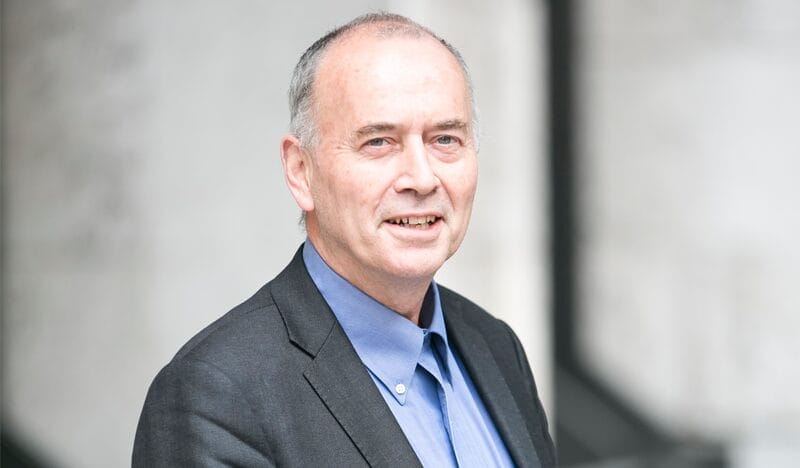
Asif Noor: Opening up on data and financial fragility

I chat with Asif on his career journey, how the world changed after the GFC and what he sees for the future of machine learning assisting with rigorous testing of a hypothesis.

Career, systems, how the world changed after GFC, data sets that are interesting, AI and machine learning, neural networks, testing a hypothesis and data.

Nothing on this podcast is to be considered investment advice or a recommendation. No investment decision or activity should be undertaken without first seeking qualified and professional advice.

Sponsored Content

Leave a Comment

WTW’s Urwin defends TPA value-add as attribution scrutiny intensifies

WTW’s Urwin defends TPA value-add as attribution scrutiny intensifies

Roger Urwin, one of the industry’s most well-known proponents of TPA, has defended it against the growing scepticism of its reported performance edge over SAA, saying “TPA is a system” and any performance attribution is difficult to isolate from the broader context each fund operates in. In an interview with Top1000funds.com, he also weighs in on whether some funds are inherently unsuitable for implementing TPA.

Sort content by

Inside NBIM’s AI playbook to hone investment edge

Norges Bank is a lean organisation despite managing a $2.2 trillion portfolio. Across the fund’s four global offices, there are only 700 staff, or $3 billion per person, which is why it has made pursuing AI-driven efficiency a core organisation initiative – and a non-negotiable requirement for its employees. 

Investors unpack regime-based portfolio thinking 

Funds are operating in an extraordinary environment, with Scott Chan, chief investment officer of CalSTRS, saying he has never witnessed so many “large shifts stacked on top of the other” in his investment career. Amid the change, investors are increasingly shifting to a scenario and regime-based asset allocation.  

AI investors face post-Moore’s Law reality

Mark Horowitz, a leading computer scientist and electrical engineer at Stanford University, has declared that Moore’s Law is “basically over”, which will have significant ramifications for artificial intelligence investors who are counting on more computing power to feed into more complex models.  

Public-private partnerships key to fixing US infrastructure

The size of the current infrastructure investment gap and the speed at which it is widening mean there is both a desire and a need for more public-private partnerships to unlock funding. Investors say that collaboration with local governments and raising public awareness of private investment benefits are crucial. 

Federal backing vital for US innovation: Stanford president 

Stanford president Jonathan Levin said the university’s top priority is maintaining the partnership with the federal government while safeguarding its operational freedom, as the institution balances financial reliance on Washington and political scrutiny from the Trump administration. 

Believing the hype around data centres

With digital infrastructure projects like hyperscale data centre facilities becoming bigger, more complex and more costly, Blue Owl’s Robert Hartog believes that investors should begin to take part in what he describes as a “generational market opportunity.”

Previous



