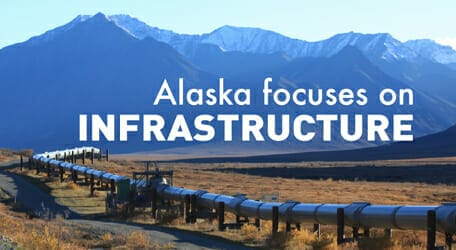
Alaska focuses on infrastructure

Infrastructure co-investments will be a new area of focus for the $36.6 billion Alaska Permanent Fund, as reflected in changes to its strategic asset allocation last week.

In July 2009 the fund changed the way it allocated assets – looking at underlying risks or economic conditions, not asset buckets – with a view to building an all-weather portfolio. It came up with five categories: company exposures, real assets, special opportunities, interest rates and cash.

This latest asset allocation tweak sees company exposures increase by 2 per cent to 55 per cent of the allocation, and infrastructure increase from 3 to 4 per cent.

The special opportunities bucket has been reduced as a result from 21 to 18 per cent.

While the company exposures allocation has been increased, it will not require new mandates, as existing mezzanine debt and credit opportunity mandates have been transferred from the special opportunities bucket.

Within the special opportunities, Alaska has embraced the “external CIO” concept, and awarded seed mandates of $500 million to five managers – PIMCO, GMO, Bridgewater, AQR and Goldman Sachs.

Sponsored Content

At last week’s board meeting, changes to the infrastructure investment policy were approved to allow investments in infrastructure funds based on the recommendation of an independent fiduciary, and to add authority to co-invest subject to a board-approved process.

The 1 per cent increase in the target allocation will allow room for this asset class to grow over the next few years.

Infrastructure is part of the real assets exposure, which also includes real estate and TIPs.

The fund, which returned 20.6 per cent for the 2011 financial year, has re-elected Bill Moran (pictured) as chair and Steve Rieger as vice-chair at its annual meeting.

It is still without a chief investment officer following the resignation of Jeff Scott.



Leave a Comment

Sort content by

…as executives take pay-cut

The board of the Canada Pension Plan Investment Board will not award the individual component of executive’s short term incentive plans, due to current economic circumstances, however the chief executive and the three key investment professionals still earned a combined C$8.6 million in total compensation in the fiscal year to March. mrec4inarticleinline Sponsored Content scnative1

CPPIB changes asset weights, expands risk management…

The C$105 billion Canada Public Pension Investment Board (CPPIB) has adjusted the investment allocations in its reference portfolio, including an increased foreign exposure, and made significant risk management enhancements, as a response to the volatile economic environment and its long-term asset-liability matching. mrec4inarticleinline Sponsored Content scnative1 scnative2 scnative3

What investors lose to their fiduciary ‘agents’

The flow of capital absorbed by Australia’s superannuation industry is something that irritates academics Ron Bird and Jack Gray, who just received research funding from the ICPM, particularly since super fund members are forced by law to put their money into the hands of their fiduciary ‘agents’, writes Simon Mumme. mrec4inarticleinline Sponsored Content scnative1 scnative2

Norwegian SWF pushes equity exposure beyond 50pc amid Q1 losses

The $US 324 billion Government Pension Fund – Global (NBIM) of Norway pushed its allocation to equities beyond 50 per cent in the course of Q1 2009 at the expense of its fixed income portfolio, maintaining a strategic bent towards a higher exposure to growth assets. mrec4inarticleinline Sponsored Content scnative1 scnative2 scnative3

Another big equity manager calls the bottom

The US$13 billion global equities manager Trilogy Global Advisors has joined the growing list of funds managers prepared to call the bottom for equity markets, and is already overweighting stocks leveraged to global economic recovery such as technology and consumer discretionaries. mrec4inarticleinline Sponsored Content scnative1 scnative2 scnative3

Going beyond DB vs DC for the ultimate pension

One constructive consequence of the global financial crisis, according to the director of the Rotman International Centre for Pension Management, Keith Ambachtsheer, is the exposure of defined benefit and defined contribution scheme designs as inadequate. Amanda White spoke to him about alternative pension models and the most cost-effective delivery mechanism. mrec4inarticleinline Sponsored Content scnative1 scnative2

Previous




