
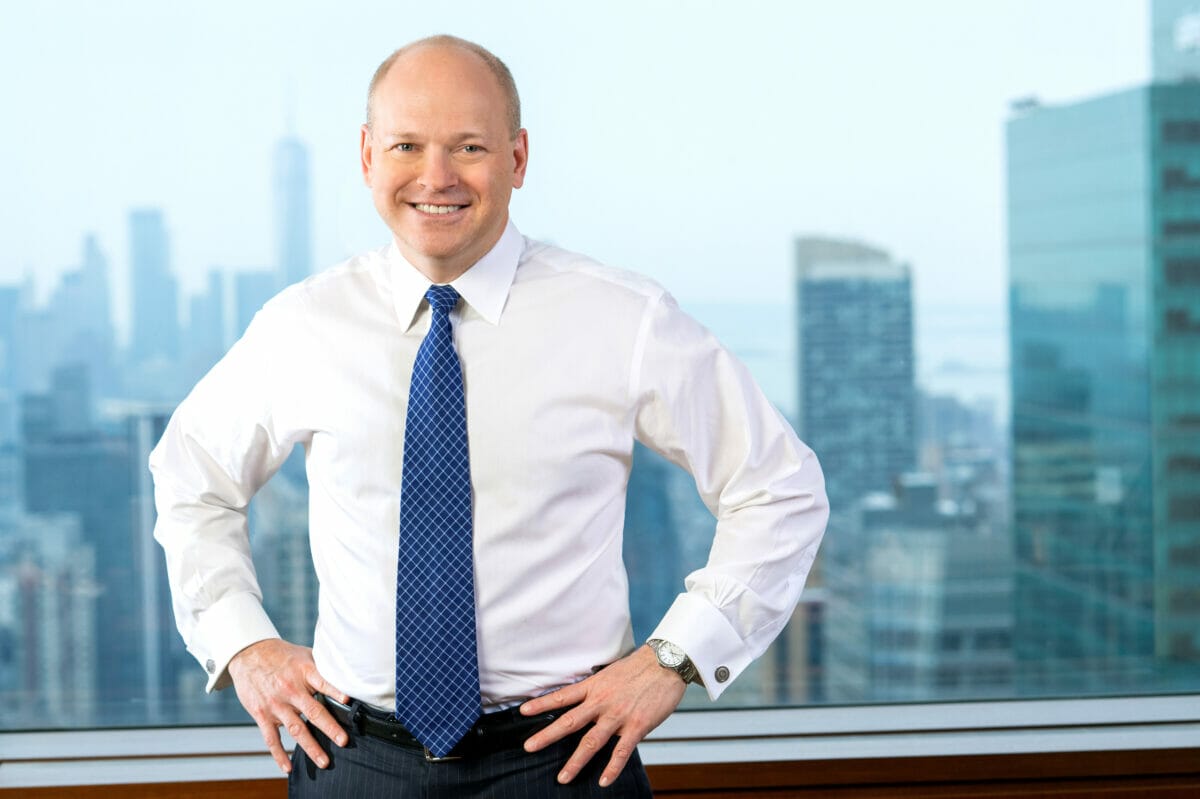

The discourse around ESG investing may be “messy” but Mercer’s global chief investment strategist, Rich Nuzum, says media and political scrutiny can help sharpen the focus of pensions and sovereigns on their objectives and duties. The comments come amid a debate about the merits of decarbonising portfolios ahead of the COP28 climate change summit in Dubai.
The increasingly “messy” and “impolite” discourse around environmental, social and governance investing, especially in the US, may have unlikely benefits for fiduciaries, says Mercer’s global chief investment strategist, Rich Nuzum.
Institutional investors who adopt an ESG objective or overlay have been targeted by high-profile US policymakers, including Florida Governor and Republican presidential candidate Ron De Santis, who has lashed the investing style as reflecting an “ideological agenda” and “left-wing values”. The topic has become a mainstay of conservative critics on cable news and social media platforms, while some state legislatures have sought to restrict or even ban activity by ESG-focused asset managers. The discourse has frustrated industry leaders and governance experts, who argue the politicisation of investment decision-making presents a “systemic risk”. (See The politicisation of investments at US public funds)
But while Nuzum admits the conversation has become “less polite and more pointed”, he says it is the latest incarnation of a meaningful debate being held by boards and investment committees for decades.
“This is a contrarian view … [but] I think it’s a very constructive dialogue,” the New York-based Nuzum tells Top1000funds.com on the sidelines of last month’s Mercer Global Investment Forum in Sydney. “It is forcing fiduciaries to think deeply about what they want to do and why.”
Nuzum says the scrutiny placed on US-domiciled pensions in particular, which are increasingly subject to a raft of federal and state restrictions on capital allocation and proxy voting processes, sharpens their focus on the extent to which environmental or social impact should form part of their investment objective, if at all.
“You can make investments to have an impact … and you can do it for values. But let’s be clear as stakeholders – as the investment committee or board – about what we are doing and why,” he says. “The US dialogue is forcing clarity around that.”
Beyond ESG
However, Nuzum, who advises more than a dozen of the world’s largest asset owners, says the term ‘ESG’ can be unhelpful, suggesting fiduciaries really ask themselves whether they should be aiming for impact beyond a return on capital to members, and, if so, in which areas.
For example, he says diversity, equity and inclusion is often a stated focus of US and South African funds, while decarbonisation is a goal for many Europeans. Endowments and funds associated with religious organisations may also have specific ethical overlays, he points out.
For many other funds, it will not be appropriate to have impact as an explicit objective. In that case, Nuzum says, any investment in, for example, electric vehicle manufacturers or renewable energy providers should be squarely focused on risk and return, and the “sole interest to participant”, where that legal obligation applies.
Net-zero nitpicking
Aside from the heated political and media discourse, Nuzum has detected an active debate within the global asset owner community over the benefits, or otherwise, of net-zero goals.
Many funds around the world have made commitments to reduce carbon emissions by either 2030 or 2050. But in the scramble to decarbonise portfolios other ESG-minded investors have asked whether removing exposures from individual portfolios is really conducive to meaningful climate action setting up a debate between asset owners Nuzum says.
Making proactive investments in green technologies may not reduce the size of a portfolio’s carbon footprint, but it would assist with the economics of replacing carbon with other forms of energy.
“Impact oriented investors, [especially] large sophisticated sovereign wealth funds, get really frustrated with the net-zero part of the community, because they say ‘you’re solving your portfolio, not changing the world,” Nuzum says, reflecting sentiments he has heard among his client base and broader network.
Political pressure
At the same time, Nuzum says asset owners must resist pressure from governments, which may wish to influence their investment decisions for political reasons.
He gave examples including UK legislation known as the Mansion House Compact, under which large pensions agreed to increase their allocation to British private equity and start-ups.
But Nuzum says there are both political and investment risks to being pressured into backing such projects.
“It’s easy in my experience for politicians to target [pension] funds because they’re not very sympathetic. But the moment that voters realise ‘Hey, that’s my money’, it becomes very bad politics.”








Leave a Comment
You must be logged in to post a comment.
Login