

Climate change poses risks across industries, governments and countries. Pension plans such as OPTrust – with their large, global investments – are not immune to these risks.
As a long-term investor, our role at OPTrust is to look decades into the future to identify challenges and opportunities that could affect our members’ retirement security.To ensure plan sustainability, we must better understand the risks climate change poses. The transition to a carbon-neutral economy will be increasingly disruptive and we need to be ready to adapt. Waiting for governments and regulators to act will take too long. The impacts of climate change are already being felt. That is why investors need to build climate risk into their investments, starting now.
We recently issued our Climate Change Action Plan. Among other things, the action plan commits us to: determineour exposure to industries, geographies and companies that are most exposed; engage with companies on improved performance on ESG factors; and demand better disclosure of the information investors need to properly price climate change-related risk.
We have already made some progress in our climate-change journey. With our 2017 Funded Status Report, OPTrust became one of the first pension plans to report according to the recommendations of the Task Force on Climate-related Financial Disclosures. We have also issued a white paper calling for a standardised climate change disclosure framework.
Through a G7 initiative and groups such as Climate Action 100+, Canadian investors are working with others around the world to develop common standards and encourage corporations to curb greenhouse-gas emissions.
As a global pension citizen, we believe we must use our voice to influence organisations to better manage climate risk. Currently, 7.6 per cent of the OPTrust portfolio is invested in renewable energy and green real estate. This is our direct investment in the transition to a lower-carbon economy, and these are our guiding principles:
Change happens through influence. Fossil-fuel industries are going to be with us for the foreseeable future.We use our ownership position to promote better practices among our investee companies, which has a far greater impact than divestment. We have engaged 235 companies on climate-related issues, leading to improved climate risk reporting, climate-aware boards and emissions reduction.
Measurement matters. We are focused on developing and using measures and tools that accurately support pricing climate change-related risk.
Market forces can promote sustainability. Our job is to prioritise sustainability by balancing sufficient investment returns with appropriate amounts of risk. We don’t believe regulation will happen soon enough. Market forces will be the more effective means of keeping us adaptable so we can thrive in a changing climate.
Innovation has a role to play. Successful investing requires an emphasis on assessing and understanding a constantly changing environment. We understand the importance of having an innovation mindset and recognise that new technologies will be key in better understanding climate change risks and opportunities. The increasingly rapid pace of change is foundational to how we think about climate change.
Work continues
OPTrust is prepared to face these challenges.
Our approach will evolve over time and the same must happen at other companies for them to adapt to the evolving landscape. Companies must be agile to manage climate risk.
Canada is a global leader in so many respects. We can be even more so by working collaboratively with other global investors to improve understanding of climate-change impacts. One example is to bring together climate scientists and investors for thoughtful debate, to assess and analyse how climate risk exposure affects investment portfolios.
We want our plan members and the broader community to know that addressing climate change constitutes good business and contributes to value creation and plan sustainability.
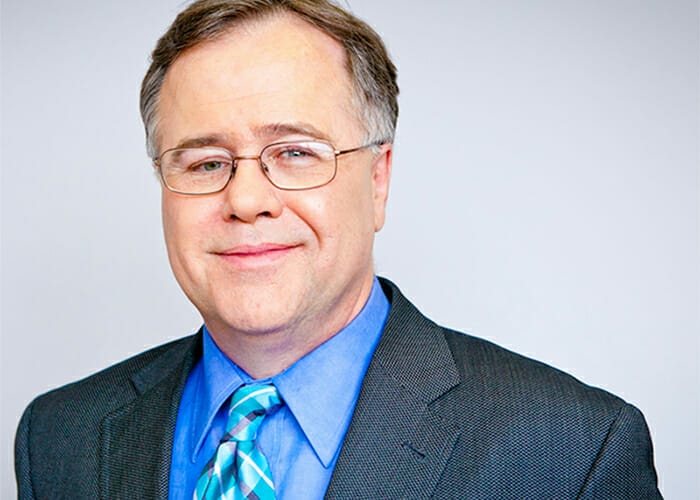
Hugh O’Reilly is president and chief executive of OPTrust. He will be speaking at the Fiduciary Investors Symposium at Stanford University, September 30-October 2, in a session covering innovation and technology in pension fund portfolios. The discussion will be chaired by Ashby Monk, executive and research director, Stanford Global Projects Center. More information is available here. Note: the event is open only to asset owners.








Leave a Comment
You must be logged in to post a comment.
Login