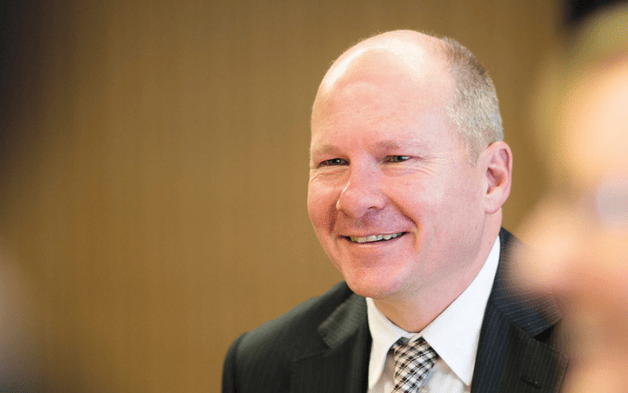

New PRI chief outlines priorities

In his first interview as the new CEO of the PRI, David Atkin outlines his priorities for the organisation and the areas of urgency for investors focused on sustainability.

Driven by good processes and planning David Atkin has had success in managing organisations through periods of immense growth. In the 12 years he was CEO of the profit-to-members Australian superannuation fund, Cbus, the fund grew from A$12 billion to be more than A$65 billion today with a large internal team.

Similarly the PRI has been an organisation that has undergone enormous growth. Now with 4,718 signatories it continues to grow, with 308 signatories coming on board in the last quarter alone.

“In organisations where there has been rapid growth you have to think about how you organise and deploy resources and how you think about execution might need to change,” Atkin told Top1000funds.com in an interview. “Clearly I’m coming in on really strong foundations – James [Gifford], Fiona [Reynolds] and I are all different in our leadership styles but we all consistently believe in the same idea. I now bring a different phase for the PRI. It’s boring, but process is important. If you plan well and you think about your processes you get better outcomes in my experience.”

Atkin says one of the challenges with rapid growth is how to meaningfully serve each of the signatories.

“We have to industrialise the way we provide opportunities to serve our membership base and our digital strategy will be important. We might need to segment better via groups of interest or region or investment style to provide the right forums and take advantage of the global perspective the PRI brings,” he says. “We are a member organisation and put our signatories at the heart of everything we do and ensure we provide value to them.”

Sponsored Content

Atkin, who will move to London from Melbourne in March, has had a long history with the PRI serving on the board from 2009-2015, and working with outgoing CEO Fiona Reynolds.

But he is aware that a lot has changed in the organisation and in responsible investment since that time. This year his focus will be on understanding the broader landscape, looking internally at the organisation’s ability to serve its signatories, and then conducting a comprehensive signatory consultation on the PRI’s mission and purpose.

“This is an important opportunity for me to really listen to our signatories and ensure our aims and outputs are aligned with their needs,” he says.

The issue of a generation

Atkin describes climate as not just the most important issue for investors this year, but the issue of a generation.

“It can’t be solved in one year and it’s not going away,” he says. “We are already seeing the consequences of not dealing with it as a managed transition and this will lead to a whole lot of other S and G issues. It is an existential threat. We have to solve it this decade.”

He points to initiatives such as the Net Zero Asset Owner Alliance and the Manager Alliance as really important. But he says that declarations of net zero now need to move from high level strategic intent to clear implementation and reporting plans.

Last October, the Net Zero Asset Owners Alliance released its first progress report with 29 asset owners setting targets to manage their portfolios in line with the 1.5C climate goal, including Axa, Swiss Re and the Church of England. This first round covers the investors’ plans out to 2025. Of the $9.3 trillion under management by alliance members about $1.5 trillion is now in motion towards a 1.5C-aligned target by 2025.

But while climate is the most important issue of sustainability it is not the only issue and in an environment where there is increasing change and focus on reporting, Atkin is prioritising that the PRI ensures the reporting and assessment obligations it is asking of signatories is fit for purpose.

“There are some questions around not duplicating what is being asked from other reporting frameworks and ensuring what we are doing is helping us identify the progression of our signatories in incorporating the principles,” he says.

To that end there are a number of internal projects underway, including one that assessed the reporting requirements of the world’s 10 leading economies. It identified 150 reporting requirements that signatories are being asked or required to participate in.

“With all that emerging we are looking at what is relevant and what’s duplicative,” Atkin says.

While there has been a lot of maturity in the PRI assessment reports they need to cover broad territory from signatories at the beginning of their sustainability journey through to leaders.
“We are asking whether the current structure can still provide useful information for each of those different categories,” he says, “We need to step back and see whether it is a fair ask of our signatories given the effort to complete the whole thing.”

He said that the PRI will communicate with signatories in the next few weeks about changes in the 2023 request, adding there was no doubt some information won’t be required because signatories can report through other obligations.

To this end the PRI is currently recruiting its first chief reporting officer.

“Reporting is a fundamental part of being a signatory and we need someone at the leadership level who has the remit of the program, the accountability and responsibility of that,” he says. “There is so much information that can be shared across the content areas and having someone to bring that out and seed that information across the organisation is really important.”

It’s no coincidence that Atkin is talking about shifting people out of their silos and working in a more integrated way. Under his leadership Cbus became, and remains, a leader on Integrated Reporting globally and its Atkin’s intent to produce an Integrated Report at the PRI as well.

Ensuring the organisation is walking the talk it has also just appointed a head of diversity, equity and inclusion in an effort, Atkin says, to cultivate a culture that genuinely embraces diversity.


The PRI’s current flagship projects:

Climate Action: This project is about moving towards net zero through investor action, corporate engagement and policy reforms. This is composed of a number of workstreams including The Inevitable Policy Response, Climate Action 100+, COP26, the New Zero Asset Owners Alliance, the Net Zero Asset Managers Initiative, the Net Zero Financial Service Providers Alliance and the Investor Agenda.

Driving Meaningful Data (DMD) – This project is about enabling the flow of reliable and comparable data from corporations through the investment chain
Sustainability outcomes and SDGs: this project is about supporting investors looking to shape real-world outcomes
Human rights: – this project is about maximising investors’ collective contribution to global respect for human rights
ESG in Fixed Income: this project is about driving ESG incorporation across the fixed income market in response to increasing investor interest and signatory demand
Active Ownership 2.0 – this project is about developing more ambitious, effective and assertive stewardship
Asset Owners: this project is about providing tailored resources to further the adoption of ESG amongst asset owners, in their position at the top of the investment chain


Related content

Sustainability Podcast: From inception to mainstream

Amanda White, director of institutional content at Conexus Financial, dives into the past, present and future of responsible investment with PRI’s founding executive director, James Gifford, and outgoing CEO, Fiona Reynolds. In this candid conversation, they reflect on the genesis of the PRI mission, where we are today and trends and challenges going forward for the responsible investment industry from both an integration and impact lens.

To listen click here


Leave a Comment

La Caisse’s oil exit pays off as renewables portfolio pulls ahead of fossil fuels

La Caisse’s oil exit pays off as renewables portfolio pulls ahead of fossil fuels

Divesting from the oil sector has been a boon for La Caisse’s performance, as the Canadian pension giant says its energy investments have earned billions in value-add compared to the benchmark since the inception of its climate strategy. Head of sustainability Bertrand Millot unpacks the fund’s approach in an interview with Top1000funds.com.

Sort content by

Ford’s Roy Swan on how the Church of England is tackling its slavery legacy

Roy Swan, director, mission investments at the Ford Foundation, is helping The Church Commissioners for England set up a new impact fund to tackle its slavery legacy. He tells Top1000funds.com about how the fund will provide grants and make impact investments intended to increase access to capital for Black-led businesses.

Asia’s climate transition requires unique regional presence 

Asia is going through its own sustainability journey, and it’s different from the transition pathways in Europe and North America. Robeco head of fixed income, Asia, Thu Ha Chow told the Top1000funds.com Fiduciary Investors Symposium in Singapore that this means investing in the region requires a unique, regional perspective.

Recasting emissions abatement as expensive rather than hard 

When it comes to figuring out how a company will get to net zero and how their transition will be financed, more investors are making a distinction between emissions that are hard to abate, and emissions that are expensive to abate.

NY Common makes further divestments, ups commitment to climate solutions 

The $260 billion New York State Common Retirement Fund will divest and restrict approximately $26.8 million of corporate bonds and actively traded public equities in eight integrated oil and gas companies, including ExxonMobil; and is doubling its commitment to the Sustainable Investments and Climate Solutions program.

Investors trying to change the world: Why climate investing is so difficult

Asset owners are preparing their portfolios for the climate transition, reducing holdings in companies with high emissions and pledging billions to climate investments. But climate proofing portfolios is proving one of the most arduous and complex challenges investors have ever faced. Top1000funds.com takes a close look at the progress.

NBIM’s RI report showcases benefits of transparency

Risk-based divestments increased returns on Norges Bank Investment Management's equity portfolio by 0.07 per cent in 2023. Measuring the impact of its investment decisions, reported in NBIM's latest RI Report, is part of a concerted drive for greater transparency by the manager of Norway's Government Pension Fund Global.

Previous




