
More work needed on climate integration

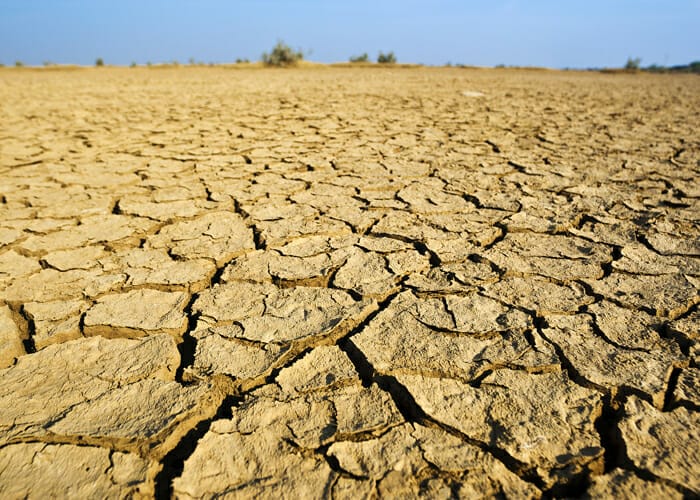
Cracked Ground From The Indian Subcontinent

There has been widespread adoption and more board engagement since the launch of the Task Force on Climate-related Financial Disclosures recommendations in 2017 but more work is needed to get a uniform and comparable approach to climate change disclosure across the investment community.

The $201 billion Ontario Teachers’ Pension Plan said consultants and advisers need to educate themselves on climate change to help the smaller funds integrate the risks into their investment process.

Barbara Zvan, chief risk and strategy officer at OTPP, said the challenge facing the pension industry was no longer about raising awareness but rather how to implement climate change into their organisation. She said it was easier for the bigger plans with more resources to get access to the climate data they need to make investment decisions.

The smaller organisations “can’t always afford to do that,” she said in a telephone interview. “The ecosystems of consultants and advisers need to improve their knowledge on climate change. Bringing groups together will help build the tools needed.”

Canada’s second-largest pension fund was a contributor on a report by the Investor Leadership Network that shows how some of the world’s biggest institutions have implemented the recommendations from the Task Force on Climate-related Financial Disclosures, or TCFD.

It found that while there has been widespread adoption and more board engagement since the recommendations were launched in 2017, more work is needed to get a uniform and comparable approach to climate change disclosure across the investment community.

Sponsored Content

“Traditional risk management is usually a lesson in history, but there is no history in climate change,” said Zvan. “It’s a complicated topic and there are so many scenarios to take into account – that’s the hardest part.”

The report, which coincides with the United Nation’s climate action summit in New York this week, also showed which asset owners were more ahead than others in embedding climate change into their investment process. Canadian funds particularly fared well.

These include Caisse de dépôt et placement du Québec, which has made climate change part of the mandates of board sub-committees, and OTPP, whose investment committee has formalised climate change as part of its mandate for investment strategy and risk. The report also cited CPP Investment Board, which last year set up a formal climate change program that is being overseen by a dedicated steering committee made up of almost half of their senior executive team.

Zvan says by showing how the bigger plans have tackled climate change, it may help drive momentum among the smaller players. She said while a lot of leadership will also come from the private sector in bringing about change, investors played a key role as they were the ones that ultimately own the risk.

“We have to make 4 per cent real every year so we are looking for opportunities to steer the big ship,” she said. “And at the end of the day,  (we) can just pull their capital.”

Leave a Comment

La Caisse’s oil exit pays off as renewables portfolio pulls ahead of fossil fuels

La Caisse’s oil exit pays off as renewables portfolio pulls ahead of fossil fuels

Divesting from the oil sector has been a boon for La Caisse’s performance, as the Canadian pension giant says its energy investments have earned billions in value-add compared to the benchmark since the inception of its climate strategy. Head of sustainability Bertrand Millot unpacks the fund’s approach in an interview with Top1000funds.com.

Sort content by

How large would you like your climate risk to be?

Tim Hodgson, co-founder of the Thinking Ahead Institute at WTW, explores the possible consequences of breaching planetary boundaries and triggering systemic risk.

Dutch, British and Australian funds latest to back timberland

Investors are hunting forestry assets because they combines a large-scale sustainable investment with compelling risk-adjusted, inflation proof returns and diversification. Funds like Nest, APG and AP2 explain their approach.

Highlights from Climate Week 2023: The Burning Man for climate geeks

Biodiversity, transition finance and a sense of urgency around climate mitigation were in focus at Climate Week 2023, dubbed the "Burning Man for Climate Geeks". PSP Investments' Herman Bril and Stella Y. Xu reflect on the highlights from Climate Week which they attended this year. They didn't attend Burning Man.

SDG-aligned private equity proves winning formula at AP1

It's possible for private equity investors to add value by integrating ESG. Swedish buffer fund AP1 is tapping the benefits.

How Swiss PUBLICA integrates climate risk

PUBLICA, one of the largest pension funds in Switzerland, has built a bespoke equity benchmark to reduce climate risk. It's not the consequence of any target to reduce emissions in the portfolio or wider ESG legislation. Senior portfolio manager Frederik von Ameln explains the process behind the strategy.

‘New energy system’, not transition, needed to reach net zero

 More than $4 trillion a year in investment is needed over the next 30 years to meet the goal of net zero by 2050, asset owners have been told. Arun Majumdar, dean of Stanford University’s school of sustainability describes it as the “defining challenge and opportunity of the 21st century”

Previous




