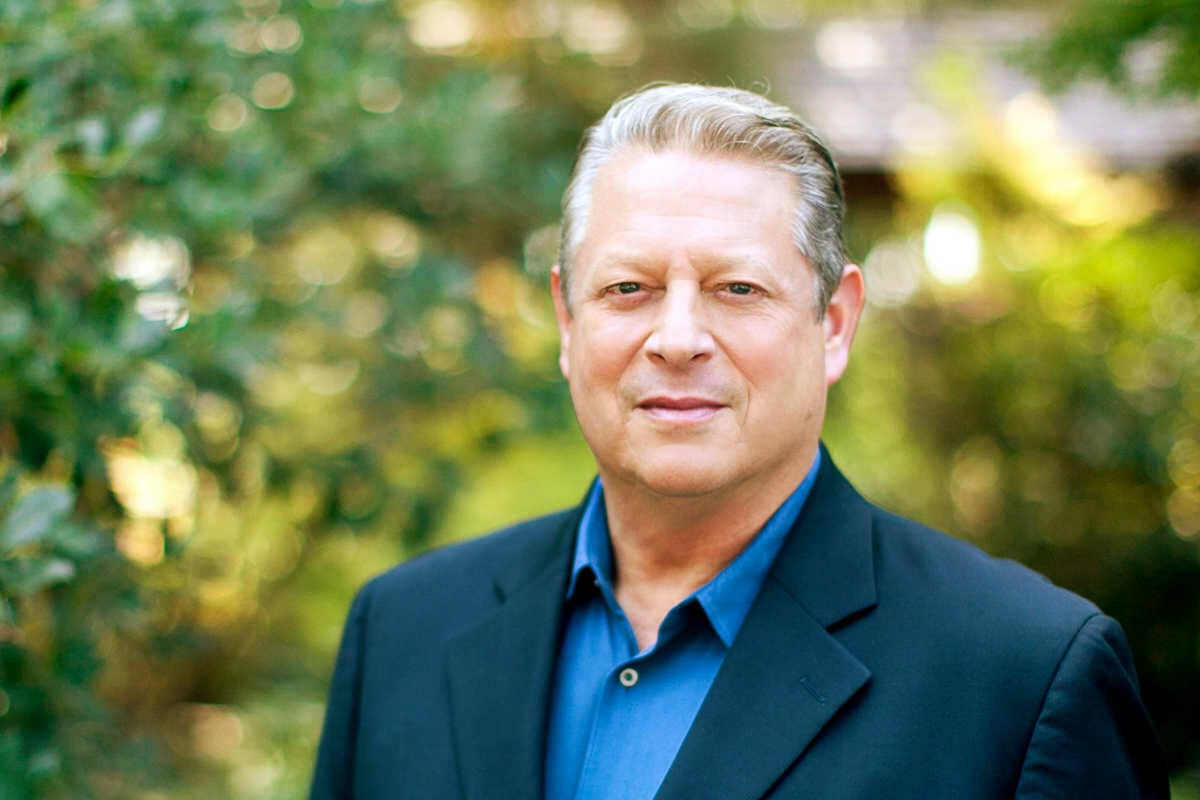

Gore spruiks sustainable investment

Climate change is the number one threat to the global economy but sustainability is the “single largest opportunity in all of history”, former US vice-president Al Gore told delegates at the Milken Institute Global Conference.

“The sustainability revolution is powered by new digital tools,” Gore said. “It has the magnitude of the industrial revolution and the speed of the technology revolution. It’s the single largest opportunity in all of history. The investor community can, and is starting to, play a key role in this.

“We are in a moment of transformation. The global economy is responding to new conditions and the resources we relied on in the past have delivered unanticipated problems. But there are new opportunities in resources. Growth must become sustainable growth.”

Gore called for policy changes to stop subsidising fossil fuels but said institutional investors adopting long-term horizons was the real key to change, as demonstrated by Norges Bank, which has taken a long view on climate.

“The cultural focus on short-term performance distorts the rational allocation of capital,” he said.

Gore told delegates there were still three questions to be answered on the climate: Must we change? Can we change? Will we change?

Sponsored Content

He said that every 24 hours, 100 million tonnes of man-made pollution was released into the air. While oil-production practices such as forest burning, land transport and landfill were all large sources of pollution, the biggest by far, was human reliance on fossil fuels, he said.

“Climate change has been a security issue for the country for some time,” he said. “It is the number one threat to the global economy. So we have to change, but can we?”

He said the US was the only country in the world that persistently denied climate change and pointed out that it cannot legally withdraw from the Paris Agreement until after the 2020 presidential election, alluding to the fact a change in president could alter the country’s stance on the issue.

“In the US, we’ve had 14 1-in-1000 events in the last seven years,” Gore said. “We have to solve this. We have the tools. We don’t have to wait for some research-and-development breakthrough, the answers are here.”

He said a volatile climate also set new conditions for growth and pointed to agriculture and energy as two areas to watch.

“The cost of clean new energy is coming down so dramatically,” he said. “In the US, 62 per cent of new capacity was from solar and wind last year. Chile and India have very large amounts of solar energy under construction and, in the US, solar jobs are growing nine times faster than other jobs.”

The session with Gore was chaired by Jim Yong Kim, president of the World Bank, which has a climate action plan that includes helping countries put a price on carbon, which will create incentives for investments in renewable energy and energy efficiency.

Asset Owner:World Bank

Leave a Comment

La Caisse’s oil exit pays off as renewables portfolio pulls ahead of fossil fuels

La Caisse’s oil exit pays off as renewables portfolio pulls ahead of fossil fuels

Divesting from the oil sector has been a boon for La Caisse’s performance, as the Canadian pension giant says its energy investments have earned billions in value-add compared to the benchmark since the inception of its climate strategy. Head of sustainability Bertrand Millot unpacks the fund’s approach in an interview with Top1000funds.com.

Sort content by

Can we ‘circle’ our way out of this mess?

A circular economy keeps materials circulating in their highest value use. Co-founder of the Thinking Ahead Institute, Tim Hodgson, recently hosted a working group who debated whether it is a necessary – or even possible – component of the climate transition.

LGPS Strathclyde invests more in impact; boasts highest funded level ever

LGPS Strathclyde, the £31 billion ($41 billion) pension fund for public sector employees in the Glasgow area is planning to increase its impact allocation to 7.5 per cent, after also celebrating its highest funded level ever.

Exploring the interconnectedness of biodiversity and climate change

Biodiversity loss is one of the top global risks in terms of its impact and likelihood, yet it is completely overshadowed by climate change and is not well understood. Anastassia Johnson, researcher at the Thinking Ahead Institute, explores the intersection of both issues and what investors should do about them.

USS calls time on emissions reporting

USS has steadily reduced the carbon footprint of its portfolio but real world carbon intensity and global emissions have climbed relentlessly higher. Now the investor says it is going to focus more of its effort on engagement with policymakers than reporting its emissions.

Can artificial intelligence (AI) help stewardship resourcing?

Jessica Gao, associate director of research at the Thinking Ahead Institute, outlines how asset owners can use AI to solve a growing resource gap in stewardship activities.

Piecing together the impact investing puzzle

Ben Thornley, co-founder at Tideline, looks at how value creation practices bring a manager’s impact credentials into sharper focus, the strong positive correlation between impact and financial performance, and the role of allocators in incentivizing and enabling managers to deliver impact value.

Previous




