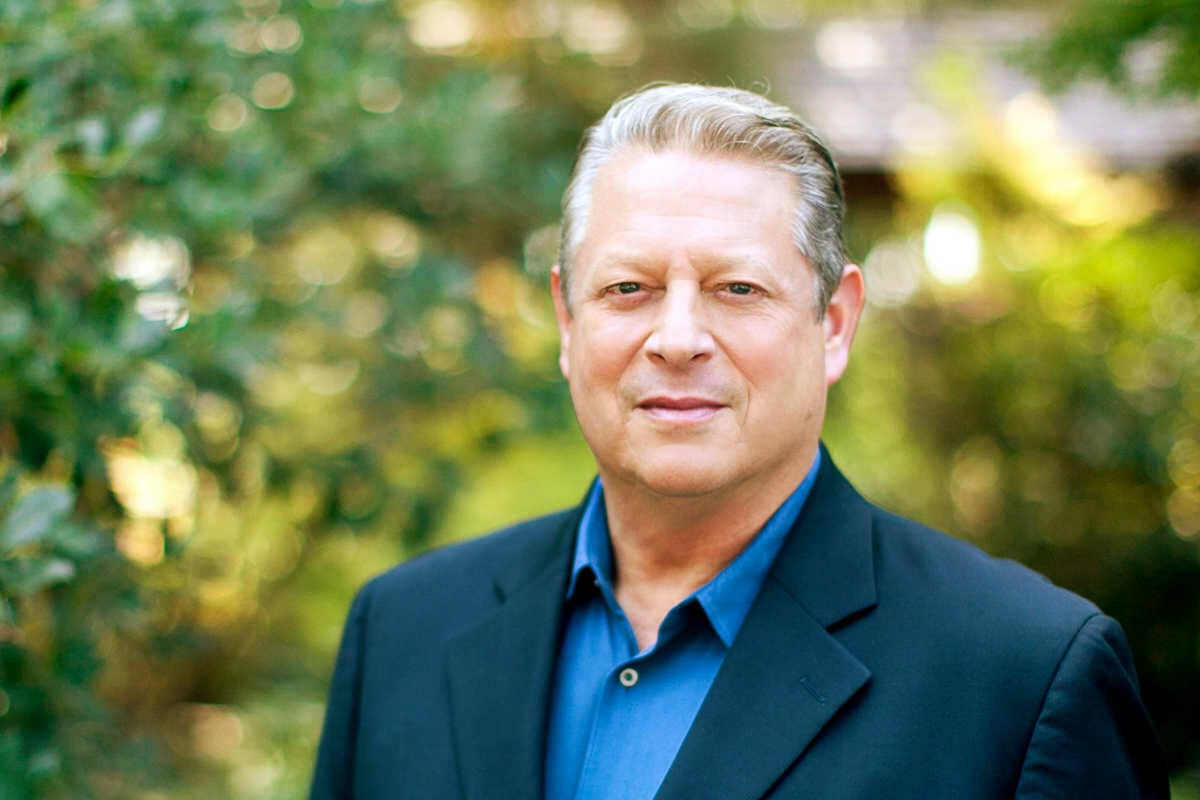

Gore spruiks sustainable investment

Climate change is the number one threat to the global economy but sustainability is the “single largest opportunity in all of history”, former US vice-president Al Gore told delegates at the Milken Institute Global Conference.

“The sustainability revolution is powered by new digital tools,” Gore said. “It has the magnitude of the industrial revolution and the speed of the technology revolution. It’s the single largest opportunity in all of history. The investor community can, and is starting to, play a key role in this.

“We are in a moment of transformation. The global economy is responding to new conditions and the resources we relied on in the past have delivered unanticipated problems. But there are new opportunities in resources. Growth must become sustainable growth.”

Gore called for policy changes to stop subsidising fossil fuels but said institutional investors adopting long-term horizons was the real key to change, as demonstrated by Norges Bank, which has taken a long view on climate.

“The cultural focus on short-term performance distorts the rational allocation of capital,” he said.

Gore told delegates there were still three questions to be answered on the climate: Must we change? Can we change? Will we change?

Sponsored Content

He said that every 24 hours, 100 million tonnes of man-made pollution was released into the air. While oil-production practices such as forest burning, land transport and landfill were all large sources of pollution, the biggest by far, was human reliance on fossil fuels, he said.

“Climate change has been a security issue for the country for some time,” he said. “It is the number one threat to the global economy. So we have to change, but can we?”

He said the US was the only country in the world that persistently denied climate change and pointed out that it cannot legally withdraw from the Paris Agreement until after the 2020 presidential election, alluding to the fact a change in president could alter the country’s stance on the issue.

“In the US, we’ve had 14 1-in-1000 events in the last seven years,” Gore said. “We have to solve this. We have the tools. We don’t have to wait for some research-and-development breakthrough, the answers are here.”

He said a volatile climate also set new conditions for growth and pointed to agriculture and energy as two areas to watch.

“The cost of clean new energy is coming down so dramatically,” he said. “In the US, 62 per cent of new capacity was from solar and wind last year. Chile and India have very large amounts of solar energy under construction and, in the US, solar jobs are growing nine times faster than other jobs.”

The session with Gore was chaired by Jim Yong Kim, president of the World Bank, which has a climate action plan that includes helping countries put a price on carbon, which will create incentives for investments in renewable energy and energy efficiency.

Asset Owner:World Bank

Leave a Comment

La Caisse’s oil exit pays off as renewables portfolio pulls ahead of fossil fuels

La Caisse’s oil exit pays off as renewables portfolio pulls ahead of fossil fuels

Divesting from the oil sector has been a boon for La Caisse’s performance, as the Canadian pension giant says its energy investments have earned billions in value-add compared to the benchmark since the inception of its climate strategy. Head of sustainability Bertrand Millot unpacks the fund’s approach in an interview with Top1000funds.com.

Sort content by

Divestment and impact: Detailhandel pioneers participant engagement

Dutch fund Detailhandel takes participant engagement to a new level as it begins to integrate feedback and preferences from a three day beneficiary forum into investment strategy.

The complexity, limitation, evolution and liberation of climate benchmarks

Benchmarks are highlighted in the recent CFA Institute paper as among the historical norms that make investing in climate challenging. MSCI Institute’s Linda-Eling Lee talks about the complexities and evolution of climate benchmarks including the use of balanced scorecard-toolkits that are improving the technology.

How to nature proof portfolios

Natural capital holds more risk and opportunity than climate change, but where do investors start? Top1000funds.com takes a deep dive exploring the investors that are making inroads to nature-proofing their portfolios.

Why patient capital will be rewarded for investing in timberland

The fundamentals that underpin timberland, and their strategic role on the path to net zero, will reward consistent investment in productive natural capital. Aleksi Ehtee, timberland team lead, Church Commissioners for England explains why forestry is a real opportunity for patient capital to tap into favourable long-term supply-demand dynamics.

CFA’s guide to the whole framework on net-zero

Climate risk has certain features that stretch the imaginations and toolkits of investors, meaning a new framework that includes systems thinking is necessary to branch out from the narrow measurement and management of risk predicated on modern portfolio theory, says Roger Urwin.

Utah’s URS: Why fossil fuels and alt energy hold key to climate crisis

US public funds should stop wasting time on thinly veiled political activism, ditch ESG conferences and repurpose most of their sustainability staff, says URS’ CIO John Skjervem. Instead they should invest in proven energy investments and move from either/or to both/and which allows fossil fuels to jostle alongside alt energy.

Previous




