

The term “ESG” has come under attack recently in various opinion pieces, reaching the spotlight. Elon Musk told his Twitter followers that “ESG is a scam”. A Bloomberg op-ed began with the headline: “America’s Political Right Has a New Enemy No. 1: ESG Investors.”
The anti-ESG narratives go on, politicizing, and frankly sensationalizing, the term “ESG,” framing it as a left-wing agenda misaligned with investors’ best interests.
For Wespath, sustainable investment practices, those that consider the risks and opportunities related to ESG factors, have absolutely no relevance to any political affiliation.
As a faith-based, not-for-profit investor responsible for the financial security of more than 100,000 benefit plan participants and 140 institutional investors, we strongly believe long-term investment success requires a sustainable global economy: one that holistically considers the systemic risks that pose serious threats to world economic development, robust financial markets, and ultimately our investment portfolios.
We focus on integrating sustainable investment through our Sustainable Economy Framework. We recognize that the world is complex and there is no “magic formula” for achieving a sustainable global economy. We accept the validity of some anti-ESG critics who point to oversimplification or overpromising related to ESG. However, we do not believe ESG is a bogeyman, lurking out of sight, waiting in the wings to say “gotcha.” It is a proactive investment strategy where investors seek to understand how sustainable investment issues can positively or negatively affect their portfolios.
Prudent asset owners must understand how public policy may impact specific market sectors, and how political instability in certain areas of the world can affect global economies. We cannot ignore the complexities of myriad environmental, social, and governance issues that, if not adequately addressed, jeopardize the financial security of our stakeholders.
Let’s take a closer look at some recent ESG critiques:
ESG is a partisan wolf in investment clothing.
By focusing on issues that represent unmitigated risks to the global economy and the future solvency of investors’ assets, we can cut out the political noise.
For example, some may perceive certain sustainability actions, such as climate change, as political. We view climate change not as political, but as an incredibly complex issue that the world must proactively address as a danger to sustainable economies and markets. Calling on the EPA to strengthen methane management, which multiple oil and gas majors support, or addressing larger universal topics, such as the Net-Zero Asset Owner Alliance’s call for thoughtful carbon pricing, are two examples. In addition, a call for carbon pricing is echoed by a large bipartisan group of prominent economists.
That said, there are plenty of sustainable investment issues not remotely viewed as political. Community development loans that serve families, seniors, veterans and individuals with special needs and demanding opioid accountability from pharmaceutical firms are issues that we all can support. While skeptics may focus on what they believe are controversial ESG topics, we believe there are many issues where we can find more common agreement.
ESG is anti-fossil fuels
The world’s transition away from fossil fuels is laden with complexities. Fossil fuels will play an important role in fulfilling the world’s energy needs for some time. We know abandoning the fossil fuels sector would cause undue hardship on broader global society, generating negative impacts on workers and communities.
To that end, Wespath does not support wholesale divestment from the fossil fuels sector, but instead we seek to use our influence as a shareholder to enact change within oil and gas companies. Wespath has successfully accomplished this, having engaged several oil and gas giants, most notably Occidental Petroleum.
The company recently stated its intentions to become the first U.S. oil and gas major to achieve net-zero emissions from its operations by 2040 and reach net-zero for all emissions by 2050 including those generated by suppliers and customers.
ESG leads to high fees and underperformance/it is a way for asset managers to increase their fees
ESG should not be an “add-on” expense. Rather it is a comprehensive approach for achieving successful investment performance over the long-term by better understanding the companies and the systemic risks that may affect them. We maintain that the integration of sustainable investment practices should not cost more or lead to underperformance.
Rather, we expect integrating sound sustainable investment practices will add long-term value to investment portfolios. In our experience, it has done just that. Integrating comprehensive sustainable investment practices into investment management is simply prudent investing.
ESG ratings are unreliable
Investors should make their own informed decisions with the external inputs they deem appropriate— ESG scores being one potential source.
This is not dissimilar to brokerage firms’ “buy/hold/sell” ratings for stocks. ESG scores should never be the sole determining factor in an investment decision.
Wespath does not use ESG scores in its sustainable investment strategies, instead choosing to apply our more holistic Sustainable Economy Framework as our core methodology.
“Shareholder capitalism” doesn’t align with the interests of asset owners
While some reject the notion that corporations must manage their businesses in a manner that serves the interests of all related stakeholders, we recognize that the overall health of the economy ultimately drives investment performance.
A narrow view that does not acknowledge the broad impact companies can have on customers, suppliers, and other stakeholders is a hinderance to achieving overall strong economies and resilient markets.
Investors must think globally about how their stewardship resources can strengthen the economy in ways aligned with their broad and long-term economic interests. In our co-authored white paper, “The Future of Investor Engagement,” we have called on other investors to pursue such a holistic and systemic approach.
For Wespath, integrating ESG considerations through our Sustainable Economy Framework is about addressing material systemic risks that threaten a robust and thriving global economy.
We believe every asset owner has a fiduciary obligation to their stakeholders to identify and mitigate these risks. Through action, investors can create and support a sustainable global economy, one that delivers healthier financial markets, more resilient companies and greater financial security for various stakeholders.
Is this “harmful” ESG investing? We think not.
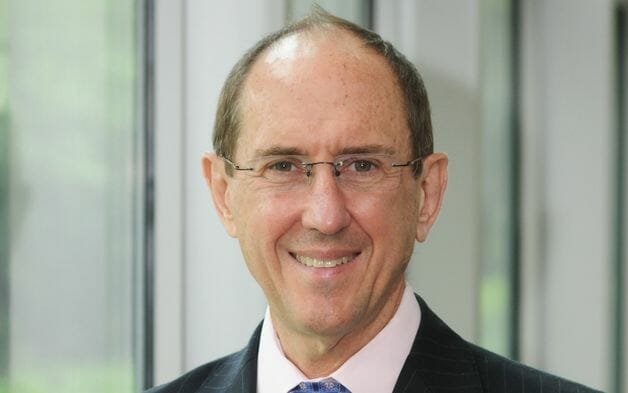
Dave Zellner is chief investment officer of Wespath Benefits and Investments.








Leave a Comment
You must be logged in to post a comment.
Login