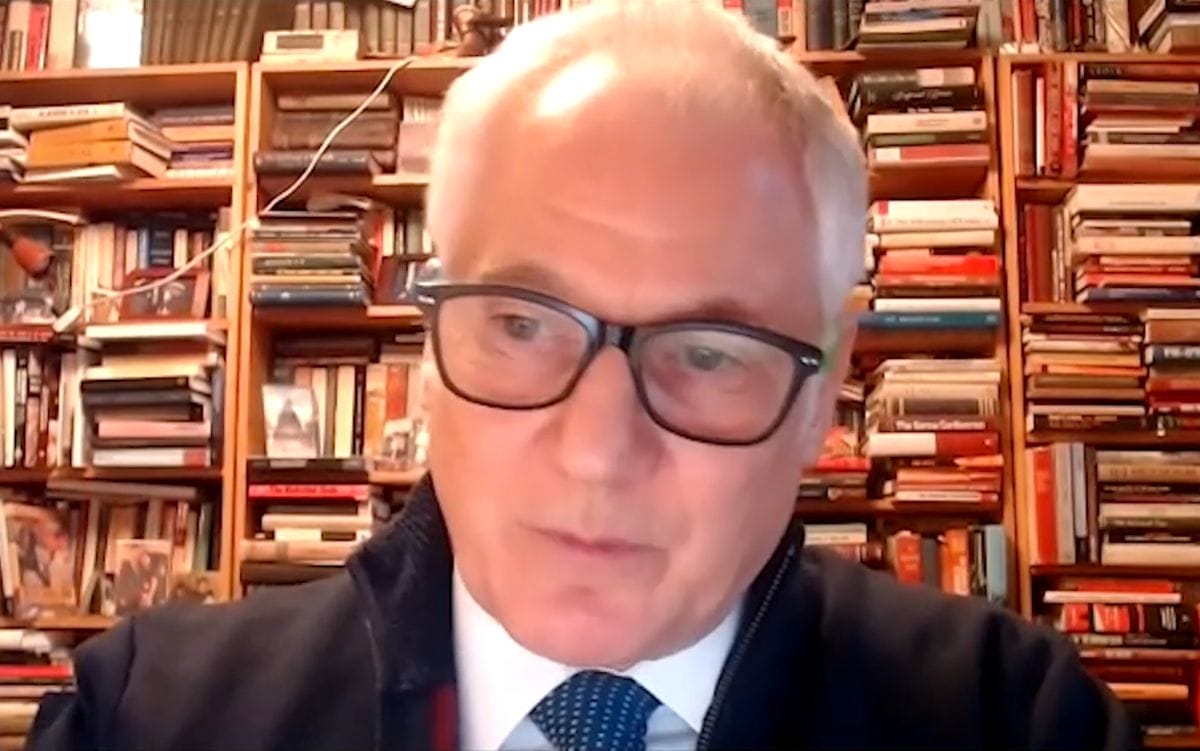

Kotkin warns of Ukraine break up as key geopolitical risk

It is not war between Russia and Ukraine that inve
Continue Reading

A Top1000funds.com subscription unlocks the full article

Join the global institutional investment platform read by the world's largest asset owners, fund managers and consultants.

New here

Create an account

Complimentary to register. We'll verify your details and grant access to the archive, our newsletters and the Asset Owner Directory (enhanced features coming soon).
Register now
Already a member

Sign in

Already activated your account? Sign in to continue reading and access your saved articles, preferences and member-only content.

Leave a Comment

La Caisse’s oil exit pays off as renewables portfolio pulls ahead of fossil fuels

La Caisse’s oil exit pays off as renewables portfolio pulls ahead of fossil fuels

Divesting from the oil sector has been a boon for La Caisse’s performance, as the Canadian pension giant says its energy investments have earned billions in value-add compared to the benchmark since the inception of its climate strategy. Head of sustainability Bertrand Millot unpacks the fund’s approach in an interview with Top1000funds.com.

Sort content by

Asset owners fear rising inflation and falling equity valuations

The 2022 annual CIO Sentiment Survey, a collaboration between Top1000funds.com and CaseyQuirk, finds asset owners most concerned about equity valuations and inflation. After three years of fee rises, asset owners are paying less for investments while CIOs in 2022 are also working with a smaller manager roster.

Beyond traditional portfolio construction: incorporating uncertainty

Incorporating uncertainty into the asset allocation process is a complicated but essential ingredient of building portfolio resilience, something investors are valuing more than ever in an environment where inflation, geopolitical and climate risks dominate. GIC and BlackRock have both developed asset allocation frameworks that incorporate investors’ aversion for uncertainty.

Climate policy key to balancing incoming economic shocks

The methods central banks use to predict inflation are breaking down, and world governments will need to look beyond monetary policy and incorporate fiscal and climate policy levers to balance fragile economies, according to renowned economics professor Warwick McKibbin.

Leverage: Friend or foe?

Against the backdrop of rising rates, market turmoil and pension funds’ ever-growing illiquid allocations, leverage is going to increasingly come under the spotlight. Today’s changing macro picture of increasing interest rates and rising borrowing costs will put pressure on pension funds to ensure financing costs are compensated with expected returns.

Gulf SWFs have most exposure to Russia as crisis grows

Gulf SWFs funds face some of the biggest losses to their investments in Russia, particularly through investing alongside Russia's RDIF, a fund set up to attract foreign capital into the country.

Climate tops risks, complicated by pandemic

Climate action failure tops the World Economic Forum’s Global Risks Report 2022 as the number one long-term threat to the world. The pandemic has added further complication with the resulting divergent economic recovery threatening the collaboration needed on climate and other global challenges.

Previous




