
The macro-economic outlook: ESG needed to navigate uncertainty

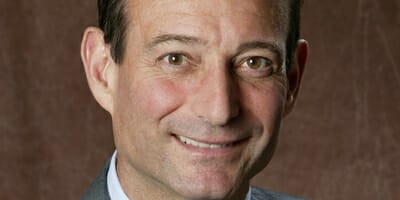
“It is in our interests to analyse ESG risk,” argued Douglas Hodge, chief executive of PIMCO in his opening address at PRI in Person, the UN-supported international network of investors working to put the six Principles for Responsible Investment into practice.

Hodge set the scene for the three day conference, where delegates gathered at the biggest PRI event to date, with a medium-term economic forecast that puts ESG principles at the forefront of investment decisions.

Hodge said in the past investors viewed ESG “as unconnected to fiduciary duty” or “a type of investing reserved for the do-gooders” and “investors prepared to compromise.” In today’s changed world PIMCO has embraced ESG investment as intrinsic to its strategy.

“ESG risks are real. They can cause real losses for companies and capital. ESG makes good business sense,” he said.

Hodge described the current investment landscape as “low and flat,” in a nod to low interest rate and flat yield curves.

A new post crisis world is also characterised by heightened volatility, “a tsunami or regulation,” and little chance of a return to pre-crisis growth.

Sponsored Content

He said developed countries are now confronted by the so-called “3Ds” of debt, deficit and demographic challenges.

“The stock of debt limits extension of credit and ageing populations make creating organic growth very difficult.”

However he adds that banks’ reduced appetite to lend has triggered new sources of funding.

“Historically banks provided most debt finance. Now there is an increasing array of non-bank actors providing funding to the corporate sector.”

Emerging economies aren’t faring any better, with the growth curves in the key emerging economies of Brazil, China and Russia also flat. Although much of the world’s wealth creation has come from emerging markets, “emerging economies are not always stable and remain prone to internal and external disruption factors,” he warns.

With “meagre” investor returns in bonds and equities and a world faced with “more disruption” and “rising demand for natural resources” he urges investors to embed long-term ESG analysis in their decision making.

“ESG investing makes sense.”

It will also be driven by the rising influence of the next generation, he predicts. The millennials have different priorities that pay greater attention to sustainability than their parent’s generation.

“This new generation will want to invest according to their values and beliefs,” he predicts.


Leave a Comment

Slavery victims look to financial world

Slavery victims look to financial world

Speaking at the PRI in Person in Paris in a panel to highlight the role of finance in addressing social issues, Ghanaian James Kofi Annan, sold into slavery at the age of six, told his story.

Sort content by

Board, ESG staff need good harmony

When fund trustees and internal environmental, social and governance staff have an open, collaborative relationship, information flows more efficiently and difficult issues can be addressed.

Sustainable development on to-do list

The largest fund in the US, the California Public Employees’ Retirement System, the largest fund in Europe, ABP, and a fast-growing Australian fund, Cbus Super, have all adopted the SDGs.

Europe in quest for sustainability

There is momentum on the continent towards a sustainable financial system but a short-term economy persists. Stakeholders think the classic metrics of success may need to change.

Asset owners embrace ESG

Leading asset owners have integrated ESG into their investment policies and processes in order to harness the opportunities of global systemic drivers, a panel of investors told PRI in Person.

Fund managers make mock pitches

Three managers presented their wares in mock mandate pitches at the PRI in Person, meant to show how leading asset owners assess their managers’ investment practices and integration of ESG.

Guide to persuading trustees to join the ESG journey: CalSTRS and BT Pension Fund explain all

For many asset owners, persuading their trustees to adopt an ESG strategy can be a challenge. The ESG strategy of one of the UK’s biggest pension funds, the $65 billion BT Pension Scheme, became more serious with the realisation that the scheme’s sponsors and beneficiaries were more interested in the area, said Daniel Ingram, head of