
Stephen Kotkin on regional conflicts, and the one war investors can’t price

The Trump administration’s strikes on Iran stem from a deep conflict between the two nations which has existed for the past 47 years, according to Professor Stephen Kotkin, senior fellow at the Hoover Institution at Stanford University.

In a conversation with Conexus Financial founder and managing director Colin Tate, the celebrated geopolitical academic argues that while the Iranian regime is “hollow, illegitimate, lawless” and “hated by its own people”, military action alone cannot produce regime change without a credible alternative for regime loyalists to defect to. Until that alternative exists, he says, the violence will continue regardless of how many missile launchers are destroyed.
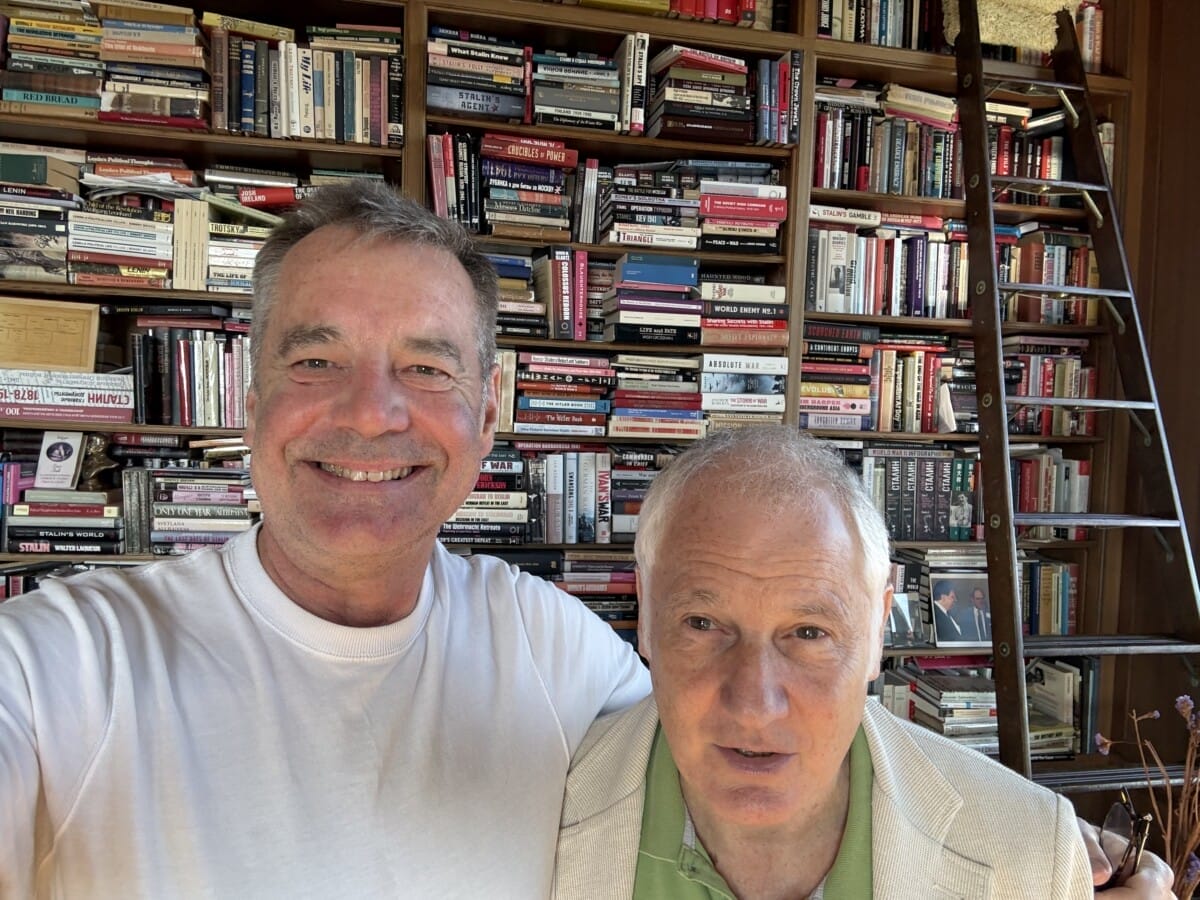
Tate and Kotkin at Stanford University, March 2026

On the question of whether there will be a wider conflagration, namely the potential for a global war, Kotkin is precise: a world war requires China and the United States to enter into direct conflict as belligerents, which remains the only geopolitical risk institutional investors cannot price.

Every other regional war – Iran, Ukraine, the Sahel, Haiti – is painful and costly, but manageable for markets. A US-China war is not.

“That’s the thing we have to avoid with better statesmanship and management as we hope to wind down the violence that’s short of a World War.”

The conversation also covers the growing vulnerability of critical infrastructure to AI-enhanced cyber attack, why the Greenland issue is less a territorial threat than a social media provocation, and how China and Russia have left Iran to fight alone.

Sponsored Content

Fiduciary Investors Symposiums 2026:

Leave a Comment

Why Asian equities’ growth will outlast the AI-driven semiconductor cycle

Why Asian equities’ growth will outlast the AI-driven semiconductor cycle

In the latest episode of the Fiduciary Investors Series, Liao spoke with Top1000funds.com Asia Pacific correspondent Darcy Song on why the convergence of innovation, demographics and improving shareholder returns makes Asian equities an increasingly compelling diversification trade for asset owners navigating a geopolitically fractured world.

Sort content by

CalPERS’ Stephen Gilmore on the total portfolio approach

Listen to the detailed interview between Top1000funds.com editor Amanda White and CalPERS' CIO Stephen Gilmore to gain insights into how a TPA mindset has the potential, through a shared focus on the total portfolio, to add value, simplify accountability and open new opportunities for investments.

The world in flux and Trump’s role in a new equilibrium

The second Trump administration has so far brought a lot of things: market shocks, volatile trade policies, and turbulent foreign relationships. But beyond the chaos, renowned geopolitics expert Stephen Kotkin says Trump has an unwitting role to help the world rebalance and reach a “new equilibrium” in the global order.

Why Asia is the future

In the midst of the great power rivalry between the US and China, “we need to carve out a future that works well for all of us” says National University of Singapore’s Danny Quah, in a talk examining the global economy and the role of Asia. Listen here.

Reversal of investment themes demands investors change their assumptions

Investors are currently facing the end of uncertainty around assumptions they have made for decades, and need to shore up their portfolios with greater inflation protection, more active management, and by fostering innovation, according to chief strategist at the Investment Management Corporation of Ontario, Nick Chamie who spoke to Amanda White in the Fiduciary Investors Series

Mandates need innovating to encompass sustainable investing

As carbon emissions continue to rise investors need to innovate on the nature of investment mandates says Colin le Duc, a founding partner of Generation Investment Management. He says real world impact is going in the wrong direction, even though sustainable investing is booming, and the credibility of transition plans is under scrutiny.   What

Energy markets post-COVID, amid a conflict and in a decarbonising world

Tom Nelson, head of thematic equity at Ninety One, talks to Conexus Financial managing editor Julia Newbould about the extent of the shock to energy markets through the Ukraine War and how it will impact the transition to clean energy and how portfolio managers can invest in renewables and achieve carbon zero targets in this