
Stephen Kotkin on regional conflicts, and the one war investors can’t price

The Trump administration’s strikes on Iran stem from a deep conflict between the two nations which has existed for the past 47 years, according to Professor Stephen Kotkin, senior fellow at the Hoover Institution at Stanford University.

In a conversation with Conexus Financial founder and managing director Colin Tate, the celebrated geopolitical academic argues that while the Iranian regime is “hollow, illegitimate, lawless” and “hated by its own people”, military action alone cannot produce regime change without a credible alternative for regime loyalists to defect to. Until that alternative exists, he says, the violence will continue regardless of how many missile launchers are destroyed.
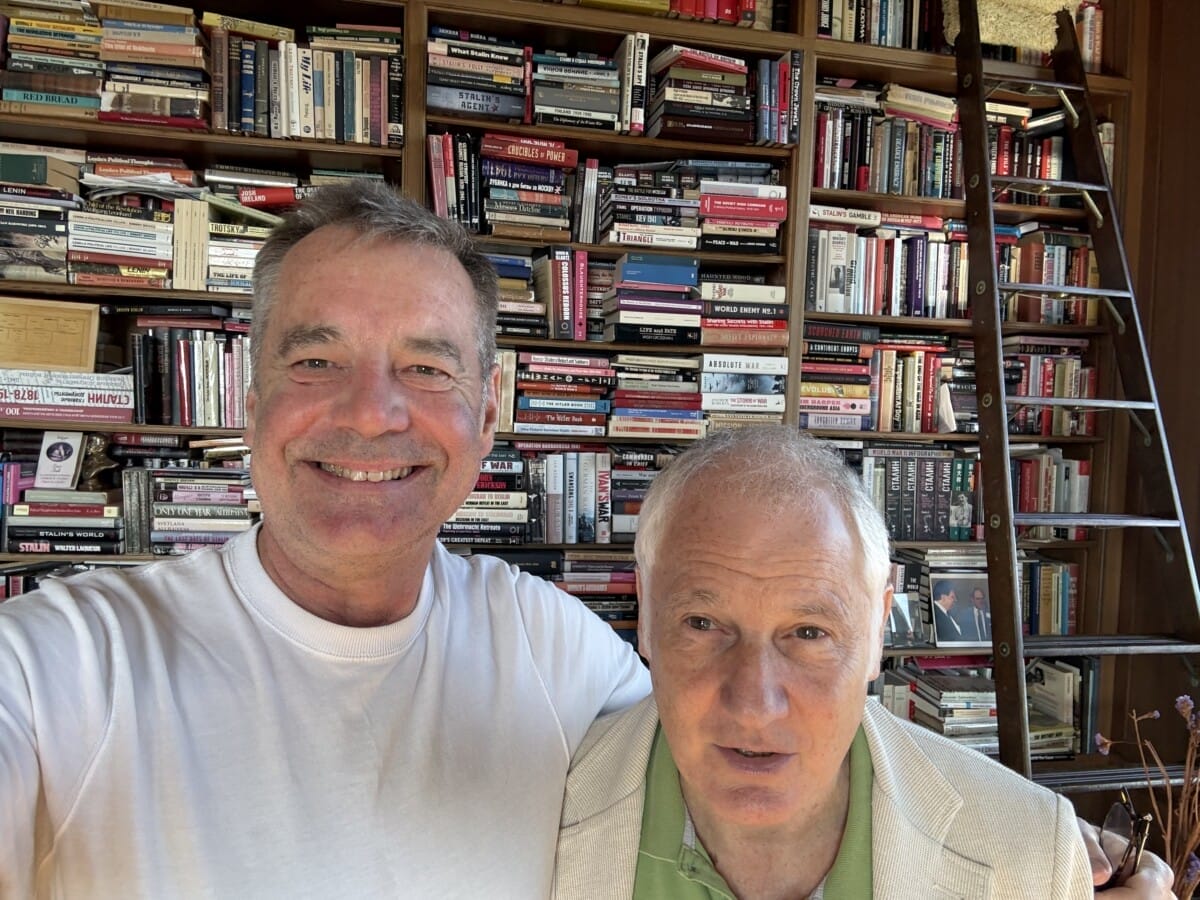
Tate and Kotkin at Stanford University, March 2026

On the question of whether there will be a wider conflagration, namely the potential for a global war, Kotkin is precise: a world war requires China and the United States to enter into direct conflict as belligerents, which remains the only geopolitical risk institutional investors cannot price.

Every other regional war – Iran, Ukraine, the Sahel, Haiti – is painful and costly, but manageable for markets. A US-China war is not.

“That’s the thing we have to avoid with better statesmanship and management as we hope to wind down the violence that’s short of a World War.”

The conversation also covers the growing vulnerability of critical infrastructure to AI-enhanced cyber attack, why the Greenland issue is less a territorial threat than a social media provocation, and how China and Russia have left Iran to fight alone.

Sponsored Content

Fiduciary Investors Symposiums 2026:

Leave a Comment

Why Asian equities’ growth will outlast the AI-driven semiconductor cycle

Why Asian equities’ growth will outlast the AI-driven semiconductor cycle

In the latest episode of the Fiduciary Investors Series, Liao spoke with Top1000funds.com Asia Pacific correspondent Darcy Song on why the convergence of innovation, demographics and improving shareholder returns makes Asian equities an increasingly compelling diversification trade for asset owners navigating a geopolitically fractured world.

Sort content by

Liability driven investing 2.0: How HOOPP is evolving its investment strategy

In this Fiduciary Investors Series podcast, Amanda White talks to Jeff Wendling, chief executive of HOOPP – the C$94 billion Healthcare of Ontario Pension Plan. In 2007, HOOPP moved to a liability driven investing approach, which included a large allocation to bonds and internal management. In a very different interest rate environment it is now exploring if that is still a relevant approach.

Can America be great again?

With only a few days before the US election Amanda White speaks with Stephen Kotkin, the John P Birkelund Professor in History and International Affairs at Princeton University, about what it would take to actually make America great again.

Improving alternative investment industry practices: John Claisse

In this Fiduciary Investors Series podcast, Amanda White speaks with John Claisse, the chief executive of Albourne Partners. Albourne, which is a leading consultant focused on alternative investments, has been advocating for better practice within the alt

Andrew Parry on staying relevant in a changing world

In this Fiduciary Investors Series podcast, Amanda White talks to Andrew Parry, head of sustainable investment at Newton Investment Management about the complexity of sustainable investment, and the role of the finance industry in guiding investors to cho

Florida’s Ash Williams on opportunities in a crisis

In this Fiduciary Investors Series podcast Amanda White talks to Ash Williams, the executive director and chief investment officer of the Florida State Board of Administration about managing a large institutional portfolio in a time of crisis. Drawing

Railpen’s new investment chief on transformation, governance and culture

Michelle Ostermann, managing director of investments at Railpen which manages £30 billion in assets for the Railways Pension Schemes in the UK, discusses the pension fund's continued evolution.