UTIMCO aims for ‘total alignment’

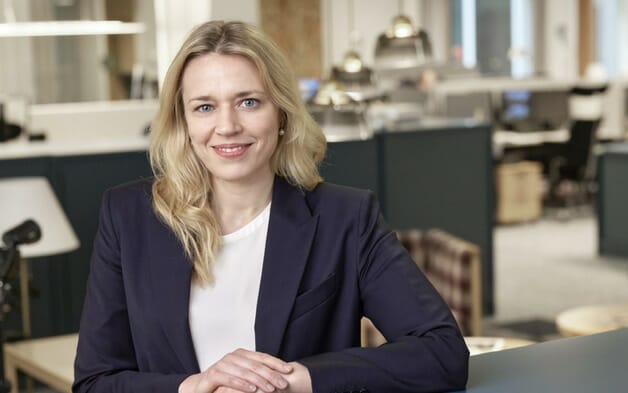
Britt Harris defines strategy for the year ahead at the University of Texas Investment Management Co in two words. “Total alignment” is the new mantra that will govern the $41 billion university endowment’s own internal structures, and its relationships with investment partners and external beneficiaries.

Built on the analogy of a ship set on course with all oars rowing in sync, total alignment describes Harris’s first major overhaul at the fund he joined last June as chief investment officer and chief executive. It reflects Harris’s renowned expertise in team building, developing talent and nurturing partnerships during a career that includes 10 years leading the $140 billion Teacher Retirement System of Texas (TRS) and a stint as chief executive at hedge fund giant Bridgewater Associates.

“This is a strong foundation for UTIMCO going forward that can last for years to come,” he said when presenting the total alignment strategy to the UTIMCO board.

The strategy represents a refreshed mission and more aspirational vision for the endowment, which was founded in 1996. Although UTIMCO has long had a profound mission statement, Harris says few people can remember it. Now, a raft of new and pithy acronyms sum up UTIMCO’s goals of fostering education, research and advancements in society and healthcare.

It is these goals that will inform a culture of higher purpose designed to play a key role in attracting and retaining talent. The fund has lost 37 people in the last three years, and Harris is determined to see the endowment recruit and hang on to top talent going forward.

“One of the great things that we have here is a more easily articulated higher purpose than most organisations that manage money,” he explains. “If you want to make a difference in the world with your skill set, this is where you want to be.”

Sponsored Content

Harris draws on his own managerial expertise to articulate the type of culture he wants to imbue. He counsels colleagues in preparation, being early rather than on time, coming to work with their “headlights on”, and adopting curiosity over defensiveness. And although he has only just taken the reins, he is also determined to have UTIMCO develop a succession plan, so a senior team that reflects the values of the fund will be ready and able to take the helm.

“Every great organisation has a succession plan,” he says. “One of the reasons I could leave where I was without disruption was because we had done a good job preparing for succession.”

In sync on the inside

Successful investment organisations are also built on strong internal teams that all work in sync, and here is where Harris has spotted another gap in UTIMCO’s armour.

“We have a lot of really talented people who are highly motivated, superstars in their own right,” he says. “But the teams themselves are still relatively young. One of our challenges is how we mature these teams.”

To help, he has brought in expertise from the outside. New recruits include deputy chief investment officer Rich Hall, previously head of private equity at Harvard Management Co., and managing director Scott Slayton, who joins UTIMCO from Jamison Capital Partners.

Harris is also targeting reform of the endowment’s internal processes to build teams from the inside. He wants UTIMCO’s 94 staff to get to know one another better; he’s just ordered ping-pong and pool tables to encourage people out from behind their desks and into communal areas at the fund’s Austin, Texas headquarters. He says strategy will concentrate on putting people in positions that play to their natural skills and innate qualities, where they can excel via “natural ability” rather than “brute force”. He also calls for management to think “not about what is best for my unit, or best for me, but what is best for the fund”.

Collaborative partnerships

Total alignment also applies to UTIMCO’s external relationships. In another shakeup that bears the hallmarks of Harris’s strategy at TRS, he aims to transform UTIMCO’s relationships with managers from adversarial clashes into strong, collaborative partnerships based on sustainable fee structures and status for UTIMCO as a preferred client at the front of the queue for the best deals. Harris proved his ability to change the dynamics between asset owners and managers when TRS remoulded its relationships with hedge fund managers using a new 1-and-30 fee model. He took the new deal to 23 of the fund’s managers and 18 accepted it.

The fund will be reviewing the compensation of all managers that have underperformed and for which UTIMCO is paying more than 50 basis points.

“They are not all going to be fired; they are going to be reviewed,” Harris says.

He also wants to create a premier list of about 30 top managers across asset classes that can be drawn upon as and when needed. This way, the fund will no longer be looking for managers all the time.

He also wants to build more strategic partnerships in the public and private markets.

“I’ve done this in the past and it produces outsized returns on an absolute and risk-adjusted basis,” he says, adding that co-investment and strategic partnerships are also important conduits for bringing new information into the fund.

“It’s not going to happen in a day or two or a month or two, but it is already [starting],” he says. “We will be well served by this framework. Total alignment is our first priority.”

Leave a Comment

AP4: Why a dynamic, shorter term allocation is paying off

AP4: Why a dynamic, shorter term allocation is paying off

Volatile markets have provided a rich hunting ground and opportunistic best ideas have come thick and fast for AP4’s new five-pronged global allocation made up of systematic equity, currency and rates, asset allocation, hedge funds/external mandates and analysis. Magdalena Högberg explains the risks and opportunities of the best ideas allocation.

Sort content by

Cbus Super delivers lower fees, higher returns

The past year has seen Cbus Super bolster its team and systems - adding to its internalisation of investments - continue down the journey of fee reduction and deliver the best return of the fund’s 37-year history. Amanda White spoke to CIO, Kristian Fok.

Aware Super positions for growth

Aware Super, one of Australia's largest superannuation funds, engaged McKinsey as part of the development of its next five-year strategy which the fund presented to the board in March. As it develops its next five-year plan a key initiative is how to deal with growth as it plans for an organisation that could double in size.

Harvard endowment goes net zero by 2050

The Harvard endowment is about half way through its transition to external investment management and will work with its service providers to implement the university’s new directive, to position the portfolio in line with net-zero greenhouse gas emissions by 2050.

Wisconsin leans into opportunities

In the space of three months the State of Wisconsin Investment Board has moved its portfolio from “defensive” to “offensive” as it “leans into the opportunities” presented by the coronavirus crisis. CIO and executive director David Villa, and deputy, Rochelle Klaskin spoke to Amanda White about the portfolio and how the large internal team is managing remotely.

The bright and dark sides of PE

Analysis of institutional investor private equity allocations shows the differences in implementation styles and related costs are a key driver of a wide dispersion in private equity results. Researchers at CEM Benchmarking show that costs matter, a lot, in PE.

ADIA boosts internal active fixed income

The $700 billion Abu Dhabi Investment Authority, ADIA, is boosting its internal fixed income capabilities and scaling up capacity to run active strategies in-house as it simplifies the portfolio to become more fleet-of-foot.

Previous