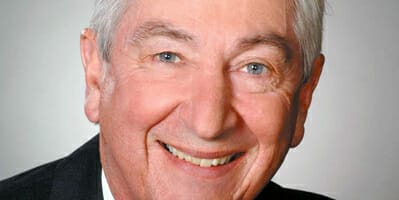

Invert the business model to focus on members: Ambachtsheer

There is a lot more work to do in raising the quality of governance of pension boards around the world, Keith Ambachtsheer told a conference of Australian superannuation fund trustees and staff last week.

“We have to stop thinking about organisational needs and think about member needs. The business model must invert from serving organisational needs to serving member needs. That is the mission of the business and you should not forget it. It is not about achieving market share, it is not about having the highest returns in the league tables,” he told delegates at the Australian Superannuation Fund Association conference in Melbourne.

“To do that requires strong governance. A good board is able to ask the right strategic questions. They have to ask what they are doing to reach their goals.”

Ambachtsheer, who is president and founder of KPA Advisory Services and director emeritus of the Rotman International Centre for Pension Management,  says an effective board requires people who are both publicly minded and have the collective requisite skill and experience to do the job.

Ambachtsheer cited a periodic survey of 80 pension fund organisations which were asked to rank themselves by 23 different metrics in 1997, 2005 and 2014. In all three surveys board selection process ranked low, he said.

“Some of the comments received from funds who answered the survey were that ‘The board selection process for our organisation is seriously flawed’, and ‘we have a wonderfully dedicated board, but they fly just above the tree tops rather than at a strategic fiduciary altitude’.

Sponsored Content

“Clearly the message is that we are not done yet in raising the quality of governance of pension boards around the world. There is more work to be done,” Ambachtsheer said.

Ambachthseer reiterated that the more funds know about their members the better they can meet their needs.

“Funds should build a database on member facts and attitudes. They should provide members with pension targets and investment plans on how to get there and then provide regular progress reports towards targets, and they need to develop longevity insurance options for the decumulation phase. All this will create a strong connection between an organisation and its membership,” he said.

“If we have certain goals to achieve for our members through income replacement or the ability to maintain their standard of living, that should become a central focus for organisational success. You also need to think about the investment and members services’ program. Are we giving value for money? We need more feedback loops,” he said.


Ambachtsheer began his presentation quoting from Peter Drucker’s 1976 book “The Unseen Revolution”, whereby Drucker listed six metrics, which Ambachtsheer believes are still relevant to be a good performing fund today:

1 Mission clarity

2 strong governance

3 strong member interface and interaction with the members

4 sensible investment beliefs

5 competitive compensation for its own professionals

6 strong feedback loops.

“I believe those are the key performance metrics, the six key success metrics. We are getting better over time, but we have got a long way to go,” he said.

In terms of sensible investment beliefs, Ambachtsheer gave delegates a guide or starting set of beliefs:

  • We articulate a clear investment stance and live it
  • We have separate programs for long term wealth creation and providing short term payment safety
  • Our long term wealth creation program invests in real businesses
  • Our primary asset is human capital
  • We balance conviction and humility.

Ambachtsheer estimates, very roughly, that there is probably 75 basis points of savings if funds followed this five points.

The barriers to success, he says, include sensitivity to short term peer relative performance, an inability to insource high cost investment programs, and an inability to create success metrics for long term wealth creation programs.

“There needs to be a set of metrics where the board can say how the long term investment program is doing,” he said.


Leave a Comment

NY Common joins allocator push on company AI transparency

NY Common joins allocator push on company AI transparency

The $273 billion New York State Common has upped the pressure on portfolio companies to report on how artificial intelligence usage is contributing to layoffs, as AI governance becomes a growing focus in the proxy voting and engagement activities of asset owners.

Sort content by

The collective brain

The Future Fund knows exactly where its leadership team’s cognitive strengths, and weaknesses, lie. Does your fund?

The importance of investment beliefs

It’s often said that investment beliefs provide the solid frame on which investment strategy can hang. Some of these Magna Carta’s are beguilingly simple, like ‘Costs Matter’. Others may enshrine beliefs like ‘A Long Term Investors Has Opportunities and Responsibilities.’ So, it was with keen interest that delegates at PRI in Person 2015, the annual

Railpen, the open DB fund with locomotion

Despite the constant pull on Railpen chief executive Chris Hitchen’s expertise in other directions, most recently helping to run NEST, the UK government’s new low-cost pension scheme, he is resolute that his primary task is ensuring Railpen, inhouse manager of the £19-billion ($30.4 billion) pension scheme for Britain’s rail industry, successfully delivers on its monthly

USS powers into diversity

In the past few years the £34-billion ($54.7 billion) Universities Superannuation Scheme (USS) has substantially diversified its asset allocation, including a large alternatives allocation, and extended its investment team from 65 to 105. In the latest chapter of the fund’s investment department reincarnation, from October this year a separate but fully owned USS company, USS

Overseeing complexity with Rotman-ICPM

A week-long Board Effectiveness Program with peers from around the globe, including those from Canada’s HOOPP and Denmark’s ATP, has given AIMCo board member, Andrea Rosen, a new perspective on best practice. In a business environment where most people are working harder, multi-skilling, facing lower-than-necessary resourcing, staffing and margins, a week-long course could be viewed

Gunning for diversity, dynamism and due diligence

The new low-return, high-volatility environment requires broadly diversified portfolios, dynamic decision-making and rigorous due diligence, which is beyond the internal capacity of most small funds under $10 billion, warns Russell Investment’s global chief investment officer Peter Gunning. He says smaller funds must decide if it is cost effective and even possible to internally manage investment

Previous



