

Long-term plans, presented by chief executives, are becoming a valuable tool for corporations in communicating with their long-term investors. Such investors are underserved by earnings calls and have an unmet need for information directly from investee companies on their long-term plans.
So far, 19 companies, representing more than $1 trillion in market capitalisation, have presented long-term plans at CEO-Investor Forums convened by CECP’s Strategic Investor Initiative (SII). Participants have included Aetna, Delphi, IBM, Johnson & Johnson, Medtronic, Merck, Prudential, Telia, Unilever and UPS.
The chief executives and their teams preparing these long-term plans seek guidance from SII regarding the appropriate components. This is understandable, as a long-term plan will not look like an earnings call and there are no existing venues that are fit for this long-term purpose, including a corporation’s annual general meeting.
As the chief executives we speak to often ask, what do investors want to know?
Investors’ guidance to chief executives
To this end, SII, led by co-chair Bill McNabb and the investor members of our advisory board, has developed a guidance letter to chief executives that sets out key elements of a long-term plan, including identifying megatrends, risk factors, capital allocation, material sustainability factors, and governance issues for at least five years forward. In feedback, investors have made clear that the long-term should be described in terms of goals, metrics, and milestones, to enable a deeper understanding of the strategy and to track progress as it is implemented.
This letter seeks to help companies meet BlackRock’s Larry Fink’s repeated request that corporations share their “strategic frameworks for sustainable value creation”. Communicating a long-term value story is something that, in the words of Financial Times editor Gillian Tett, chief executives ignore at their peril.
Corporations do have room for innovation in the topics they choose to disclose in their long-term plans, and our guidance letter seeks to give chief executives the flexibility to tell their long-term value story in a way that’s authentic and appropriate for their business and sector. As a result, it is important that each CEO-Investor Forum is a learning moment. We identify here the key themes addressed in presentations so far.
Emerging themes in company presentations
- Talking about transitions: disruption, opportunity and capital allocation
Talking long-term – a horizon of at least five years forward – means talking about megatrends and their implications for business strategy. The long-term trends chief executives have identified in their presentations to date represent a formidable set of financial, operational, governance and policy challenges. These involve: the effects of climate change and the related transition to a low-carbon economy; technology disrupting and democratising product markets (as described by UPS’s David Abney); and technology amplifying corporate risk from cyber-security to reputational concerns (as described by Delphi chairman Raj Gupta).
Urban transit megatrends were the focus of the presentation by Delphi chief executive Kevin Clark. These have required Delphi to respond to trends across dimensions, including in-car driver technology, the transition from petrol to electric drivetrains, and the emergence of autonomous vehicles. Addressing such trends required extensive commentary on Delphi’s capital allocation priorities for implementing its strategy.
Shareholder engagement and the role of the board
For many presenting chief executives, institutional investors’ increasing scale and rising levels of year-round engagement are making it necessary for corporations to develop frameworks for effective interaction with shareholders.
Prudential’s presentation, by chair Marc Grier, outlined a set of corporate governance practices it has adopted, including designating its lead independent director as the primary point of engagement with shareholders. Prudential has also sought to describe its approach to shareholder engagement, quantify such engagement, and account for its outcomes in expanded proxy statement disclosures.
Chief executives have demonstrated a growing awareness of the diverse constituency of investors that own their stock and their varying time horizons and outlooks. Paul Polman was clear that he had set out to “choose his shareholders” by establishing Unilever’s sustainable living plan and ending practices such as delivering quarterly earnings guidance.
Chief executives also highlighted board composition as a focus, particularly in terms of diversity and gender parity (as highlighted by Voya chief executive Rodney Martin). Both Merck’s Ken Frazier and Medtronic’s Omar Ishrak looked to dive deeper into the thinking about the composition of their board, its compensation, and how those tie into future strategy and business needs.
Human capital: productivity through stakeholder investments
Human capital is a top priority for investors, especially in terms of improved corporate disclosure of metrics. Presenting chief executives consistently identified employees as “mission-critical” stakeholders and highlighted different approaches to improving employee health and productivity, fitting into a broader narrative about developing corporate cultures of health and purpose. Aetna chief executive Mark Bertolini had overseen a raising of the wage floor and the leveraging of Aetna’s own healthcare programs to boost the wellbeing of employees and their families. Alex Gorsky, of Johnson & Johnson, described how the company’s foundational credo was implemented, measured, and converted into learning moments for management across the organisation.
Stakeholder investment has been deemed key to long-term value across the presenting companies. However, chief executives have described different frameworks (at different levels of the organisation) for thinking through stakeholder relationships in the context of long-term strategy. For instance, Telia chief executive Johan Dennelind explained how the board had adopted a statement of significant audiences and materiality, in which it reflected on its key stakeholders essential to enabling a sustainable business model over the long term. In the same vein, Merck’s Frazier discussed its materiality matrix, for prioritising its stakeholder relationships in a way that reflects its operating model. It is clear that preparing long-term plans can enable operational enhancements within corporations, as teams collaborate across functions and develop new data for disclosure.
What’s next?
Investors representing more than $25 trillion in assets under management have provided extensive feedback on the presentations of long-term plans so far, which we will fold into the briefings we provide to presenting companies. Investors want to see a longer time horizon addressed, supported by more specific goals, metrics and milestones. They also seek a more detailed understanding of corporate governance arrangements, in terms of board composition, diversity and their alignment to strategy. This requires supporting commentary on how incentive structures align with long-term strategy. Further, investors have identified priority themes on which they require enhanced disclosures – from human capital to climate change.
Our forums seek to enable long-term plans to become a mainstream fixture in corporate-shareholder communications. If broadly adopted, these plans can help reorient the focus of our capital markets towards the long term, benefitting both investors and corporations. At our CEO-Investor Forum in San Francisco on April 19, 2018, long-term plans will be presented by the chief executives of Wells Fargo and PG&E (following PG&E’s presentation from February last year).
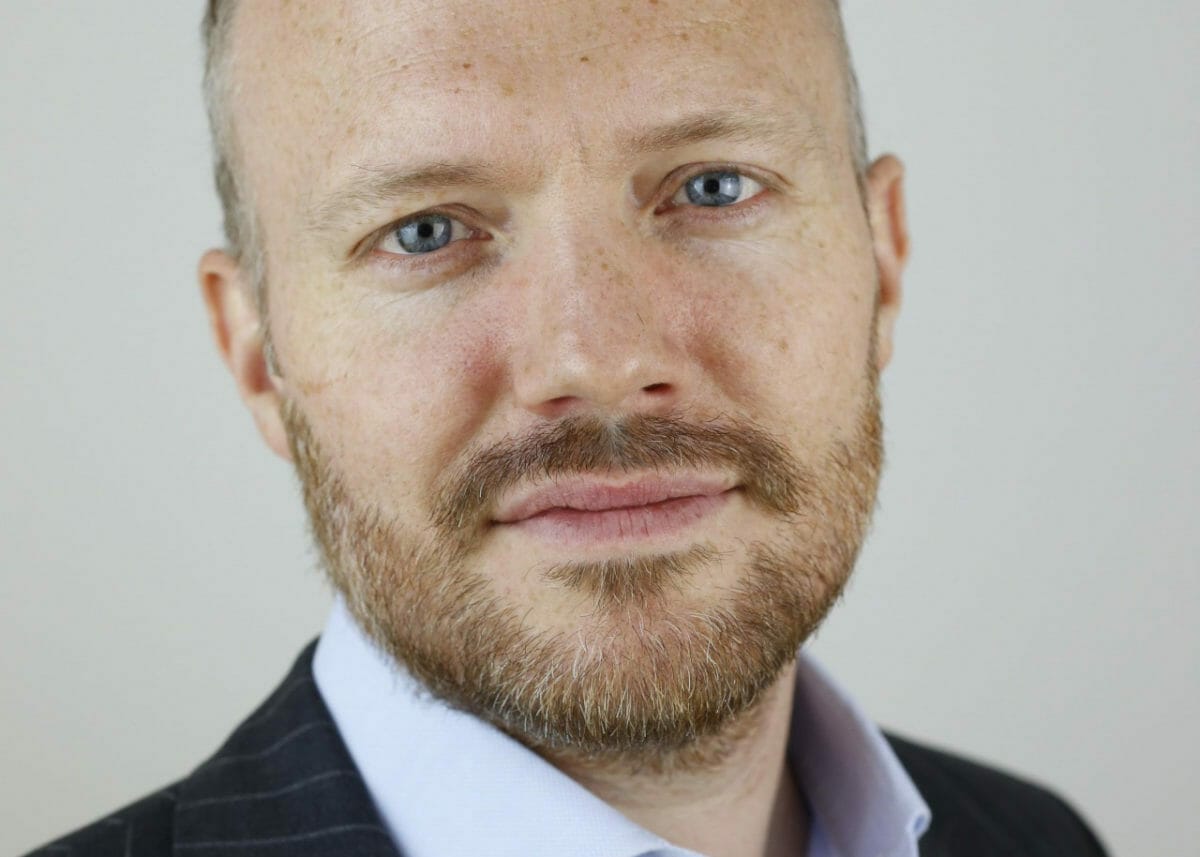
Brian Tomlinson is research director of CECP’s Strategic Investor Initiative.








Leave a Comment
You must be logged in to post a comment.
Login