
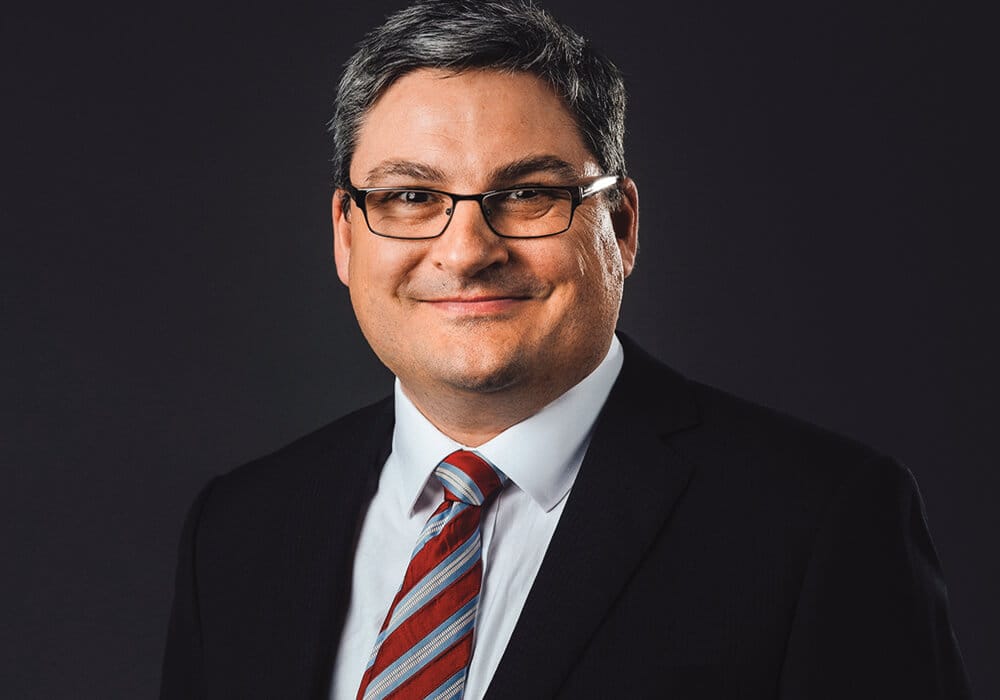

The Future Fund, Australia’s largest and most sophisticated investor, has positioned its portfolio with material exposure to two asset classes that are currently out of favour with many other long term investors – private equity and alternatives. The Future Fund’s chief investment officer, Raphael Arndt, writes exclusively for conexust1f.flywheelstaging.com and explains the investment strategy.
In recent months financial markets have experienced heightened volatility.
These extreme market moves are to some extent a product of the global financial crisis and the policy responses that followed it. There is no reason to think this type of market behaviour will go away any time soon.
Volatility and market risk are facts of life for investment managers, and have been front and centre in our thinking at the Future Fund since we began in 2006.
In an effort to maximise returns over long time periods we have sought to build a portfolio that delivers good returns during periods of strong market performance while providing some risk mitigation during periods of weaker market performance.
Unlike many large pension funds, we don’t have liabilities to manage. We are simply focused on maximising returns for a given level of risk.
We have been careful to allow ourselves the flexibility to select the best ideas to contribute to this mission.
We have not set rigid composite benchmarks with static sector weightings, nor have we set a budget for the fees we will pay.
Instead we focus on maximising net returns and value for money within a stringent risk-management framework.
In seeking to maximise returns in a low-return environment that is susceptible to significant volatility, we have built a portfolio with material exposure to two asset classes that are currently out of favour with many other long-term investors.
Almost one quarter of our portfolio is currently invested in private equity and alternatives (which for our purpose can be thought of as hedge funds and alternative risk premia strategies).
Private equity
The Future Fund’s current exposure to private equity is around 10 per cent of the portfolio or A$12 billion.
In a low-return environment, strategies that give an investor access to true manager skill are extremely valuable.
Our program is focused on gaining access to very high quality investment managers that can apply their craft over a relatively long-term horizon.
It is particularly challenging to make reasonable returns in an environment where equity markets are falling, the cost of debt is rising and economic growth is lacklustre.
In this environment, managers who can actively improve a business or identify a great idea are particularly valuable.
Our investment process actively screens out managers that rely too greatly on market timing or use excessive leverage to generate returns.
Furthermore, private equity is the key tool through which we seek to access and profit from the innovation cycle and disruptive technologies.
This innovation cycle isn’t strongly correlated to listed equity markets.
The Future Fund does this through our significant multi-billion dollar exposure to venture capital, which has proven to be resilient through market cycles.
We recognise that many are put off investing in private equity because of high fees and poor alignment. These are issues we take seriously and spend significant time analysing and understanding.
We seek to back only managers that have appropriate terms and share an acceptable amount of the “alpha” they generate with their investors.
We support the Institutional Limited Partners Association’s efforts to improve the industry’s terms and increase transparency.
And we have rejected investing in some managers when their terms were weighed too heavily away from investors.
We have also developed a co-investment program which helps to provide us better insight into how our managers are creating value and also helps to lower fees overall.
We see ourselves as a true partner, aiming to share the insights that a A$130 billion investment program can bring across markets, coupled with an ability to provide capital on a nimble basis in a transaction time frame.
To put this in context, over the last 12 months we have completed more than a dozen co-investments alongside our private equity managers.
The insights from this activity have helped inform our wider investment activities – for example, which of our equity holdings are at risk of being disrupted by new business models.
Alternatives
The Future Fund’s allocation to alternatives is over 12 per cent, or A$15 billion.
This exposure is focused on diversifying our portfolio risk away from listed equities, credit and interest rate exposures.
Too many hedge funds don’t provide true diversification, and are simply expensive vehicles to access these bulk betas.
Any approach that allows the payment of high fees and agreeing to illiquid structures just to get what we could buy cheaply and in liquid form in public markets is bound to disappoint.
Over the past two years we have worked hard to refine our approach in this respect, and have significantly turned over our managers in this sector.
Our focus has been on identifying managers who can provide true uncorrelated returns and do so with reasonable fees and liquidity.
Like for private equity, we support the efforts of organisations such as the Hedge Fund Standards Board to provide balance in the investor/manager relationship.
And like for private equity, we pay significant attention to the terms we achieve.
Again, we have rejected managers whose terms are too rich, but also those that we believe are too dependent on strategies which provide us little more than exposures we already have more cheaply.
I am pleased to say that our efforts in this space appear to have been paying dividends during the recent market volatility, although it is too early to have a definitive view.
Results
It is easy to talk about the theory that our private equity and alternatives programs should provide appropriate returns while reducing overall portfolio risk.
What experience has the Future Fund actually had?
We estimate that the Future Fund has generated in excess of A$15 billion cumulative excess return through its actual portfolio allocation since inception relative to a simple portfolio of 60 per cent equities and 40 per cent bonds.
And we have delivered this outperformance while significantly reducing portfolio volatility relative to this comparator.
The benefit of our private equity and alternatives exposures is particularly evident when traditional public equity markets are less than accommodating, with recent months fitting that description well.
We will continue to work with selected managers who are genuinely skilled, are appropriately aligned with us, and who offer reasonable expected returns.
We believe the investment environment and the outlook for returns to asset markets will challenge long-term investors in the period ahead.
To not consider private equity and alternatives as a meaningful part of a long-term investment program would be to enter the current market environment with one hand tied behind your back.








Leave a Comment
You must be logged in to post a comment.
Login