
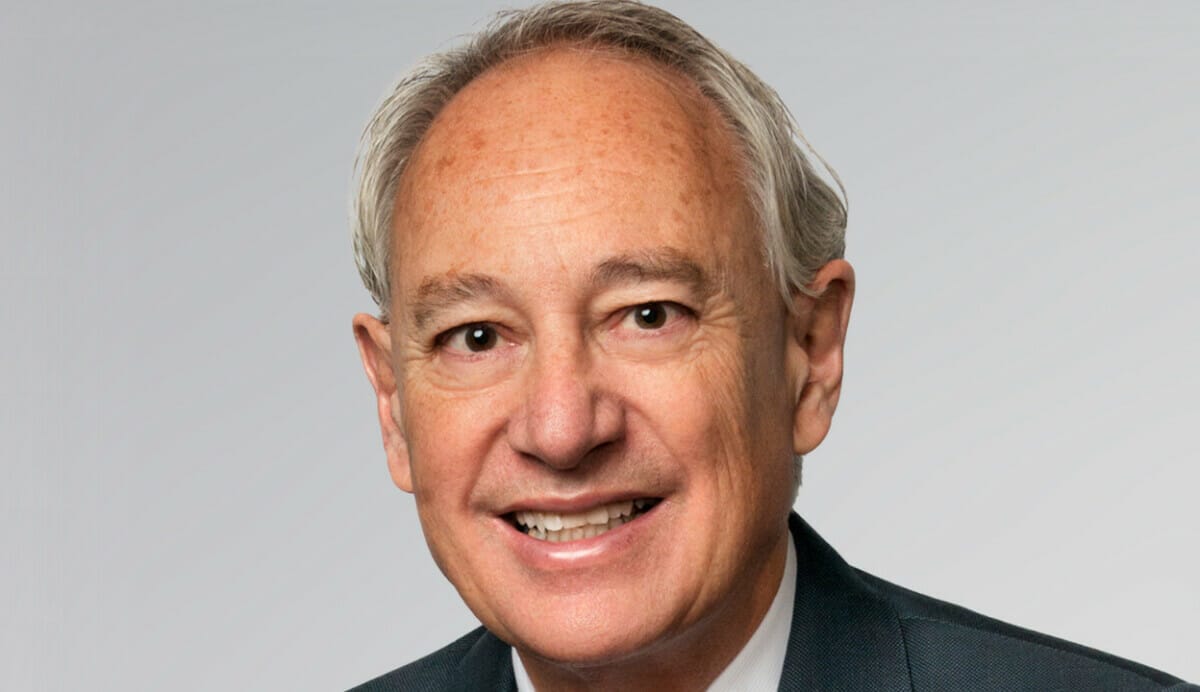

Boards face a vital role supporting governance around climate change. The board journey of Canadian fund HOOPP serves as a starting point for other boards feeling equally challenged by the complexity of the issue writes Gerry Rocchi.
For pension plans and other institutional investors, the greatest concern around board governance of climate change issues can be put simply: how to ensure you’re having meaningful discussions on such a complex subject.
This is a risk with any subject that is highly complex – that the discussions stay at a superficial level. And climate change has, perhaps more than any other issue, the potential to amplify all complexity, especially in the investment area, where climate change impacts are ubiquitous.
It would take a whole other, and lengthy, article merely to describe the unique aspects of climate change in relation to investments that includes uncertainty and rapidly changing estimates of the level, path, pace, costs, regulations and opportunities related to decarbonization and adaptation; macroeconomic impacts; collective investment and reporting initiatives.
What can a diverse board, with members of varying levels of understanding of climate change, do when faced with governing such a complex issue? Our approach at HOOPP (Healthcare of Ontario Pension Plan) was to underpin critical decision-making and supervision on climate change with effective and efficient process and practical steps. What follows is the story of the HOOPP board’s journey on climate change, at least to date, as this is a rapidly evolving space. It may serve as a starting point for other boards feeling equally challenged by the complexity of the issue.
HOOPP is a pension plan for healthcare workers in Ontario. It finished 2022 with C$103.7 billion in assets and a funded ratio of 117 per cent (meaning for every dollar we owe in pensions, we have $1.17 in assets). A history of strong returns has been accompanied by frequent increases in benefits and stable contribution rates while maintaining strong funding. HOOPP and its board are responsible for all aspects of the pension plan – investment, administration, contribution rates and benefits.
In 2022 and 2023, the HOOPP board analyzed how it should fulfill its fiduciary obligation with respect to climate change. Here’s what we have done:
1. Separated climate change from ESG for board-level governance because climate change poses unique issues that merit unbundling it from other discussions. We seek to retain consistency of approach and cross-pollination between the two areas.
2. Clarified committee mandates to reduce overlap and concentrate expertise. The audit and finance committee is now responsible for oversight of reporting because what gets measured gets done, and we expect that climate change reporting will attract more demands for external assurance.
3. Conducted a competitive search and hired an external advisor (EY) to provide independent advice to the board. This advisor is not meant to repeat work done by management, but will focus on board education, independent advice to the board, and independent board research. Some of the early research by HOOPP’s advisor will be directed to a review of best practices in pension board climate change governance; what we learn may inspire us to evolve our approach even further.
4. Designated a specific day to exclusively discuss climate change between the Q1 and Q2 meeting cycles. While we hold routine and comprehensive discussions on climate change at regular board meetings, this dedicated session ensures that any new or modified board requests are relayed to management promptly, facilitating coordination with other policy updates for Q4 approvals.
5. Commissioned research on the most effective ways to incorporate climate change in incentive compensation, including whether to use climate change results as another weighted additive factor, or as a multiplicative modifier.
6. Prioritized board education on climate change and related governance, including current guidance, regulations and court cases on how a board fulfills its fiduciary obligation with respect to climate change. This is done through a combination of management, the external advisor, external counsel, and external courses. HOOPP already has board members who have taken the Institute of Corporate Directors’ Governance of Climate Change course, and more external education will continue.
As HOOPP’s website states: climate change poses one of the most urgent and pressing systemic challenges of our time, with unique risks and opportunities. And it can no longer be approached solely as a long-term issue.
Against that backdrop, it is imperative that a board executes its governance role with focus and purpose, and ensure it is having meaningful discussions. The key to achieving this is process and practical steps. The steps outlined above have set the HOOPP board on a promising path, yet we understand this is an ongoing journey. We will re-examine our approach as we learn more and as we reap the results of the decisions we have made and the processes we have implemented, having taken the time as a board to build a solid foundational capacity and knowledge base on this critical issue.
Gerry Rocchi is co-chair of the Healthcare of Ontario Pension Plan








Leave a Comment
You must be logged in to post a comment.
Login