
Exploring the interconnectedness of biodiversity and climate change

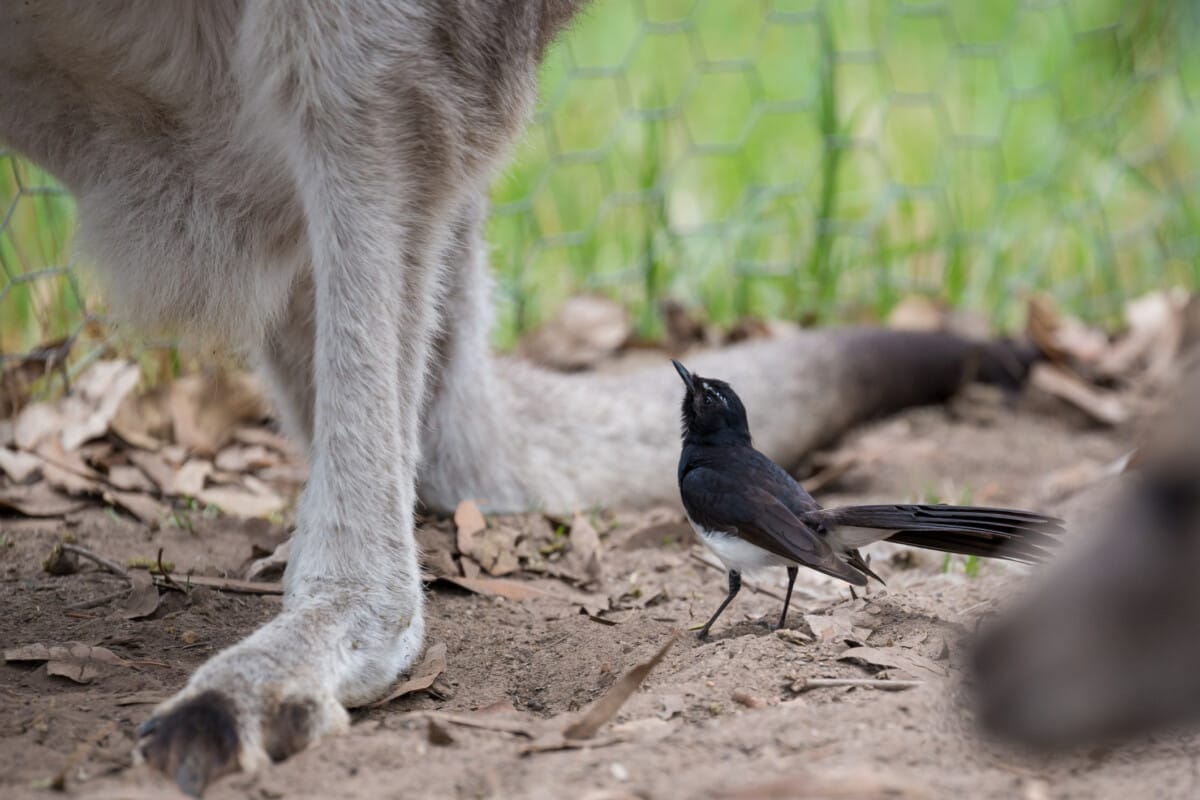
A willy wagtail with a kangaroo in the Australian bush

I believe biodiversity loss is one of the top global risks in terms of its impact and likelihood, yet it is completely overshadowed by climate change and is not well understood.

Six out of the nine planetary boundaries that define a “safe operating space for humanity” have now been exceeded and there is increasing pressure on all nine boundaries, or processes, that regulate the stability and resilience of the Earth system. There is now undeniable evidence that economic growth at the expense of the environment and the biosphere is unsustainable in the long term.

Climate transition encompasses and affects several different areas, which are all interdependent and together form a complex network or system. Targeting and thinking about one area in isolation, therefore, may produce negative impacts on other parts, potentially resulting in more harm than good.

Achieving net zero emissions is a critical goal for combatting climate change, however reversing the decline of biodiversity is equally vital for human survival and flourishing. Without a wide range of animals, plants and microorganisms, ecosystems will not survive. We rely on ecosystems to provide us with food and air, materials we wear and use to build our homes with. Hence biodiversity is essential for all life on Earth, including humans.

Among the main threats to biodiversity are climate change, pollution, habitat loss, overexploitation of species, and invasive species.

The relationship between biodiversity and climate change is complex. Biodiversity plays a key role in regulating the climate through carbon sequestration, maintaining healthy ecosystems, and supporting resilience to climate change impacts.

Sponsored Content

Effective climate action can enhance biodiversity by promoting the preservation of habitats and ecosystems. However, there is a potential scenario where the race to achieve net-zero emissions could inadvertently harm biodiversity.

For instance, the rapid expansion of renewable energy infrastructure or large-scale monoculture for bioenergy could disrupt natural habitats and threaten native species. Aggressive reforestation efforts without considering local ecological needs may lead to the introduction of non-native species that can harm existing biodiversity. The energy transition relies heavily on critical minerals, and extraction tends to have serious environmental and social consequences.

It is essential therefore that while pursuing the goal of carbon neutrality, we consider its effects on other dimensions and make sure we don’t compromise biodiversity in the process. Considering climate change in isolation is potentially dangerous because it overlooks the intricate relationship between climate and biodiversity, both of which are crucial for sustaining life on Earth.

The ‘do no harm’ principle plays a vital role in ensuring that climate action does not inadvertently damage natural habitats or the species that depend on them. We need sustainable approaches that simultaneously address both issues to ensure a holistic and effective response to environmental challenges. Our efforts to address climate change and biodiversity must ultimately be net positive to ensure their long-term sustainability.

Achieving positive, viable outcomes will depend on our ability to embrace the fact that we are part of a system where all components are interconnected, and their interaction creates the life as we know it. In practice, this also means that climate change efforts require collaboration among all stakeholders, where every perspective is significant and additive.

As the climate and natural environments continue to change, the interactions between them evolve, presenting challenges and opportunities that are difficult to anticipate. This is a dynamic relationship with potential tipping points, further shifts in climate and irreversible damage to the planet. Our lack of understanding or ability to predict these events with any degree of accuracy underscores the need and urgency for action and careful consideration of our approaches.

The biosphere is the foundation of economies and societies and the basis for all of the United Nations’ Sustainable Development Goals (SDGs). Nature loss threatens financial stability and poses a systemic risk which is likely to impact increase volatility and financial returns in the future.

Addressing biodiversity is a challenge for the investment industry. Investment organisations already have limited governance budgets, there is a lack of reliable data and it’s difficult to measure the impact of investments on biodiversity. The Taskforce on Nature-related Financial Disclosures (TNFD) incoming biodiversity regulation aims to enable financial institutions to integrate nature into decision-making, but still a lot needs to be done to ensure investor actions have a positive real-world impact.

In practice, investment organisations have different levels of ambition when it comes to biodiversity. At one end, there is compliance with regulatory requirements and TNFD reporting.

Moving beyond compliance, there is risk management and mitigating potential threats to portfolios. At the other end of the spectrum, some organisations take on a more proactive role by financing transformative projects aimed at restoring biodiversity and rehabilitating ecosystems. A systems-based approach is at the heart of these projects, with stakeholders collaborating to solve the challenge to generate positive outcomes in the long term.

Climate change and biodiversity loss are both critical global risks, in terms of impact and likelihood of occurrence. The interplay between them forms a complex and interdependent system that cannot be effectively addressed in isolation.

Recognising this interconnectedness is crucial, as failing to consider the mutual influences between climate and biodiversity could lead to incomplete and potentially harmful strategies. Addressing biodiversity loss requires integrated efforts across all sectors, acknowledging the profound and multifaceted relationships that sustain our natural environment. Only through such a holistic perspective can we hope to mitigate the risks and secure a sustainable future for our planet.

Anastassia Johnson is a researcher at the Thinking Ahead Institute at WTW, an innovation network of asset owners and asset managers committed to mobilising capital for a sustainable future.

Leave a Comment

What a brief encounter with Elon Musk taught me about the limits of capitalism

What a brief encounter with Elon Musk taught me about the limits of capitalism

In 2013, on the sidelines of the Milken Conference at the Beverly Hilton, my friend and then-colleague Sean Scallan and I found ourselves in a seven-minute private conversation with Elon Musk.   He was not yet the figure he is today. Tesla was struggling. SpaceX had launched but not yet proven itself. The idea of humans

Sort content by

End of the beginning for responsible investment

Recent reflections on this month’s five-year anniversary of the Lehman Brothers collapse have focused on a variety of developments since the crisis: from reform to remuneration, sovereign debt to shadow banking, and from offshore tax to the Occupy movement. However, one significant area that has been largely overlooked has been the rise of sustainable and

Precarious world needs effective G20

General secretary of the International Trade Union Confederation, Sharan Burrow, spoke to the Lowy Institute for International Policy in Sydney, Australia on Thursday August 1 about the need for an effective G20 in a precarious world. Ladies and Gentlemen, The global economy is no more stable today than it was six years ago, and the

Towards sustainable stock exchanges

Wall Street is not normally synonymous with sustainability. But today, the United Nations Secretary-General Ban Ki-moon will ring the closing bell at the New York Stock Exchange to welcome NYSE Euronext into the Sustainable Stock Exchanges Initiative, joining NASDAQ OMX and leading emerging market exchanges from Turkey, South Africa, Egypt, Brazil and India. Why would

Asset-backed funding: desperate or innovative?

On one hand, the decision by one of the United Kingdom’s leading foods businesses, Dairy Crest, to plug its £84-million ($130-million) pension deficit with cheese smacks of desperation. Any proactive investment strategy to get the $1.2-billion pension fund back on track has been abandoned for a funding measure using unconventional sponsor assets to plug investment

Gloom at NAPF attests to investor adventure

One year on and the job of trustees gathered at the United Kingdom’s National Association of Pension Funds, NAPF, annual investment conference in Edinburgh hasn’t got any easier. As the search for optimism in a low-return world endures, the conference seems to be caught in a time loop. Compared to last year, deciding on the

The smoking gun at CalSTRS

For a pension fund that describes itself as “ponderous”, the $154-billion California State Teachers’ Retirement System, CalSTRS, has moved uncharacteristically swiftly in recent months. The second largest public pension fund in the United States, the plan for teachers and faculty is in the process of divesting its holdings in gun manufacturers following the massacre at

Previous



