
Emerging markets show more maturity

In the last few decades, we have been debating how long it would take for emerging-market countries to ‘emerge’ and graduate to be developed markets. While we have experienced shining examples such as South Korea and Taiwan matching most of the developed-market countries on many different measurements, we have also experienced countries being relegated from developed markets to emerging-market classification, like Greece.

Another commonly discussed topic is whether emerging markets can truly decouple from developed markets. Emerging nations have shown compelling improvements when shocks have tested the resilience of a country. For example, even an oil price collapse and sanctions were unable to trigger a crisis in Russia on the scale of 1998. We are currently experiencing an even stronger test of the Turkish and Argentinian economic architecture, as structural inflation, bloated current account deficits and large-scale foreign currency borrowing are making a dent in each of these economies. But if we compare the current volatility to previous large-scale emerging-market crises (’97 Asian crisis or ’98 Russian default), it is clear many emerging-market countries have matured because we haven’t seen any domino effect on the broader asset class.

The current crisis is the result of original sins many emerging markets committed in the ’90s, when countries with structurally high inflation nudged the corporate sector to borrow at cheaper rates in hard currency. This caused both high debt levels and currency mismatches. Additionally, the high economic growth rates sucked in imports (raw materials, machinery, consumer goods, etc.) and forced governments to borrow more to fund the current account deficit. The famous quote about seeing who is swimming naked when the tide goes out rings true. Today’s high borrowing levels are being tested by the stronger dollar, reduced liquidity and higher borrowing costs.

We believe emerging economies’ deeper domestic capital markets can shield countries from external threats and contain damage during the transition. The recent macro-policy changes and trade war rhetoric mark the starting points of a systematic repricing of risk globally, with emerging-market economies as the canaries in the coalmine. Emerging economies will need to adapt to new realities to engineer a soft landing. They also need to navigate the volatility spinning off from the US-China trade war and investor nerves around upcoming elections in Brazil and South Africa. On the positive side, only a limited number of countries still belong in that old basket defined by structural current account deficits, high inflation, unsustainable debt profiles (foreign currency and short-duration external funding) or purely relying on the extraction sector to carry the economy forward (as in Venezuela or Angola). The rest of the emerging markets have evolved, as they have become innovation power houses with solid fundamentals (South Korea and Taiwan) or compelling manufacturing hubs with disposable incomes ahead of many Western economies’ (Czech Republic or Slovenia).

Core strength can be found in countries where policymakers have used the last two decades to develop a robust institutional domestic capital market with strong checks and balances. Additionally, it is important to create a legal and legislative framework where companies can improve their productivity but still ensure a cost-effective, productive labour force. As policymakers work towards reducing external vulnerability, they also need to be ahead of the curve and set up a regulatory framework that enables domestic capital markets to become deep and sophisticated.

Nowhere is the contrast more striking than between South Africa and Turkey. Both are in a group of five vulnerable countries (high structural inflation, reliance on external funding or commodity, high current account deficit). South Africa is equipped with one of the deepest institutional money markets, with pension funds, insurance companies and other efficient savings vehicles in place for many years. In contrast, Turkey can show only limited improvement in these areas. While both countries must work hard to reduce their external vulnerabilities, South African domestic capital has always supported the local markets, and the country has never experienced hardship on the scale Turkey is going through at the moment.

Sponsored Content

Investors are growing more positive about similar structural developments in China, where domestic capital markets are going through one of the most significant transitions. We are seeing evidence of regulatory support to create a sophisticated domestic fixed income market and mutual fund industry, while at the same time moving the economy away from shadow banking. Additionally, China must transfer its economy away from spending-driven growth and save more, while reducing its current large debt profile. The transition might come with pain, but evidence shows that deep domestic capital markets can replace retail savings as a safety valve, and the country has a better chance to cope with the change.

Secular growth

Secular growth drivers are still in place for most emerging-market economies; population growth is compelling and disposable income growth and productivity improvements have come as economies have climbed the value chain. Emerging nations need to address many systematically important vulnerabilities to reach their full potential, but at the current stage of the cycle, a deep domestic capital market can serve as one of the most important safety nets.

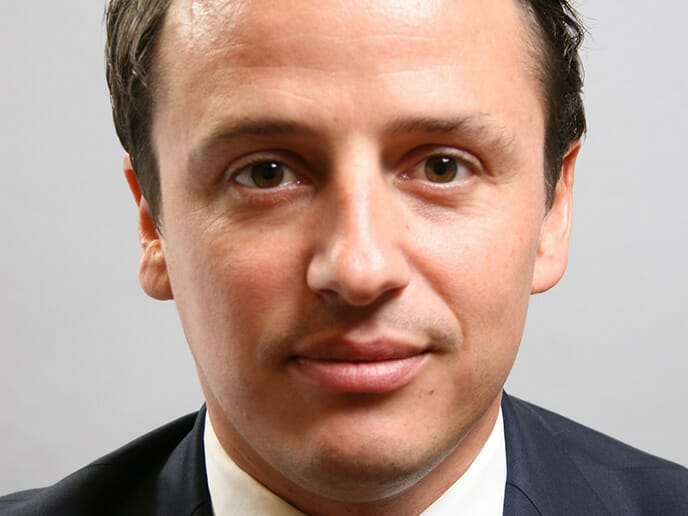
Egon Vavrek is head of Europe, Middle East and Africa equities at APG Asset Management. APG is the asset manager and pensions provider of the €414 billion ($487 billion) Dutch civil service scheme ABP.

 [vc_subscription_cta s_cta_text=”Sign up to our weekly newsletter for regular news flashes and industry insights.” text_color=”#0c0c0c” bg_color=”” button_url=”/subscribe/” button_text=”Subscribe” btn_color=”” btn_bg_color=”#c0091f”]

Leave a Comment

The future belongs to investors who can adapt

The future belongs to investors who can adapt

Canada's HOOPP has officially adopted the total portfolio approach since the start of 2026. Unpacking the move, the fund's managing director and head of total portfolio group Jacky Lee writes that while the approach doesn't magically make the return better, the fact that it frees the investment team from outdated processes and gives investment leaders the flexibility to act is what gives it an edge.

Sort content by

Long-termism, the problems with capitalism and other holiday reading

The holiday season is a good time to catch up on the reading you may have put off throughout the year. To make it easy for you here is a choice of articles that speak to some of the key themes for investors – long-termism, economic growth, climate risk and capitalism. Long-termism is one of

How to hedge long-term inflation-linked liabilities without inflation-linked instruments

Given the capacity constraints on local inflation-linked bond markets, what are other options for hedging long-term inflation-linked liabilities? This is a question Ontario Teachers’ Pension Plan has been deliberating on as it supports an academic chair at EDHEC-Risk Institute with a focus on analysing the design of novel forms of liability-hedging portfolios that do not

What, really, are your pension liabilities?

Liabilities in UK pension schemes are grossly under-estimated with the current valuation system not recognising  the perilous funding position in both corporate and public systems. The implications for not addressing this include huge financial costs borne unfairly by younger members of the schemes. Stefan Lundbergh, head of innovation, and Andrew Stewart, client manager at Cardano,

Towards a new generation of pension funds in Australia

Numerous surveys suggest that Australians are not completely satisfied with superannuation as it exists today. First, fund members tend to think that they will not have enough to retire and second, that investment plan providers are not necessarily acting in their best interest. In this context, we asked in a recent study supported by AXA

Are your managers as active as you think they are?

Measuring how active managers actually are is a useful tool for investors. A metric called “active share” can be used by institutional investors to assess active fees, measure and monitor managers styles and maintain portfolio diversification. By Thusith I. Mahanama, chief executive of Assette. Seven years ago, professors Martijn Cremers and Antti Petajisto introduced a

Is chasing lower taxes really a strategy for value creation?

Investors are just beginning to understand global tax issues and the risks associated with aggressive tax planning by the companies int their portfolios, Fiona Reynolds, managing director of PRI says there are a number of common-sense measures that companies should begin to put in place.   The 2014 G20 Summit to be held in Australia

Previous



