

The State of Alaska is rightly known for its frontier spirit and fierce independence. So it may be surprising to some that we at the Alaska Permanent Fund Corporation attribute strong recent performance in part to the vigour with which we have pursued a strategy of teaming up with outside partners across our $65 billion portfolio. This strategy leverages our institutional strengths (clear mandate, patient capital) and mitigates our weaknesses (small staff, remote location). Partnership is among the most overused (and, too often, abused) terms in asset management. For Alaska, the term has central importance and refers to three categories of partners: fund managers, specialised advisers, and institutional peers.
The first category, partnerships with talented fund managers, relies on a critically important task: identifying capable external managers with differentiated skills and sustainable competitive advantages. We seek to team up with these managers to design and implement initiatives that meet their institutional objectives and ours. The MEASA Stock Fund (focusing on publicly traded equities in the Middle East, Africa and South Asia) we recently formed with McKinley Capital management is a good example.
The APFC has been investing in emerging markets for many years. We believe exposure to the fastest-growing economies in the world is increasingly important. And we recognise that there are risks and challenges investors need to address to maximise the probability and extent of their success. In this context, APFC developed the concept of a public equity fund targeting about 30 of 80 eligible markets in the Middle East, Africa, and South Asia that appear to offer the best risk-reward trade-offs. These targeted countries are home to 44 per cent of the world’s population yet account for only 12 per cent of GDP, 6 per cent of equity market capitalisation, and 2 per cent of equity index capitalisation.
APFC considered a range of potential fund managers to lead the launch of the MEASA Stock Fund and ultimately selected McKinley Capital, a quantitative growth investor that has managed APFC assets for many years. Together with McKinley, we designed features to address several concerns. For example, the MEASA fund is intended to offer a listed, closed-end share class in addition to an institutional share class, in order to minimise ‘hot money’ price distortions in these emerging and frontier markets. Also, an arbitrage mechanism is built into the listed share class structure in order to reduce any potential gap between unit price and underlying net asset value. The fund is expected to list on two exchanges eventually – New York (NYSE) and Abu Dhabi (ADGM). As the MEASA fund and the underlying capital markets develop, and the impact of what is expected to be a multibillion-dollar fund becomes apparent, APFC hopes to benefit incrementally from a revenue-sharing provision that further aligns our success with McKinley’s.
Partnerships with advisers
The second category of partnership is with specialised advisers and consultants, to leverage our internal team, improve deal flow, and enhance our due diligence and transactional capabilities. This category includes investment consultants and outside counsel, plus more specialised advisers that offer skills or intellectual capital that complement our internal resources. These advisers can range from credit analysts to molecular biologists, and in all instances, we’ve found that the greatest value for all parties is realised from the most robust, systematic long-term relationships.
Partnerships with peers
The third category of partnership has the potential to be the most powerful and impactful: joining with like-minded institutional investors to pursue important strategic or tactical initiatives. Many institutional investors believe they are competing with their peers for a finite pool of alpha – and this is sometimes the case; however, there are also several areas where common challenges, common goals, and complementary resources create opportunities to join together and create tremendous value for all participants. Private equity co-investments and manager seeding strategies are two prominent examples of areas in which individual limited partners can create powerful affiliations that propel asset growth and extend institutional reach.
Although asset allocators talk frequently about joining with other allocators, the gap between dialogue and formal partnerships has been surprisingly difficult to bridge, with relatively few examples of successes and, until recently, none that combined capital across continents into a shared mandate. This is one reason we have been enthusiastic about the launch earlier this year of Capital Constellation, a joint venture between ourselves, the British Railway Pension System (RPMI Railpen), and the Public Institution for Social Security (PIFSS) of Kuwait, designed to back the next generation of private equity and other alternatives managers.
Constellation’s strategy seeks to back a new generation of managers whom we believe represent some of the most promising investor entrepreneurs in private alternatives. This strategy aligns us with these managers through economic interests in their firms and allows us as asset owners to vertically integrate with investment managers who share our view that collaboration can transform alternatives into a positive-sum game in which limited partners and general partners share a deeper interest in our mutual success and a formal commitment to active partnership. In the months since launch, Constellation has already forged partnerships with Astra Capital and Ara Partners, dynamic teams in the communications and energy sectors.
Not about fee avoidance
Partnership can sometimes be code for disintermediation or fee avoidance. That is neither the form nor purpose of the partnerships we initiate. Our primary objective is not to minimise fees but to maximise net returns, subject to risk parameters our board has established. We believe we can do that most effectively by joining with others and pursuing our mutual self-interests. Very often, this joint pursuit has resulted in reduced portfolio risk and diminished fees. And while fee reduction isn’t the primary objective of our partnering strategy, it has been a substantial benefit.
Our private equity co-investment program is an example. Over five years and 24 separate investments, it has delivered a net IRRof 64 per cent and an investment gain of $1.4 billion (at 31 March 2018). Our primary objectives with this program are to boost returns, improve information flow, and mitigate overall portfolio risk. Based on those objectives, the program has so far exceeded our targets. It has also allowed us to avoid an estimated $282 million in fees and carry.
The spirit of independence is alive and well in Alaska. We believe that the best outcomes follow from an honest assessment of one’s own capabilities and a clear-eyed view of the obstacles ahead. It is our mission to continue to deliver attractive returns for the benefit of all Alaskans and we intend to do that not by chipping away at the fees we pay along the way, but by teaming up with capable partners for the long journey ahead.
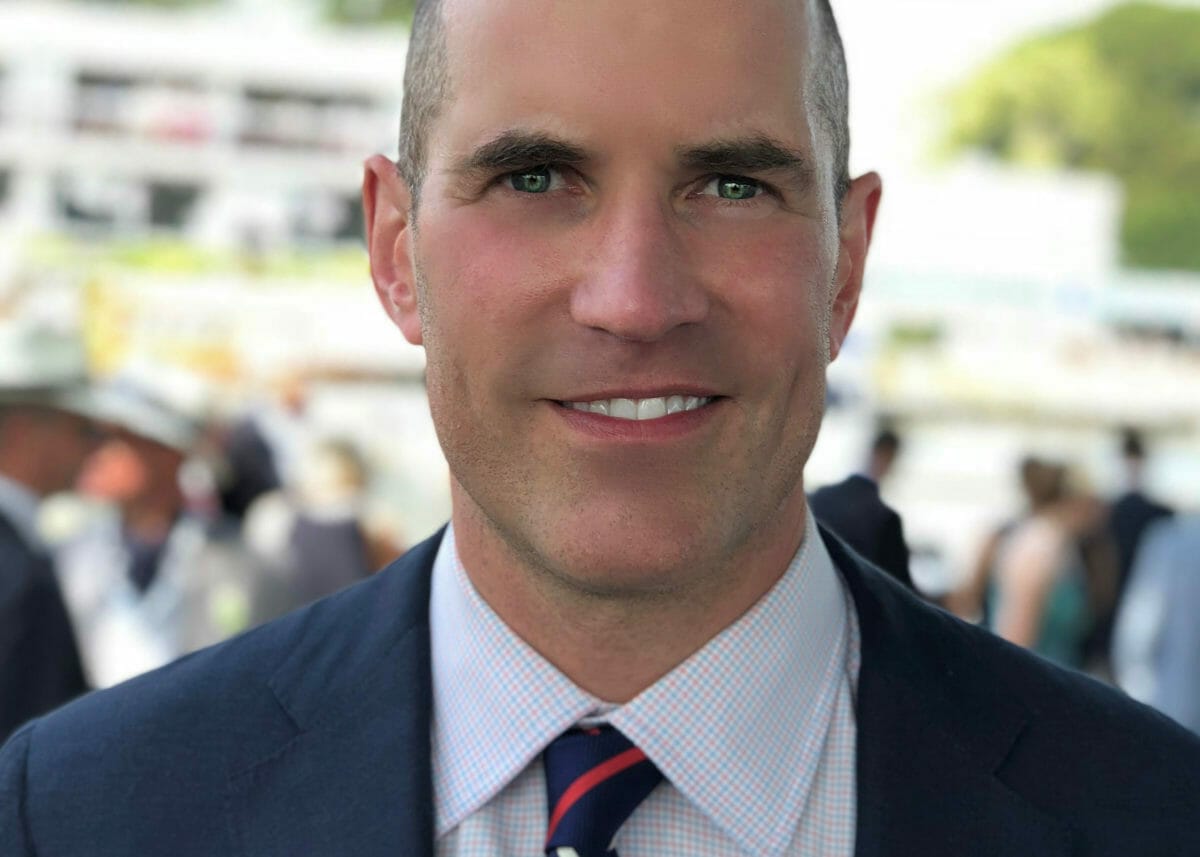
Russell Read recently resigned as chief investment officer of Alaska Permanent Fund Corporation. Steve Moseley (pictured) is the head of private equity at APFC and a founding board member of Capital Constellation.







Leave a Comment
You must be logged in to post a comment.
Login