

The United Parcel Service corporate pension fund is finalising an asset liability study this year which will result in a new strategic asset allocation.
The $28 billion US fund, typically has a lower allocation to fixed income than its peers and has a reasonably aggressive portfolio for a corporate defined benefit fund.
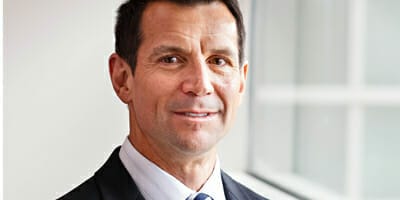
It is a young, open plan with a low payout ratio at around 3.3 per cent. It means the investment allocations can be more innovative than a de-risking mature defined benefit fund, and chief investment officer, Brian Pellegrino, and his team have been exploring new ideas to make the most of these structural opportunities.
In the past, fund allocations were primarily focused on the asset side, and it is now focusing the allocation process on meeting future liabilities.
Pellegrino says that while the fund is not trying to solve any particular problem, it’s a good time to look at its liabilities, adding that the company recently hired its first in-house actuary.
“We will look at our cash outflows and our funding status, and will have a special focus on liabilities this year,” he says.
In 2010 the UPS pension scheme moved to a master trust structure, allowing it to easily manage its four underlying plans in a single asset allocation.
It last implemented a strategic asset allocation change in 2009, which was an abnormal or unscheduled change in response to the financial crisis, and had previously implemented a change in 2007.
It will finalise a new asset allocation later this year as a result of the asset liability study, but currently the asset allocation is 42 per cent to global equities, 30 per cent in fixed income 10 per cent to private markets, 10 per cent to hedge funds, 10 per cent to opportunistic liquid alternatives.
The investment staff are given very wide bands around the broad asset allocation, provided they stick within the investment policy, giving them autonomy and flexibility.
“If we function within the investment policy then we can make tactical decisions internally without having to seek approval from our board” Pellegrino says.
By way of example he says the portfolio had a hedge ratio of about 15 to 20 per cent from 2009 to mid-2011 when it started adding duration – mostly in the US Treasury Market – and ended the year with a 40 per cent hedge ratio. That started coming down in 2012 and in 2013 the fund was mostly underweight fixed income and duration, with a hedge ratio of about 20 per cent, and an asset allocation of about 25 per cent to fixed income versus the mid-point of 30 per cent.
“It is prudent to maximise our return seeking assets as we don’t have liquidity constraints,” he says. “Strategically we are looking for investments with a definite life where we can have some confidence in underwriting the upside and downside. You can end up with better risk return characteristics.”
New investments by UPS include structured credit, bank recapitalisation strategies, and an investigation into ownership interests.
The fund has a broad allocation to new and interesting investments across private and public markets.
The lack of liquidity constraints, the ability of the private markets team to evaluate opportunities, and the flexibility to commit capital quickly has meant the fund can actively invest in private markets.
“Opportunities among banks have given us the ability to do some creative things in secondary markets, to set our own fee and performance levels,” he says. “The path we’ve gone down since the financial crisis is that if we are paying the right price and can live with mark to market volatility, those are the types of investments we look at.”
The opportunistic bucket also targets a low beta, and it is in this asset class that Pellegrino sees a dynamic and creative future. It also set up an internal managed account platform in 2012 which allows for investments in areas that don’t fit in traditional structures.
“I feel the future will be in the opportunistic portfolio: bespoke investments with definitive life span. We are not aggressively looking to do anything in the traditional hedge fund space but always open to new ideas, and we are exploring hedge fund replication strategies.”
While admitting it is very early in the process of determining whether hedge fund replication is appropriate, Pellegrino can see the implications for the portfolio.
“If we can get comfortable with replication strategies , it may lead to changes in our hedge fund allocations, potentially reducing the exposure or the number of managers.”
UPS currently has 14 hedge fund managers in a direct structure and there are another four or five managers in the opportunistic bucket.
“We look at the themes we think are attractive, determine the best investment vehicle for capturing that, and identify the appropriate structure including legal and fees. For example if we do factor analysis on portfolio and then look at the commodity exposure and decided you don’t want an energy exposure, but you want agriculture or metals, is it the best approach to pay a manager 2:20 for that or to buy liquid ETF exposure in say gold,” he says.
Similarly the number of managers in public markets is now less than 40, and coming down, as active managers have been replaced with custom beta exposures.
The equity portfolio has two or three managers that run specialty optimisations such as minimum volatility, emerging market consumer staples, and a frontier portfolio that limits exposure to certain countries.
“We like the Trust Portfolio Manager to perform research in-house, then we find an index provider to partner with,” he says.
Overall the equities portfolio is 20 per cent passive, 40 per cent custom betas and 40 per cent active which includes a few highly concentrated active mandates such as small cap.
“We want our active managers to do what we can’t do in house – stockpicking.”
Pellegrino’s investment team now numbers 15 including three directors covering compliance and operations, public markets, and private markets. There are portfolio managers for global equities, fixed income, liquid alternatives, private equity, and private real estate with analysts in support. While there isn’t any plan in the near term to bring assets inhouse, as Pellegrino sees “plenty of opportunities to create value under the current structure”, UPS is looking to hire more analysts.
His philosophy is to stay as “close to the manager as possible” which he admits was easier when there were only three internal staff, and materially fewer strategies. Still he makes a conscious effort to join the portfolio managers whenever possible, maintaining the aim of seeing each fund on site at least once a year.
“I try to attend as many of those visits as possible, you can’t replace the value of seeing people on site,” he says.








Leave a Comment
You must be logged in to post a comment.
Login