
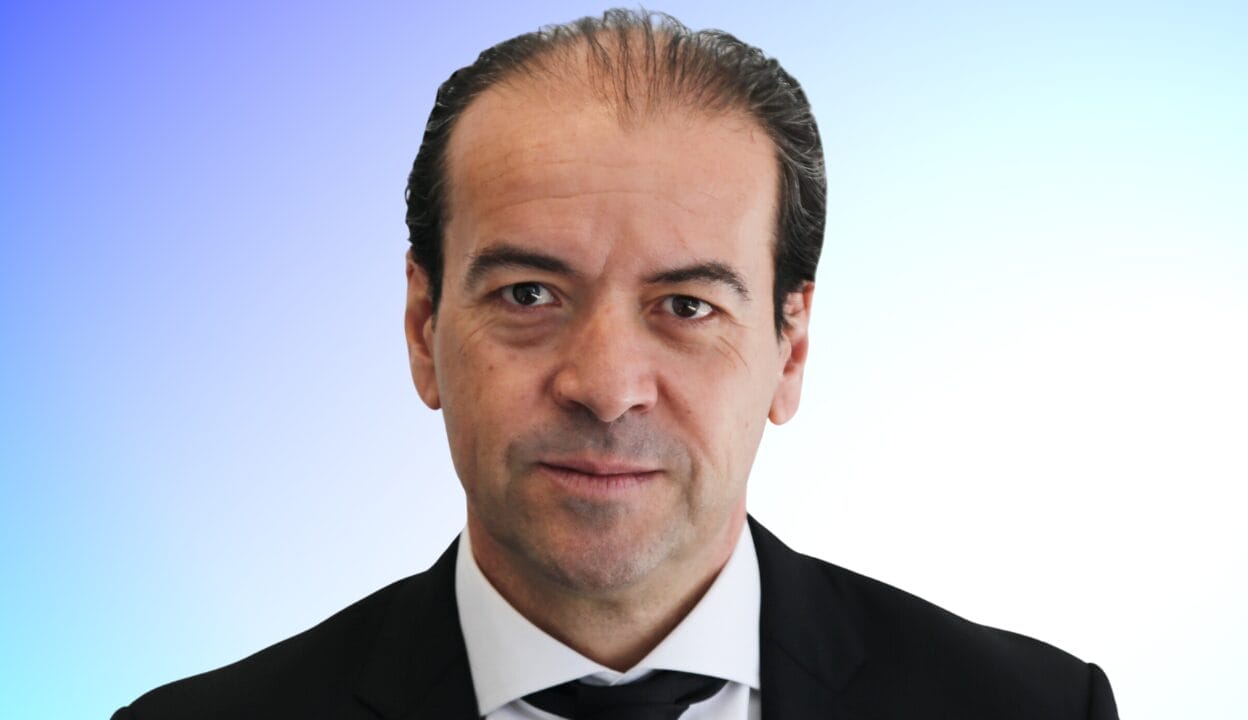

The United Nations Joint Staff Pension Fund (UNJSPF) recently reduced the allocation to equity in its $92.5 billion portfolio by 10 per cent in what Pedro Guazo, representative of the secretary-general (RSG) for the investment of the UNJSPF assets, describes as a conservative strategic allocation in response to the overvaluation in tech.
Behind the defensive exterior, the fund is stepping into new allocations in venture, impact, and private credit as well as developing more sophisticated strategies in an increased allocation to fixed income.
It speaks to a state of confidence after sharp losses in 2022 at the pension fund that is still in an accumulation phase; supported by a funded ratio of 111 per cent and boasts a large and growing investment team who all have skin in the game as beneficiaries.
“We are in a strong position compared to peers,” reflects Guazo who has led investment since 2020. He oversees six-seven different asset classes in a primarily dollar denominated portfolio and tells Top1000funds.com in an interview from the pension fund’s New York offices that strategy avoids any financial engineering or unnecessary complexity.
“We only invest in things we understand,” he says.
The active equity allocation now accounts for 43 per cent of AUM and is divided into four teams (North America, Europe, Asia Pacific, and Global Emerging Markets) that follows a disciplined investment process centred on equity screening, fundamental analysis, and frequent dialogue with corporate management teams.
Although the portfolio has been reduced he remains wary of key risks, particularly economic slowdown in China even though the portfolio has little direct exposure to China.
“If China doesn’t grow as expected, it will impact global demand for everything” Guazo says.
“We follow the US and Chinese economies closely because what they do has the most impact on our portfolio.”
The capital and profits – he says the fund sold at a fortuitous time – take out of the stock market has been ploughed into fixed income, favoured for its protection of capital and liquidity.
“With interest rates at this level, it makes sense to be in fixed income and our analysis shows that the risk return proposition is higher than other asset classes,” Guazo says.
“Interest rates may still be in the same ballpark for the next two-to-three years, and we are comfortable having an allocation to fixed income because it is paying off.”
New allocations to sub asset classes within fixed income include high yield corporate bonds that bring additional yield at very little risk compared to public equity. The fund has launched the allocation with passive exposure to understand how the benchmark is composed but will switch to active in time.
Similarly, implementation is with managers first, in a strategy that allows the team to learn, follow decision-making and understand the information on hand, before bringing the portfolio in house.
“We seek to manage everything internally, but there are times like in high yield when we don’t have the internal knowledge, we partner with external managers, give them a mandate consistent with the Fund’s objectives and learn while we invest,” Guazo says.
“We follow every decision and see what information they are using so that we can bring the allocation in house.”
Around 82 per cent of the portfolio is managed internally, and Guazo is convinced it is the key reason why UNJSPF has some of the lowest costs in the business. Total investment costs are 33 basis points compared to a medium amongst peers calculated by CEM Benchmarking of 45 basis points. “We always try to manage internally because it’s more cost efficient, as shown in the cost peer comparison analysis,” he says.
His conviction that active, in-house management pays is also reinforced by UNJSPF’s monthly report on every asset in the portfolio and the performance over different time frames. It offers comparisons against the benchmark and reveals the outperformance of internal management against the benchmark.
“It’s better than an x ray,” he says.
“It’s our MRI.”
Impact investment
In another new seam, UNJSPF is also exploring impact investment across all public and private asset classes. Impact themes are aligned to the SDGs and range from biodiversity and the transition to social housing or female empowerment. Investments include labelled bonds issued by development banks which Guazo likes because they include impact measuring and reporting criteria.
“We will never sacrifice return or modify our risk metrics for any investment and one day, hopefully, the whole portfolio will be invested with impact,” he says.
For now, he is particularly focused on combining impact with a venture allocation, another new foray for the fund that will sit in the private equity envelope. “We’ve been in private equity for 13 years but have always focused mainly on large buyouts,” he says.
The Fund hasn’t adopted a target to venture, preferring not to have to fill an allocation. “Of course, the ticket size in venture will be much smaller than what we are used to in private equity where we typically invest at least $120-$150 million.”
Private markets
He has no plans to build out allocations to private equity (8.3 per cent) real estate (7.5%) or beef up a smaller allocation to real assets that comprises infrastructure but also timber, agriculture, and commodities. For now the team remain chiefly occupied committing capital from distributions and diversifying risk to ensure different vintages across the fund investments which account for the whole private markets allocation.
Guazo has no ambition to do more private markets in house. Mostly because the pension fund would never be able to hire the size of the team required.
“In-house investment in private markets is very labour intensive and you need a lot of flexibility to hire the right people, particularly around compensation,” he says.
“We can’t attract this group of people to work for us internally because we are working on UN contracts. We have good compensation, but nothing comparable to the large pension funds or GPs.”
Returns in real estate have slightly trailed the benchmark for the last couple of years. One reason is that the fund uses a US-centric benchmark, and the underlying portfolio has a large exposure in Asia and Europe which has performed poorly given the strength in the US dollar. But he sees opportunity in new areas that also combine impact like affordable housing in the US.
“It provides good solid returns and protects against inflation,” he says.








Leave a Comment
You must be logged in to post a comment.
Login