
Seeking partners in Alaska

The $46-billion Alaska Permanent Fund Corporation (APFC) will launch PCIO, a private equity version of its successful external chief-investment-officer partnerships, and is looking for partners now.

When the fund moved to a risk-based factor allocation a few years ago, it allocated mandates under its special opportunities bucket to five managers – PIMCO, GMO, Bridgewater, AQR and Goldman Sachs.

While the mandates had limits around volatility and tail risk, the idea was the mandates were a best-ideas approach giving managers freedom to invest. The Alaska Permanent Fund Corporation described them their “external CIOs”.

Now the fund will expand this idea to the private markets and is in conversation with Carlyle to be its first PCIO.

“The external CIO model has been good for us; we like it,” Mike Burns, executive director of APFC, says. “We really get a balance of approaches from the different managers and they haven’t performed at the same time or level. We are now looking at the same structure with private investments.”

Give us your best ideasMikeBurns04

Last month the board approved a commitment to Carlyle that is a specifically designed, custom program of private asset investment strategies.

Sponsored Content

The focus of that program is on global natural-resource investment strategies, including up to $375 million in primary investments to two or three of Carlyle’s private equity funds, with Carlyle International Energy Partners and NGP Natural Resources XI targeted for investment, and a yet-to-be-formed agribusiness or metals/mining fund may also receive an allocation. Also $375 million to pre-fund direct and other direct Carlyle investments, with a focus on the natural resource, metals and energy sectors.

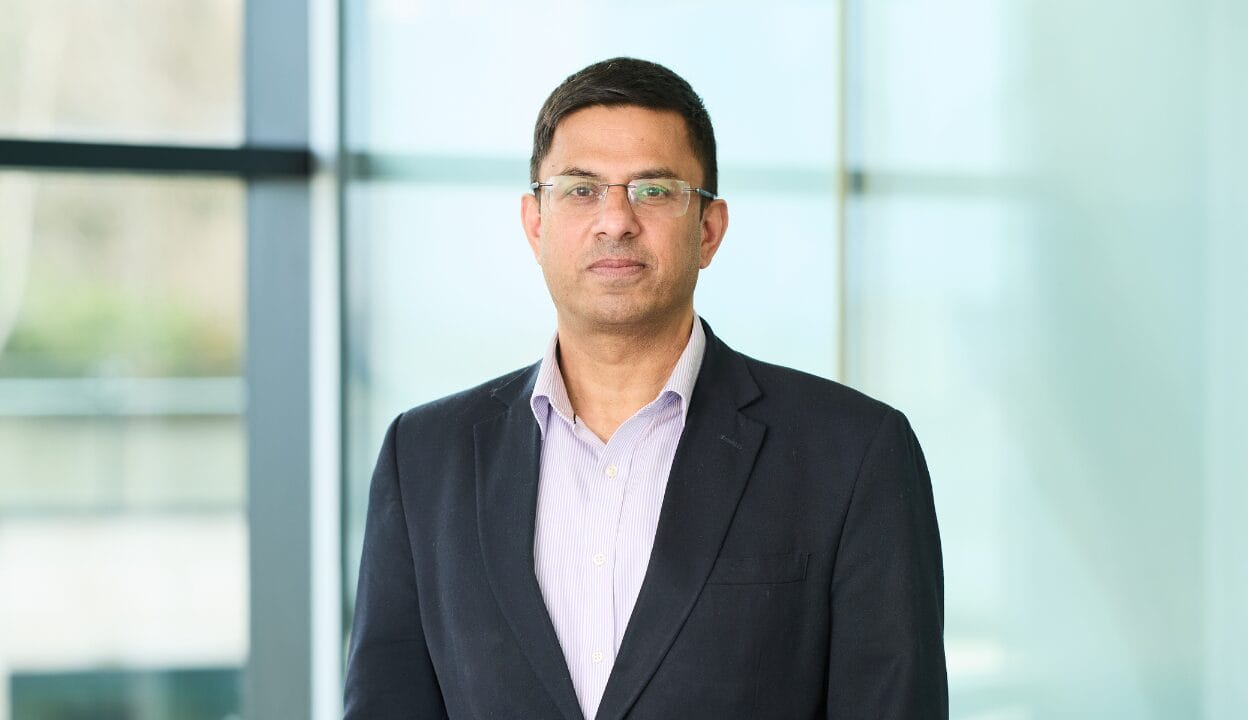
“The Carlyle investment is step-one of a similar program to our external CIO program; the same structure with private investments,” Burns, pictured right, says.

“We are looking for managers to give us a broad multi-discipline platform. It’s pretty wide discretion with a private-equity focus. We want them to give us their best ideas. Carlyle matured quicker than the others.”

Burns says that the fund has had a long history with Carlyle which has created a “long memory bank” due to the ongoing relationship.

“Trust is more important than any strategy,” he says.

Burns says taking the advice of its consultant, Callan, adds a lot to the equation in this process.

The fund also recently awarded Blackstone two $500-million mandates; one to Blackstone Strategic Holdings Fund, a private equity fund with a strategy focused on investing in minority stakes of hedge fund general partnership interests; and an additional $500 million to a no-fee fund, in which Blackstone Alternative Asset Management will make investments in selected partnerships alongside Blackstone Strategic Capital Holdings.

“We feel one of our biggest assets is our ability to handle illiquidity and take a long-term view. We are a truly multi-generational fund and we want to play on our ability to make the most of the illiquidity premium.”

The new mandates will be funded over the next three years, most likely from equities mandates, but possibly from the existing external CIOs.

In addition to the special opportunities allocation of 20 per cent, the other risk-factor based allocations are cash and interest rates (6 per cent), company exposure (55 per cent) and real assets (19 per cent).


Leave a Comment

The Austin advantage: Texas Teachers talks optimism, innovation and growth

The Austin advantage: Texas Teachers talks optimism, innovation and growth

Jase Auby, TRS's celebrated CIO, explains why TPA doesn't fit with its culture; why community push back on data centres could turn out to be an investor advantage, and argues the case for continuing to invest in fossil fuels. Top1000funds.com sat down with the CIO in his Austin office for an all-encompassing conversation.

Sort content by

Strategies, and a bit of luck, working for London council fund

For the past two months, a document has sat on the home page of the London Pension Fund Authority (LPFA) which would be the envy of many of its fellow defined benefit schemes. The document is simply, unequivocally headlined: “Your Pension Is Safe”. mrec4inarticleinline Sponsored Content scnative1 scnative2 scnative3

Jockey Club to place its bets on distressed funds

The US$7 billion Hong Kong Jockey Club fund is looking to invest in the new year into some secondary private equity and distressed debt and equity funds, to take advantage of opportunities presented by the global financial crisis. mrec4inarticleinline Sponsored Content scnative1 scnative2 scnative3

Strategies for volatile times

How ATP takes on risk on top of providing a guarantee Higher guaranteed pensions is good news for members of Denmark’s biggest pension fund, but how is ATP’s new pension savings model holding up in volatile markets? Kristen Paech reports on the investment strategies the fund is pursuing to meet its goals. mrec4inarticleinline Sponsored Content

ABP sticks to plan and active management…

While many pension funds have fled to safety in recent months due to the turmoil in global markets, pulling their capital out of equities and into bonds and cash, the Dutch pension giant ABP has not felt compelled to follow that course, preferring to stick to its original strategy, as designed in 2006. mrec4inarticleinline Sponsored

…as PGGM tweaks alpha/beta separation

As the credit crisis continues to wreak havoc with financial institutions balance sheets and new credit and market risks appear to lurk around every corner, the search for optimal asset management strategies has reached new highs. mrec4inarticleinline Sponsored Content scnative1 scnative2 scnative3