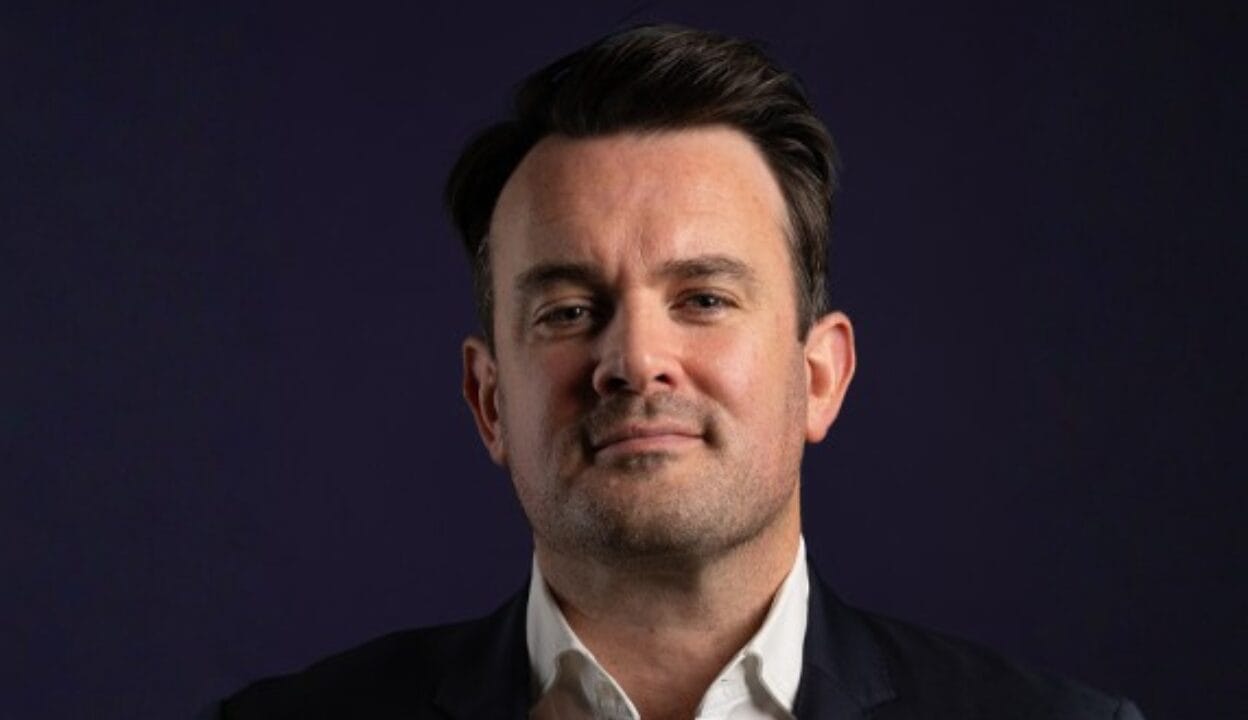

Railpen ups infra allocation; commodities investments get the green light

John Greaves

The £35 billion ($47 billion) Railpen will ramp up its infrastructure allocation and explore a foray into commodities, as the fund bedded down the protection against inflation as the most important portfolio objective in its latest strategic asset allocation review.

It was a priority driven by Railpen’s stakeholders who want the fund to better mitigate inflation risks without compromising real returns, according to director of total portfolio investments John Greaves.

“On a trailing three and five-year basis, inflation has had a really big impact on our real returns, because we only partially hedge inflation and it’s quite hard to find assets that are resilient to inflation shocks,” Greaves tells Top1000funds.com in an interview.

“We spoke to the board about their growth-matching mix, but they are pretty focused on the long-term real return generation and weren’t willing to take some return off the table to hedge inflation.

“So it was ultimately down to the growth assets to be more resilient to such an [inflationary] environment.”

In infrastructure, this means Railpen is investing more in core-plus and value-add assets to complement its existing core exposures which generate secure income. The fund is looking to boost the infrastructure portfolio from the current £1 billion to £2-3 billion in the next five years.

Sponsored Content

The fund will look to take on some development risks and grow smaller, quality infrastructure assets into the mid-market space where the fund will seek liquidity, typically within a 5-10 year hold period.

It has a strong home bias – aiming for around 75 per cent of its infrastructure portfolio in UK direct investments – and has significant exposure to assets with an energy transition theme. It also has pan-European partners for co-investment opportunities but doesn’t have exposures to the US or emerging markets infrastructure.

“It’s a nice feature of infrastructure that often there’s plenty of opportunities to develop assets that we’d see would be resilient to energy transition risk,” he says.

But the fund is hesitant about infrastructure debt. Despite it being a macroeconomically resilient asset class and throwing out attractive yields in a stable regulatory and policy setting, Greaves says that is a big ask in today’s world.

“We’re a bit mindful that any asset that requires a stable regulatory, political environment should probably be carrying a higher risk premium right now, because we just don’t think that’s the environment we’re in,” he says.

“You often get quite a small pickup [in infrastructure debt] for actually quite a lot of risk. If a government changes the rules of the game, the nature of a subsidy agreement for example, or other changes that underpin the value of the asset, then often it could be quite a big risk event.”

The fact that infrastructure debt is an area heavily bid by insurers also means the return is quite tight, Greaves explains.

“We’ve tended to invest in areas where there’s less cash flow certainty and less of an insurer bid,” he says.

“Right now it still feels like an environment where you want probably more of a barbell [approach] – buy inflation linked bonds and then invest up the risk spectrum in more of the growth infrastructure space.”

Commodities’ time to shine

Railpen recently received the nod from its investment committee to explore potential investments in the commodities universe. Greaves did not offer an expected allocation but it’s likely to be a small, controlled bet to begin with.

“We’re not going to put half the portfolio in it. It’s a complementary exposure that in certain environments hopefully would just give us a few per cent extra of return,” he says.

Gold, which has increased more than 60 per cent in the year to date, is likely to be a central part of the allocation. It’s a hedge to the fund’s underlying thesis that fiat currencies are becoming less reliable due to uncertain policies from global central banks.

“Most institutional portfolios are 100 per cent exposed to fiat currency. In our case, mostly British pound, but [others may have] dollars, euro and yen. Gold can help balance out the currency mix essentially,” he says.

“Do you want all of your exposure to be in paper money where central banks and policymakers have demonstrated in recent decades that maintaining purchasing power is not front of mind?”

Greaves clarifies the fund does not see gold as a long-term return driver but something to make the portfolio more resilient in environments where other assets may be struggling.

“Ultimately it has to outperform cash. It’s funded by cash and not funded by growth assets,” he says.

“Do we think a broad basket of commodities, and specifically gold, can outperform cash over the long run? Probably.

“Commodities have delivered about 2 to 3 per cent historically over cash and there’s no evidence that won’t continue. But equally, there’s not a clear economic rationale why it should outperform cash, really. So again, we have some very prudent assumptions there.”

The fund is still exploring the right implementation model, noting that while it has an internal trading capacity, commodities is an area where some market participants do have an information advantage, Greaves says.

“We’re comfortable running certain strategies internally. But we have some futures-based strategies which are implemented with external partners, just because they’re high-turnover type of strategies or where the contracts aren’t as liquid.”

Looking ahead, Greaves says Railpen is looking to build more portfolio resilience, which it defines as the likelihood of delivering its investment objectives over the rolling medium-to-long term.

“That’s the big thing this year, to have a better handle on what we can do over the medium term and to try and deliver on our objective in a wider range of outcomes essentially. We’re probably still at the start of that journey,” he says.

“It’s going to be very important in the coming decades to think about all these different possible scenarios. We think markets and the economy are going to be potentially pretty volatile.”

Railpen has 33 per cent allocated to equities, 8 per cent to fixed interest securities, 13 per cent to index-linked securities, 30 per cent to pooled vehicles and 7 per cent to UK property as at the end of 2024.

Leave a Comment

How CPP is evolving risk management for a faster, more interconnected world

How CPP is evolving risk management for a faster, more interconnected world

In an environment where multiple risks are emerging and their effects are compounding on the portfolio, CPP Investments' chief risk officer Priti Singh says the $572 billion fund is rethinking risk management from the ground up, shifting from reaction to preparation and embedding risk thinking earlier in investment decisions. She speaks to Amanda White about the fund's risk approach.

Sort content by

West Yorkshire prepares to up the pressure on Shell and BP

A new approach to holding the major oil companies to account will see the West Yorkshire Pension Fund, together with a cohort of other UK and European pension funds, demand BP and Shell explain their business plans in a world of declining demand for fossil fuels.

CalPERS board warned of risks in AI investments including China innovation

An investment banking expert has warned the CalPERS board of the risks inherent in AI, emphasising the importance of investors understanding how their exposure to AI is at risk because of Chinese competitors.

Cost, efficiency and less directs: AIMCo’s CIO spells out new strategy

AIMCo's new CIO Justin Lord explains why he is upbeat about investment opportunities and the fund manager's new governance after a tumultuous few years. Prioritising costs, efficiency and cutting back on direct investments in private equity, he articulates the opportunities ahead including in infrastructure and private credit.

NBIM prioritises trading efficiency, AI and culture in three-year plan

The largest investor in the world, Norges Bank Investment Management, is investing in AI to reduce costs, increase trading efficiency, and make better active decisions. The fund has set out its three-year strategy which also includes focusing on targeting managers with more flexibility to express negative views.

Private equity: Arizona’s ASRS argues the case for secondaries

The $50 billion Arizona State Retirement System is pushing into private equity secondaries, actively looking to invest in stakes being overloaded by other LPs, in a strategy that will complement its co-investments program and SMA investments with external managers. It’s looking for opportunities across the US and Europe.

TIFF plays the long game in venture capital

The $9 billion asset manager for 500 US endowments and foundations, TIFF, is famed for its PE and venture capital allocation. Head of private markets Brendon Parry reflects on his priorities, including navigating the winners and losers of AI, and leaning into independent sponsors and relationships with the best managers.

Previous



