
Funds SA cuts active risk as CIO puts stable beta first

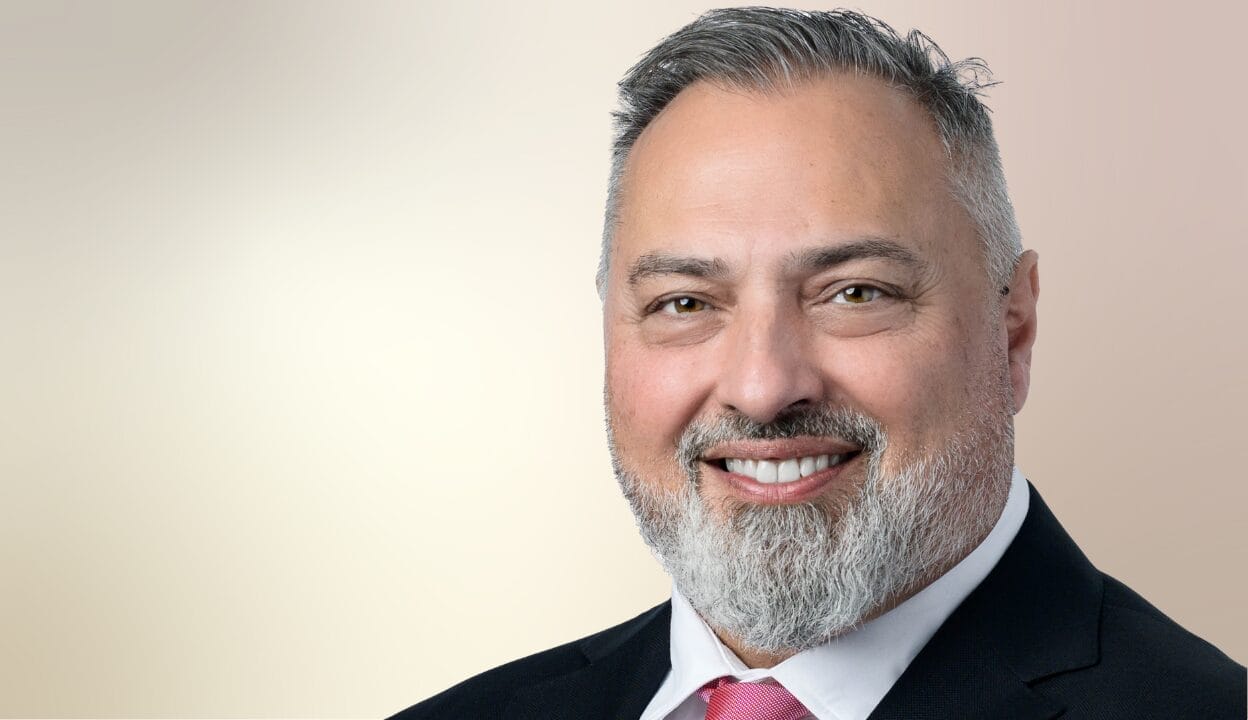
Con Michalakis

Australia’s A$50 billion ($36 billion) Fund SA has culled the number of active strategies in its equity portfolio and reallocated the capital to passive and low-risk quant investments, as chief investment officer Con Michalakis says stable beta carries more weight than alpha in today’s multi-asset portfolio.  

The fund manages capital for 11 pension, endowment and foundation clients in the state of South Australia. The biggest among them is the A$40 billion superannuation fund, Super SA, which is a pension fund only open to government workers but under pressure to compete for members with the public-offer, more commercialised super funds in a highly pro-consumer-choice industry.

In recent years, too many drivers in traditional active management have become a source of underperformance, according to Michalakis, whose key priority when he became CIO in February 2025 was to make Super SA “peer competitive” again.

“The game’s changed [in active management]. I don’t believe you can rock up with a wooden tennis racket playing in a graphite world. It’s actually changed,” he tells Top1000funds.com in an interview from the fund’s Adelaide office, pointing to the prevalence of sophisticated multi-manager hedge funds, quant firms and thematic ETFs making it more difficult for active managers to find an edge.

To reduce active risk, Funds SA cut the tracking error in its Australian and global equities book from close to 3 per cent a few years ago to 1.5 per cent today.

“It’s beta-first with a bit of alpha. Maybe the belief in the past was alpha was an engine here for multi-asset, [but now] we believe get your beta, and if you see [the opportunities] to do a little bit of alpha, go for it. But don’t bet the farm on it.”

Sponsored Content

Underpinned by a core set of fundamental active managers and passive and systematic exposures, Michalakis wants the fund to gain more “targeted” exposures in active global equities moving forward. On the wish list are crossover strategies – where public investors aim to invest in private companies before their IPOs to secure higher returns – and extended strategies like shorting, although the latter would need to be reviewed and approved by the board.

“It’s an extension to the benchmark, so it won’t be net short… We may not get there, but I’m interested to go down and see what we can do,” he says. Funds SA largely outsources its investment management as it describes itself as having a “manager of managers” model.

Private markets playbook

Broadly, Funds SA is trimming its manager roster and opting for deeper partnerships. It was a recommendation put forward by the fund’s external asset consultant JANA, which Michalakis has also brought on board in a more full-service capacity and can offer inputs to investment ideas earlier in the process.

It is not so much to do with the upkeep of relationships or team resources – Funds SA has a 20-strong investment team and not stretched by any means.

“We want to just make sure we are close to them and getting access to their best ideas,” he says. The fund already has a number of key relationships in private markets such as Macquarie and EQT in infrastructure, Bain in private equity and Oak Hill in private credit which Michalakis would like to expand.

“Basically having not just one mandate here, one mandate there, but having multiple relationships with a few managers where you get scale, and also the… sharing of ideas, being opportunistic to move early and take advantage of dislocation, or if there’s a niche opportunity,” he says.

Michalakis moved to Funds SA after close to three years as the deputy CIO at Hostplus, which has the best performing balanced investment option in Australia over a 10-year horizon according to research house Chant West. The fund is known for having a larger than peer exposure to private equity and venture capital which is something Michalakis carried through to Funds SA.

“We introduced Australian VC firms like Square Peg and Blackbird, where we’ve done their core fund, their follow-on fund and co-investment, so we have got a nice program built out there.”

TPA lite

Funds SA, due to it being a sovereign investor, isn’t subjected to the Australian pension performance test as the prudentially regulated super funds – a measure that is heavily criticised domestically for encouraging benchmarking-hugging behaviours.

Michalakis says Funds SA is determined not to miss a good investment opportunity just because it doesn’t fit into an asset class bucket, and to aid that goal has introduced a so-called “TPA-lite” framework. It means that the fund is incorporating some TPA principles into the organisation, such as reducing silos in the investment team and investing more for the total fund objectives, but not adhering to them in an “extreme” manner.

“We’re not high priest monks of the TPA approach, but we can think about how to design portfolios [with its principles]. That’s a breath of fresh air,” Michalakis says.

“Underwrite well, generate a return, and then worry about where you want to stick it. That’s one thing I love to change in investing, don’t be a slave to benchmarks.”

To facilitate the transition toward TPA-lite, Michalakis says there has been extensive communication between the senior leadership team and the broader investment team. TPA can put a strain on investment team structure as a sharper focus on total fund objectives usually means there is also more fierce competition between asset classes for capital.

“The most important thing was to get the team together, and we do this with the broader investment team, with the senior leadership team and with [CEO] John [Piteo], and say it’s not personal. We’re not taking strategies away from you,” Michalakis says.

“That conversation has gone very well actually, within the team, [there] hasn’t been really any turnover.”

There has been an investment team restructure after former deputy CIO and head of equities Matthew Kempton departed the fund last April, which saw Cameron Sinclair promoted to the second-in-command position and Kelly Howlett elevated to head of portfolio implementation. 

Asset Owner:Funds SA

Leave a Comment

More from this fund

Future Fund: AI world order defined by US-China split will hurt capital owners

Future Fund: AI world order defined by US-China split will hurt capital owners

A geostrategic standoff between the US and China over AI would be “extremely damaging for capital owners” according to the Future Fund, Australia’s A$337 billion ($237 billion) sovereign wealth fund, which outlined four “secular scenarios” around AI and its investment implications.

Sort content by

New Jersey’s $85 billion fund stockpiles cash, eyes PE secondaries

An underweight position across private markets, predicated on a view that geopolitics and inflation mean interest rates are not coming down any time soon, has positioned the New Jersey Division of Investment with plenty of dry powder and a cash position four times the policy allocation. It is now readying for opportunities in private equity secondaries and with emerging managers. Chief investment officer Shoaib Khan spoke to Top1000funds.com.

ART homes in on balance sheet management as Australian system enters new liquidity era

The A$370 billion ($258 billion) Australian Retirement Trust has been homing in on efficient usage of derivatives for exposure and liquidity management and alpha generation, as chief investment officer Ian Patrick says integrated balance sheet management will “beyond a shadow of a doubt” become a more prominent feature in the Australian superannuation industry.

GIC evolves TPA in investment framework overhaul centred on economic drivers and flexibility

GIC has further refined its total portfolio approach by moving to a strategic portfolio focused on underlying factors that drive returns. Split between equities, fixed income and real assets, the revision means the fund can move more easily between private and public exposures and nimbly between asset classes.

COAERS finds rich pickings in PE secondaries; warns of retail risk

The exit drought and extended holding periods in private equity is causing mounting pain for many LPs. But for Austin-based COAERS, it is providing ample market to pick up bargains in the secondary market. Sarah Rundell spoke to CIO David Kushner.

Beyond asset classes: Active credit becomes the test case for Florida’s portfolio evolution

Florida State Board of Administration has built an active credit portfolio spanning public and private markets, CIO Lamar Taylor says the initiative could be the first step in a broader shift away from traditional asset-class investing towards a framework centred on return drivers and risk exposures.

Why sustainability pays for US timberland manager RMS

Alabama-based timber manager RMS has developed its own index to measure biodiversity in its forests. The move is in response to a jump in the number of asset owners asking biodiversity questions.



