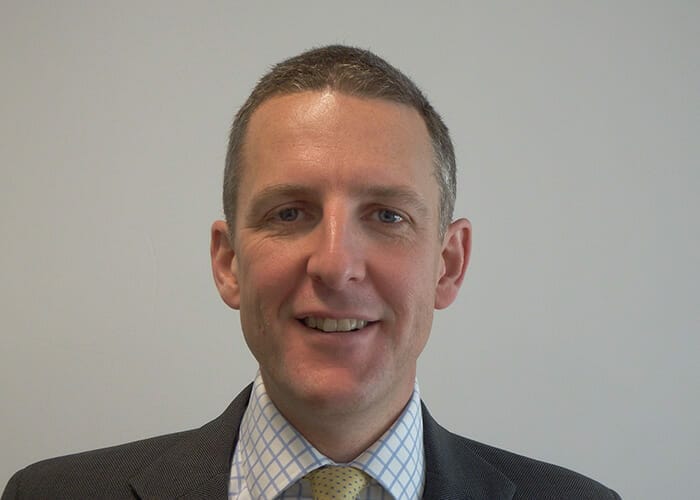
Railpen: good partners add skills

Earlier this year, RPMI Railpen, investment manager for the £28 billion ($37 billion) pension fund serving the UK’s railway workers, embarked on a joint venture with the $66 billion Alaska Permanent Fund and Kuwait’s Public Institution for Social Security (PIFSS) to better access private markets.

Like many other asset owners, the trio have found competition and elevated prices has made accessing private markets difficult. The hope is that combining firepower and expertise in a joint venture will open up more opportunities. The joint venture, Capital Constellation, will invest in private equity and alternatives managers, and plans to deploy more than $1.5 billion in the next five years. The three funds manage about $200 billion in assets between them.

The project has revealed important lessons, Railpen chief investment officer Richard Williams says. First, asset owners should partner with investors that bring different elements to the party. In Railpen’s case, this means finding partners that can complement its ESG experience and UK presence, he says.

“It is also about finding heterogeneous skill sets that blend together,” Williams says. “There are lots of hurdles to jump through and we would like to do more initiatives like Capital Constellation, but only time will tell if we do. It won’t be for lack of intention.”

Preparing the ground at the beginning of a collaboration in case things grow tricky and parameters shift in the future is important as well, he says.

“It is a little bit like a prenup [prenuptial agreement],” Williams says. “If it doesn’t work out, all parties need to know how they can separate without it getting too acrimonious. I’m not suggesting the best marriages have to have a prenup, but sometimes love isn’t enough.”

Sponsored Content

For more on Railpen’s strategy see our profile Railpen reaps benefits of in-house team.

Leave a Comment

How CPP is evolving risk management for a faster, more interconnected world

How CPP is evolving risk management for a faster, more interconnected world

In an environment where multiple risks are emerging and their effects are compounding on the portfolio, CPP Investments' chief risk officer Priti Singh says the $572 billion fund is rethinking risk management from the ground up, shifting from reaction to preparation and embedding risk thinking earlier in investment decisions. She speaks to Amanda White about the fund's risk approach.

Sort content by

Postcard from Japan

For many years Japan has been an insurance-market behemoth and Japan Post Insurance Company is one of the giants with $1.13 trillion. But the industry has not been immune to change. Between 1997 and 2001 seven life insurance companies became insolvent, and there is a question mark over whether it was a low interest-rate environment

Feathering the NEST

In the United Kingdom there are around 1.5 million employers, and it is estimated more than half of them do not offer a pension to their employees. The pension system in the UK is fragmented. There are more than 10,000 mostly defined-benefit plans and, unless you are a government employee or in the high-income bracket,

Norway’s GPFG enters the property game

Last May, when Norway’s Government Pension Fund Global bought 4 per cent of the Formula One motor racing group from private-equity firm CVC Capital Partners, its goal was clear. The sovereign wealth fund, which invests Norway’s oil revenues, wanted the inside track on Formula One’s IPO in Singapore, scheduled for June. Instead, the GPFG’s foray

Irish fund “turned on its head”

Institutional investors across the planet are squaring up to changed realities in the wake of the financial crisis. It is difficult though to think of any that has found its operating environment transformed as fundamentally as Ireland’s National Pensions Reserve Fund (NPRF). “Being turned on its head is a fairly accurate way to describe the

Taking RI from in-house to front of mind

The industry needs to be better at thinking how responsible investing can be accessed by smaller funds or those lacking sufficient internal resources, David Russell, co-head of responsible investment at the UK’s Universities Superannuation Scheme, says. Russell, who will join a panel at the Fiduciary Investors Symposium in Santa Monica produced by Conexus Financial, publisher

Overseeing complexity with Rotman-ICPM

A week-long Board Effectiveness Program with peers from around the globe, including those from Canada’s HOOPP and Denmark’s ATP, has given AIMCo board member, Andrea Rosen, a new perspective on best practice. In a business environment where most people are working harder, multi-skilling, facing lower-than-necessary resourcing, staffing and margins, a week-long course could be viewed

Previous




