Railpen: good partners add skills

Earlier this year, RPMI Railpen, investment manager for the £28 billion ($37 billion) pension fund serving the UK’s railway workers, embarked on a joint venture with the $66 billion Alaska Permanent Fund and Kuwait’s Public Institution for Social Security (PIFSS) to better access private markets.

Like many other asset owners, the trio have found competition and elevated prices has made accessing private markets difficult. The hope is that combining firepower and expertise in a joint venture will open up more opportunities. The joint venture, Capital Constellation, will invest in private equity and alternatives managers, and plans to deploy more than $1.5 billion in the next five years. The three funds manage about $200 billion in assets between them.

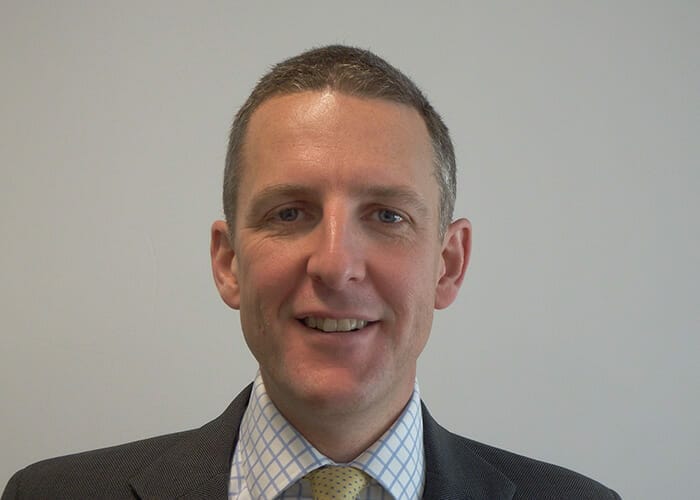
The project has revealed important lessons, Railpen chief investment officer Richard Williams says. First, asset owners should partner with investors that bring different elements to the party. In Railpen’s case, this means finding partners that can complement its ESG experience and UK presence, he says.

“It is also about finding heterogeneous skill sets that blend together,” Williams says. “There are lots of hurdles to jump through and we would like to do more initiatives like Capital Constellation, but only time will tell if we do. It won’t be for lack of intention.”

Preparing the ground at the beginning of a collaboration in case things grow tricky and parameters shift in the future is important as well, he says.

“It is a little bit like a prenup [prenuptial agreement],” Williams says. “If it doesn’t work out, all parties need to know how they can separate without it getting too acrimonious. I’m not suggesting the best marriages have to have a prenup, but sometimes love isn’t enough.”

Sponsored Content

For more on Railpen’s strategy see our profile Railpen reaps benefits of in-house team.

Leave a Comment

How CPP is evolving risk management for a faster, more interconnected world

How CPP is evolving risk management for a faster, more interconnected world

In an environment where multiple risks are emerging and their effects are compounding on the portfolio, CPP Investments' chief risk officer Priti Singh says the $572 billion fund is rethinking risk management from the ground up, shifting from reaction to preparation and embedding risk thinking earlier in investment decisions. She speaks to Amanda White about the fund's risk approach.

Sort content by

Alternative benchmarks attractive for Strathclyde

For many trustees, fundamental indexing is still too much of a leap to risk any serious asset allocation. But the £11 billion Glasgow-based Strathclyde Pension Fund, one of the largest UK local authority schemes, plans to invest in the strategy. The idea is to track an equity index that weights companies according to their economic

Modern portfolio theory drives Volkswagen Stiftung

The €2.3-billion ($3-billion) assets at the Volkswagen charitable foundation in Germany are powered by portfolio theory and diversification. The foundation is so keen on modern portfolio theory that its founder Harry Markowitz gets a mention in its annual report. Chief investment officer Dieter Lehmann says he is sure “that his correlation analysis isn’t correct at

Innovation brings results at Austria’s APK

Austria is a country with a strong tradition of innovation. That can be sensed through its nineteenth century industrial emergence to Gustav Klimt’s secessionist art movement in turn-of-the-twentieth-century Vienna and the Austrian school of economics that later spawned monetarist pioneer, Friedrich Hayek. The APK pension fund is these days adding to the list of those

Calming the waters of uncertainty at UK seafarers’ fund

The UK’s £3.3-billion ($5.6-billion) Merchant Navy Officers’ Pension Fund (MNOPF) is poised to offload the final portion of its defined-benefit liabilities in the old section of the scheme. The fund, which has provided pensions to the shipping industry since 1937, comprises a $3.2-billion new section and a $2-billion old section, closed since 1978 and with

Controlling strategy inhouse at UK coal scheme

Until a few years ago, every aspect of the investment strategy at the UK’s £20-billion ($32-billion) coal industry pension scheme was outsourced. The main inhouse task at the pension fund was benefit payment but now, in a fresh approach spearheaded by straight-talking 38-year old New Zealander, Stefan Dunatov, the new chief investment officer of the

Swiss powerhouse: the Sulzer pension fund

Sulzer is a Swiss manufacturer with a proud past. From pioneering the diesel engine to making the specialist pumps that drive power production around the world, it has been around for 178 years. Perhaps leveraging off such a rich history, the company’s pension scheme is very much looking into the future thanks to solid returns

Previous




