
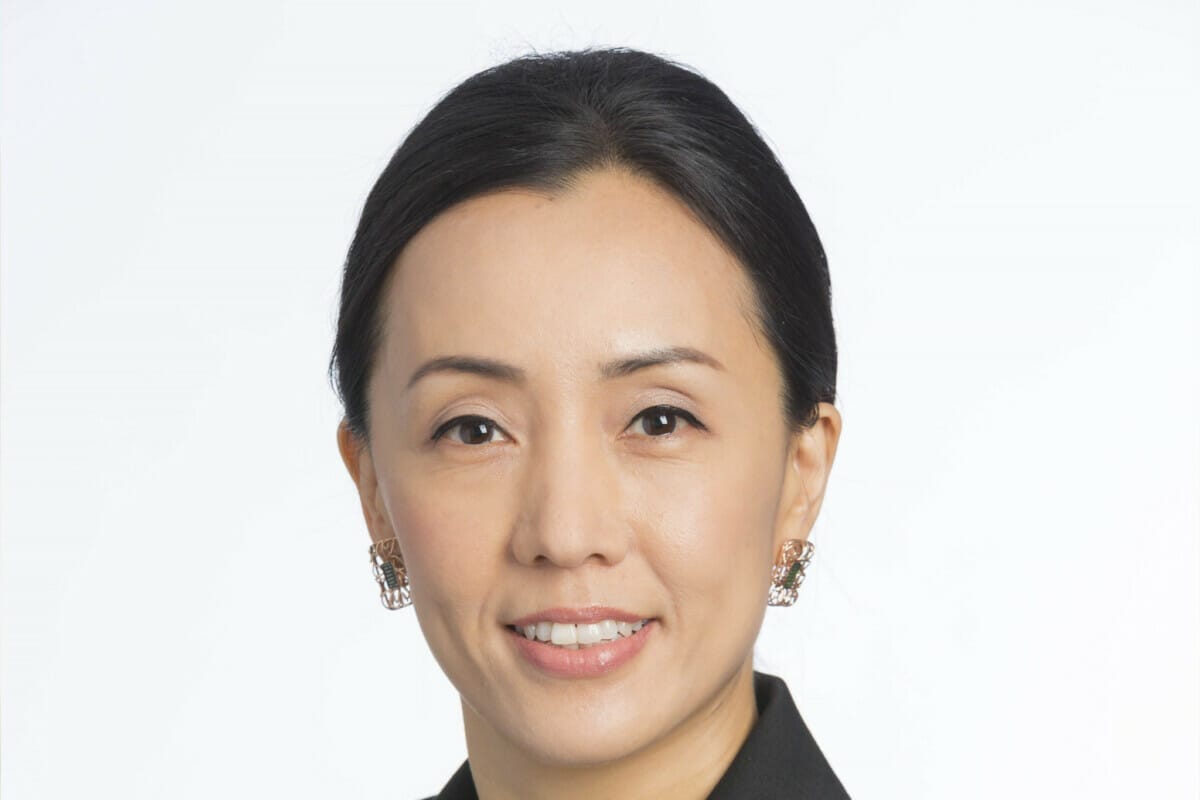

Suyi Kim, global head of private equity at CPP Investments manages quite possibly the largest private equity allocation in the world. At C$146 billion, equivalent to a quarter of the entire C$575 billion pension fund for some 21 million Canadians and forecast to grow bigger every year, Kim leads a program that is also heading into unchartered territory.
In conversation with Top1000funds almost exactly two years since her promotion to the top job, she is mindful of how the portfolio’s size could impact its ability to continue to generate the pension fund’s strongest return of 15.5 per cent on a 5-year basis.
“We are a battleship not a speedboat compared to other programs,” she says.
Kim believes the primary source of the portfolio’s success derives from the quality of the private equity team; its synergy, level of communication and mission-driven culture.
“This is what is going to allow us to outperform the market,” she says.
Yet at 190 people and counting and spread across global divisions that now include an office in Mumbai, ensuring smooth communication is, she says, intellectually challenging.
“The larger the team, the harder the task of maintaining the culture that allows us to outperform and my continual focus is making sure we are working well as a team.”
For example, a key element of team functionality is that different divisions (the portfolio is divided in four departments) work together so that insights gained by one team feed into decision making in another. It provides a level of analysis that goes much deeper than just persistency of returns, she says. “We’d never just re-up with a manager without cross referencing with our other strategies to inform how the manager will perform.”
Partnerships pay
CPP Investments’ GPs are also part of the extended team and the fund’s long-term partnerships have been integral to the portfolio’s success. Back in 2007 when Kim began what would turn into a 16-year stint heading up the fund’s Asian private equity business (she was the firm’s first hire outside Toronto when the portfolio was just C$4.4 billion) partnering with expert GPs was the main strategy.
“If you are not the best investor in the market you need to work with the best, and when we first started out, we were nowhere near the best,” she recalls.
Manager relationships, across the funds and secondaries and direct investments divisions are, she insists, much more art than science and manifest in an understanding of how the other side is going to work. The relationship is based on transparency and trust in the other’s ability to deliver.
Size and scale have helped build GP relationships, but again, it is easy to see how size can become an obstacle. One of the challenges today is making sure the fund’s processes keep up with partner GPs yet this is sometimes slowed down because investment decisions go through various stages of approval.
“For a large-scale deal, we have to go to the global investment committee and even to the board in some cases,” she says. “Our job is due diligence, and for deals that require a level of speed that makes the due diligence difficult, well, we won’t do the deal. I like to be able to sleep at night.”
focus on Quality in a challenging Market
Kim is also preparing for tougher returns in the asset class ahead. Higher interest rates signpost a higher cost of doing business that will impact portfolio companies’ performance and multiples. But she doesn’t believe this will feed through into valuations until 2025-2026.
“When we look at the investment case, higher interest rates will have an impact on the multiple but so far market multiples still haven’t changed that much,” she says.
Unless interest rates start to come down soon (and she doesn’t think that is particularly likely) leverage will remain high and the free cash flow will be lower along with the return to investors. She says private equity players that went through the GFC have “learnt their lessons and built in more of a cushion” but she is concerned that an expectation gap continues to persist between buyers and sellers.
“I have to remind our senior managers and board that returns will be more challenging going forward. Yes, private equity is the best performing asset from an absolute return perspective, but you must also look at it from a risk adjusted basis, and private equity is the most risk-taking allocation in the fund.”
She notices investors have been putting more money out than they have been getting back. It’s why she believes more exits must happen before investors put more money out the door and is the reason behind a spike in LP secondaries activity and GP’s restructuring their portfolios. For now her focus is on investing – and exiting – high quality companies only.
She reflects that if assets on the ground are performing and compounding at the expected rate, there is no rush to sell in the current market. Being a long-term investor means there is no pressure to constantly deploy so instead she is continually re-underwriting deals to make sure they are still profitable. “If we are holding a business that still makes sense, I will always choose to hold onto rather than exit and recycle the capital to other deals.”
She says her teams have grown more selective because of the challenges around forecasting the operating case for businesses and notes that the fund’s deployment on the direct side has slowed. On the funds side, because commitments are drawn down over the years trying to time the market isn’t an issue. Instead, her focus is on making steady commitments and ensuring the portfolio doesn’t have vintage concentration. “We use our secondaries to adjust the portfolio here.”
In fact, the number of deals across the entire private equity portfolio has slowed significantly in the last two years. “We have submitted bids, but we often come in far below the winning bid and in retrospect we are happy that we’ve missed these investments.”
Complexity in China
Kim lived in Toronto before she moved to Hong Kong, and because her partner is Canadian she describes her return to the city as a homecoming, even though she is Korean.
But it is her unique experience of private equity in China, where souring geopolitics, complex regulation, the increasing cost of doing business not to mention the inability to forecast exits means other Canadian funds like C$400bn ($295 billion) Caisse de dépôt et placement du Québec (CDPQ) and OTPP have pulled back on direct investing in private assets that the conversation now turns.
CPP Investments, she says, is intent on building a globally diversified portfolio of which Asia Pacific and China remains a vital pillar. Around 9 per cent of the private equity portfolio is invested in China while the total fund currently has around C$52 billion invested in the country. In private equity, a strategy focused on investing in companies that tap consumer spending has famously paid off . “Private equity Asia is one of the best performers in terms of relative performance of the whole book.”
Still, things are starting to change. Strategy in Asia is more bottom up whereby the team apply a risk return framework and then bring investments to the committee to discuss. She notes the market is becoming difficult to navigate and describes an increasingly cautious approach.
The biggest challenge is predicting a company’s operating capability. Drawing up financial models requires the team put together a fan of outcomes but predicting those outcomes has been problematic ever since the pandemic.
“Unlike in public markets, in private markets investors really need to go and see and touch and feel what they are investing in. Not being able to do this in China over the last three years due to the pandemic leads to difficulties predicting the operating case and where returns are going to come through. I can’t see the market going back to how it was in 2019.”
Yet it is precisely this ability of her team to research and dig down into an asset that she is convinced is the winning ingredient. It is also the characteristic that she believes makes it a more honest asset class than public equity.
“Public market investors have a level playing field and they can share all the information that is out there, but in private equity it’s all about how much work you put in, and how that helps you make a better decision,” she concludes.








Leave a Comment
You must be logged in to post a comment.
Login