
LGPS Central doubles in size; looks to add more alternatives

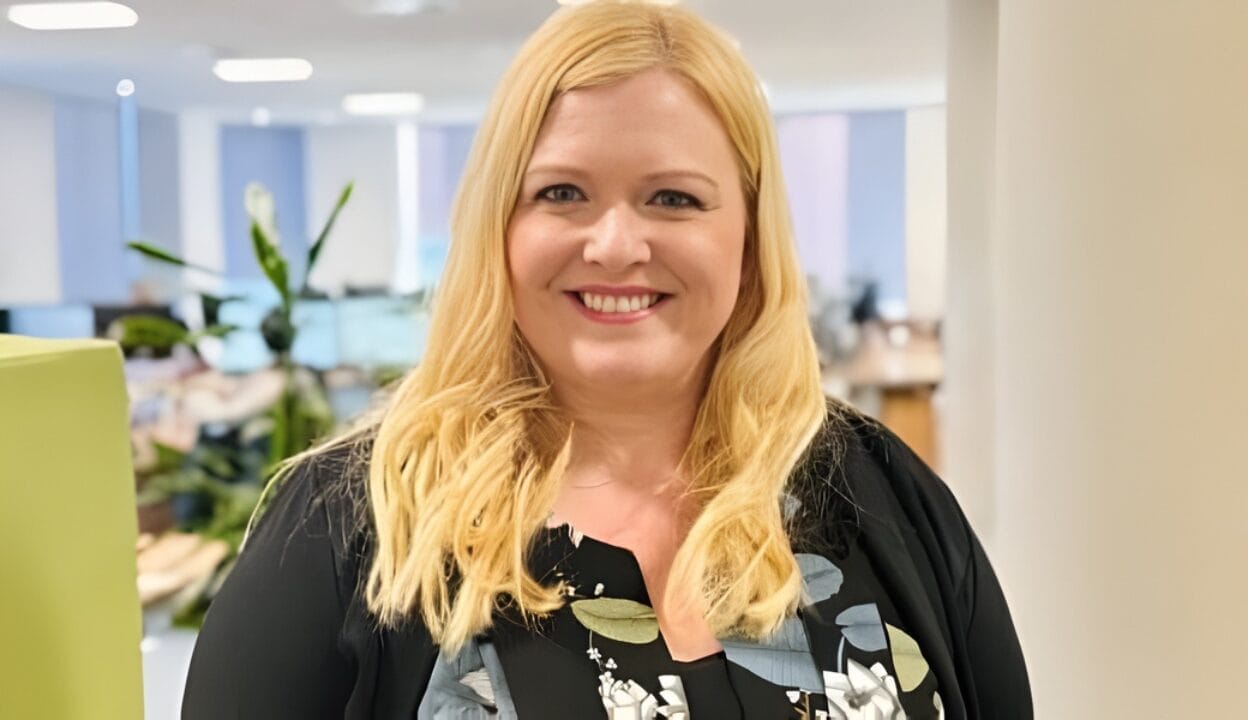
Jayne Atkinson

In a rare interview, Jayne Atkinson, chief investment officer of the £100 billion ($132 billion) UK pool LGPS Central, reveals the plan to scale up its offering after almost doubling its assets under management, including expanding alternatives to new allocations in hedge funds, diversified growth funds and insurance-linked securities.

With the sweep of a pen, LGPS Central, one of the United Kingdom’s Local Government Pension Scheme pools, has become a £100 billion ($132 billion) asset manager.

Following the government’s pursuit of economies of scale in public sector pensions, it axed two pools, ACCESS and Brunel Pension Partnership, and forced their underlying pensions funds to choose other pools.

LGPS Central has proved a popular choice, attracting six new client funds to bring its number of partner funds to 14 and nearly double its assets under management.

It requires “thinking and acting like a £100 billion asset manager” with more service offerings and a boosted exposure to asset classes and expertise CIO Jayne Atkinson, who joined LGPS Central six months ago, tells Top100funds.com.

“I wanted to join an LGPS pool that’s on the way up,” she says.

Sponsored Content

Under pressure to pool

Government policy has also put a renewed emphasis on pooling whereby partner funds transfer assets to LGPS Central. Policy makers want all LGPS assets to be pooled by March 2026, although that mandate does allow “limited flexibility” for pension funds moving to new pools.

LGPS Central’s pooled assets have grown from £19 billion in 2022 to around £50 billion today, but around £18 billion remains managed by partner funds through their existing arrangements. These include both active and passive strategies with external managers, across public and private markets.

“We have already started the transfer of these legacy assets. We are also in advanced discussions with new partner funds to understand their current asset strategies and work has started to formulate plans to transfer these assets across too,” says Atkinson.

As the pace quickens, she says her key focus is on developing stakeholder relationships, meeting new partner funds and attending the different pension committee meetings that range in size and sophistication with different needs and levels of diversification. Positively, she’s encouraged by the sense of collaboration between the funds, and how existing partner funds got behind LGPS Central’s bid to inherit new ones.

“We have been touched by how existing partner funds worked with us to inherit new ones in a truly collaborative exercise.”

In recent months she has made internal decision-making processes more efficient, including streamlining the manager line up in the pooled fund offerings. She is also building up the internal investment team to accommodate new partner funds, focused on recruiting mainstream asset managers from the external market place.

“We’ve already attracted some great hires,” she says. “It’s wonderful to see experienced household names come through the door.”

willingly taking compulsory advice

Policy makers have also ruled that  local authority pension funds take investment strategy advice from their respective investment pools. LGPS Central already provides investment advice to some of the partner funds, but in line with government policy has boosted its advisory offering in time to provide comprehensive investment strategy across all nine asset buckets, and asset liability modelling, from next spring.

“From next April, it will be compulsory for partner funds to use our advisory offering, but we want them to willingly come to us for advice and so we are working together with them on what that offering could like in the future,” she says, explaining that the individual administrative authorities will continue to decide each fund’s overall asset allocation, the major driver of overall returns.

Private markets push

LGPS Central’s existing  private markets offering is spread across OECD countries with around a quarter weighted to UK assets. Allocations span private equity, private credit, infrastructure and property, and each bucket has several closed and open-ended funds with different risk-return profiles and strategies.

This will expand to new allocations to hedge funds, diversified growth funds and insurance linked securities as well as hedging assets by April next year.

“Alternatives are one of the government’s nine asset class buckets, and we want to make sure we are ready to accommodate that next year,” she says, adding that these allocations won’t necessarily be run in-house. “We expect to in-house more investments where it is deemed cost effective, but we may also outsource if it’s not cost effective to keep the allocation in house. It’s a two-way street.”

LGPS Central is also building a new, three-person internal investment team focused on local investment in a strategy that aligns with government policy to invest more at home. Atkinson says she doesn’t want it labelled impact investment.

“The reason is, we are conscious of our members underlying need for a financial return and we are very keen to supply that financial return. These are not charitable investments, and we expect a risk adjusted return going forward.”

Leave a Comment

NZ Super cuts benchmark return expectation on US valuation concerns

NZ Super cuts benchmark return expectation on US valuation concerns

A view that the US stock market is overvalued and equity risk premia will be lower over the long term has driven New Zealand Super to lower the return expectations for its reference portfolio following its recent five-yearly review of the benchmark. Co-chief investment officer Brad Dunstan also flags underweight commodity exposure as an area to address and explains why the fund remains sceptical of illiquidity premia despite seeing a growing case for private markets.

Sort content by

What a brief encounter with Elon Musk taught me about the limits of capitalism

In 2013, on the sidelines of the Milken Conference at the Beverly Hilton, my friend and then-colleague Sean Scallan and I found ourselves in a seven-minute private conversation with Elon Musk.   He was not yet the figure he is today. Tesla was struggling. SpaceX had launched but not yet proven itself. The idea of humans

How CIOs are building portfolios for an unpredictable world

As opposing macroeconomic and geopolitical forces collide, chief investment officers at leading pension funds say that trying to predict the future is a “loser’s game”. The question today is no longer what comes next, but how to build a portfolio that holds together in any investment regime.

Assault on universities fracturing the ‘social compact’ behind US growth

The breakdown of a decades-old bargain between the US government and its research universities threatens the engine that has driven American productivity and economic growth since the end of World War II, the Top1000funds.com Fiduciary Investors Symposium at Harvard heard.

TPA to usher in clearer accountability at CalPERS

CalPERS chief investment officer Stephen Gilmore said the $650 billion fund’s upcoming shift to a total portfolio approach will sharpen investment accountability and help it focus capital allocation decisions on fund-level objectives.

Blue Owl co-founder on doing fewer things better

In a fireside chat at FIS Harvard, Blue Owl co-founder Doug Ostrover said the fast-growing alternatives shop won’t expand “just for the sake of hubris” as it pursues market leadership through a tightly defined set of offerings. He also unpacked the recent redemption pressure the firm was under and how it plans to move past it.

Reports of America’s decline greatly exaggerated: Kotkin

Reports of America’s decline as a geopolitical and economic power are exaggerated, and the noise investors should learn to ignore is really only the presidency itself, celebrated historian Stephen Kotkin told the Fiduciary Investors Symposium at Harvard.



