
PGGM finds out what it really means to be a long-term investor

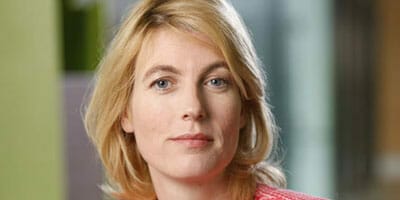
Customised benchmarks, absolute return strategies and long-term mandates are all being considered by the PGGM executive team as it implements the new PFZW investment framework. Amanda White spoke to Ruulke Bagijn chief investment officer of private markets and Marcel Jeucken, managing director responsible investment at PGGM about what it really means to be a long-term investor.

The €167 billion ($228 billion) Dutch pension fund manager, PGGM, is working under a new investment framework which is the result of an 18-month soul-searching review by its client PFZW, under a project called “The White Sheet of Paper”.

The investment framework has been adopted by the board and now the focus has shifted to implementing the investment framework.

It’s a work in progress, and involves both incremental and transformational change. Ruulke Bagijn chief investment officer of private markets at PGGM and Marcel Jeucken, managing director responsible investment at PGGM both sit on a working committee to determine the best way forward.

“Such a review makes you focus on what really matters,” Bagijn says.

She says at the core of the strategy is sustainability, and she identifies with the Michael Porter concept of “shared value”.

Sponsored Content

“The benefits we pay are worth more in a world worth living in,” Bagijn says. “We also can’t produce returns in a system that doesn’t work, so the sustainability of the financial system is a core part of what we look at as a long-term investor.”

PGGM’s focus will be taking on a larger role in the viability and sustainability of the world. It’s no small ambition, but it’s one that many large institutional asset owners are addressing as the debate over short-termism continues.

“Long term investing for us is providing a valuable future, providing a pension in a sustainable world. It’s working for the current generation but not at the expense of future generations. A sustainable and viable world includes saving a good pension and contributing to the economic and financial environment in which we operate and live.”

It focuses on a stable financial sector, human rights and good corporate governance with emerging investment themes as part of this including climate change, water, food security and health.

She says PGGM will intensify its efforts in focusing on long-term horizons, which leads its policy choices, including asset allocation.

In implementation terms this means better benchmarks, alternative strategies in public markets and more focused portfolios.

“As a long term investor we look at asset allocation and now wand to design a dynamic element to that. In terms of sustainability we will look at benchmarks, investing more in The Netherlands, agency issues and remuneration. We’ll look at our own behaviour and the behaviour of others, and want to continue to have a pioneering role in promoting a sustainable financial system,” she says.

“We think there needs to be courage from pension funds to create their own benchmarks and worry less about peer risk,” Bagijn says.

Customised index

PGGM has developed an index in house, which measures the 2800 companies in the FTSE All World Index for their environmental and social policy and good governance.

The index re-ranks the companies based on these criteria, which also include a minimum threshold. As a consequence of this, about 200 companies that don’t make it into the index have been sold by PGGM, which amounts to about 1 per cent of the portfolio.

PGGM has just completed the second year managing passively to this ESG customised benchmark, which accounts for about 90 per cent of its equities exposure, or about €44 billion in market-cap and smart beta strategies.

Marcel Jeucken, managing director of responsible investment at PGGM says the benchmark is not an exclusion strategy, rather it is about relative performance.

“It’s like an active benchmark, we don’t want to blindly follow an index. This ranks the relative performance of companies, and we think the worst companies are indicators of many things including management,” he says.

Jeucken chairs an internal working group that looks at many implementation issues in the context of the overall focus on sustainability, including benchmarks.

“We are looking at a number of areas and the impact they have. Benchmarks might lead to short termism and herding behaviour by passive and active managers. The benchmark provider actually has more impact on the stock than capital providers.”

“We try to figure out what we can do and what the impact will be. One option might be to not have benchmarks, rather have an absolute return target. We are investigating all options but the solution has to be workable.”

Jeucken says PGGM is also looking at long-term mandates and the impact and role of remuneration on short-termism.

“We have started the journey, looking at our role in financial markets, our behaviour, how we act and the measures we use,” he says. “Through the White Sheet of Paper Project we are focused on going back to asset ownership as the driver of what happens in financial markets – this includes who is employed, how benchmarks are set, the view of alignment and the view of incentive structures. It’s a big agenda, with difficult questions, and we’re not sure where it will lead us.”

Jaap van Dam, managing director of strategy at PGGM will contribute an article on the White Sheet of Paper project next month

Asset Owner:PGGM / PFZW

Leave a Comment

How CPP is evolving risk management for a faster, more interconnected world

How CPP is evolving risk management for a faster, more interconnected world

In an environment where multiple risks are emerging and their effects are compounding on the portfolio, CPP Investments' chief risk officer Priti Singh says the $572 billion fund is rethinking risk management from the ground up, shifting from reaction to preparation and embedding risk thinking earlier in investment decisions. She speaks to Amanda White about the fund's risk approach.

Sort content by

BCI: A masterclass in private debt

British Columbia Investment Management Corporation has been investing in private debt since 2018. Global head of public markets Daniel Garant, whose team oversees private debt, articulates the secrets of success at a time of fierce competition for returns as more investors pile into the asset class, tightening credit spreads.

A rock and a hard place: GEPF on the challenges of transitioning coal

Reducing exposure to the risk in coal is particularly challenging for South Africa’s $122 billion Government Employees Pension Fund. ESG manager Belaina Negash explains the complexities due to the industry's tie with the economy and the fund's transition framework.

Mid-market, asset-backed private credit shines for growing Asian allocators

Asia's growing investors, including university endowments and family offices, are hunting for returns in lower-middle market and asset-backed private credit. In an interview with Top1000funds.com, head of Asian clients at the $92 billion OCIO Cambridge Associates, Prabhat Ojha, talks manager selection and Asian allocators' rising appetite for alternatives.

France’s FRR ups risk in line with longer term investment horizon

Fonds de reserve pour les retraites (FRR), France’s €21 billion ($24 billion) pension reserve fund, has increased its weighting to equity in line with a new strategic asset allocation to reflect the investor's longer return horizon. It is also eyeing more unlisted assets including private equity, private debt and infrastructure.

AP4: Why a dynamic, shorter term allocation is paying off

Volatile markets have provided a rich hunting ground and opportunistic best ideas have come thick and fast for AP4’s new five-pronged global allocation made up of systematic equity, currency and rates, asset allocation, hedge funds/external mandates and analysis. Magdalena Högberg explains the risks and opportunities of the best ideas allocation.

University of California: Less is more and simple is better in investing

Jagdeep Singh Bachher, the CIO who oversees the University of California's $198 billion in pension and endowment assets, says that he wants to keep investment simple as the fund removed its hedge fund allocation completely, conceding "it’s not one of the things we are good at doing".

Previous



