
PGGM finds out what it really means to be a long-term investor

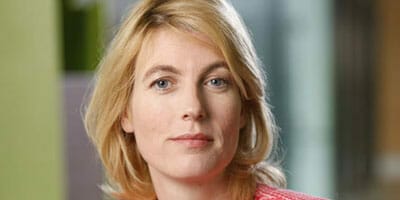
Customised benchmarks, absolute return strategies and long-term mandates are all being considered by the PGGM executive team as it implements the new PFZW investment framework. Amanda White spoke to Ruulke Bagijn chief investment officer of private markets and Marcel Jeucken, managing director responsible investment at PGGM about what it really means to be a long-term investor.

The €167 billion ($228 billion) Dutch pension fund manager, PGGM, is working under a new investment framework which is the result of an 18-month soul-searching review by its client PFZW, under a project called “The White Sheet of Paper”.

The investment framework has been adopted by the board and now the focus has shifted to implementing the investment framework.

It’s a work in progress, and involves both incremental and transformational change. Ruulke Bagijn chief investment officer of private markets at PGGM and Marcel Jeucken, managing director responsible investment at PGGM both sit on a working committee to determine the best way forward.

“Such a review makes you focus on what really matters,” Bagijn says.

She says at the core of the strategy is sustainability, and she identifies with the Michael Porter concept of “shared value”.

Sponsored Content

“The benefits we pay are worth more in a world worth living in,” Bagijn says. “We also can’t produce returns in a system that doesn’t work, so the sustainability of the financial system is a core part of what we look at as a long-term investor.”

PGGM’s focus will be taking on a larger role in the viability and sustainability of the world. It’s no small ambition, but it’s one that many large institutional asset owners are addressing as the debate over short-termism continues.

“Long term investing for us is providing a valuable future, providing a pension in a sustainable world. It’s working for the current generation but not at the expense of future generations. A sustainable and viable world includes saving a good pension and contributing to the economic and financial environment in which we operate and live.”

It focuses on a stable financial sector, human rights and good corporate governance with emerging investment themes as part of this including climate change, water, food security and health.

She says PGGM will intensify its efforts in focusing on long-term horizons, which leads its policy choices, including asset allocation.

In implementation terms this means better benchmarks, alternative strategies in public markets and more focused portfolios.

“As a long term investor we look at asset allocation and now wand to design a dynamic element to that. In terms of sustainability we will look at benchmarks, investing more in The Netherlands, agency issues and remuneration. We’ll look at our own behaviour and the behaviour of others, and want to continue to have a pioneering role in promoting a sustainable financial system,” she says.

“We think there needs to be courage from pension funds to create their own benchmarks and worry less about peer risk,” Bagijn says.

Customised index

PGGM has developed an index in house, which measures the 2800 companies in the FTSE All World Index for their environmental and social policy and good governance.

The index re-ranks the companies based on these criteria, which also include a minimum threshold. As a consequence of this, about 200 companies that don’t make it into the index have been sold by PGGM, which amounts to about 1 per cent of the portfolio.

PGGM has just completed the second year managing passively to this ESG customised benchmark, which accounts for about 90 per cent of its equities exposure, or about €44 billion in market-cap and smart beta strategies.

Marcel Jeucken, managing director of responsible investment at PGGM says the benchmark is not an exclusion strategy, rather it is about relative performance.

“It’s like an active benchmark, we don’t want to blindly follow an index. This ranks the relative performance of companies, and we think the worst companies are indicators of many things including management,” he says.

Jeucken chairs an internal working group that looks at many implementation issues in the context of the overall focus on sustainability, including benchmarks.

“We are looking at a number of areas and the impact they have. Benchmarks might lead to short termism and herding behaviour by passive and active managers. The benchmark provider actually has more impact on the stock than capital providers.”

“We try to figure out what we can do and what the impact will be. One option might be to not have benchmarks, rather have an absolute return target. We are investigating all options but the solution has to be workable.”

Jeucken says PGGM is also looking at long-term mandates and the impact and role of remuneration on short-termism.

“We have started the journey, looking at our role in financial markets, our behaviour, how we act and the measures we use,” he says. “Through the White Sheet of Paper Project we are focused on going back to asset ownership as the driver of what happens in financial markets – this includes who is employed, how benchmarks are set, the view of alignment and the view of incentive structures. It’s a big agenda, with difficult questions, and we’re not sure where it will lead us.”

Jaap van Dam, managing director of strategy at PGGM will contribute an article on the White Sheet of Paper project next month

Asset Owner:PGGM / PFZW

Leave a Comment

How CPP is evolving risk management for a faster, more interconnected world

How CPP is evolving risk management for a faster, more interconnected world

In an environment where multiple risks are emerging and their effects are compounding on the portfolio, CPP Investments' chief risk officer Priti Singh says the $572 billion fund is rethinking risk management from the ground up, shifting from reaction to preparation and embedding risk thinking earlier in investment decisions. She speaks to Amanda White about the fund's risk approach.

Sort content by

Railpen, the open DB fund with locomotion

Despite the constant pull on Railpen chief executive Chris Hitchen’s expertise in other directions, most recently helping to run NEST, the UK government’s new low-cost pension scheme, he is resolute that his primary task is ensuring Railpen, inhouse manager of the £19-billion ($30.4 billion) pension scheme for Britain’s rail industry, successfully delivers on its monthly

USS powers into diversity

In the past few years the £34-billion ($54.7 billion) Universities Superannuation Scheme (USS) has substantially diversified its asset allocation, including a large alternatives allocation, and extended its investment team from 65 to 105. In the latest chapter of the fund’s investment department reincarnation, from October this year a separate but fully owned USS company, USS

Investing hybrid or armed wing of ministry?

France’s Caisse des Dépôts et Consignations (CDC) has just provided fresh ammunition for critics who say the state-backed investor distorts markets by acting as the “armed wing” of the French finance ministry. On October 17, Prime Minister Jean-Marc Ayrault unveiled a new public investment bank, jointly owned by the CDC and the government, to lend

Defined benefit thrives at Migros

Success stories at pension funds are a real rarity in crisis-ravaged Europe, with deficits hampering countless major international firms. The CHF16.9-billion ($18.1-billion) pension fund of Swiss supermarket cooperative, Migros, is firmly in the blessed minority of funds enjoying rude health. Migros Pensionskasse was even able to boost its surplus to $1.3 billion in 2011 while

LPFA drives single mammoth UK fund

The London Pensions Fund Authority (LPFA), among the largest of the United Kingdom’s Local Government Pension Schemes, is spearheading a bold idea. The £4.2-billion ($6.74-billion) scheme is pushing the notion of combining with London’s other 34 local authority funds into a single, giant scheme. The $32.13-billion superfund would pack more punch as a single investor,

Faith in ethical investing

Received financial wisdom holds that the price of virtue for ethical investors is lower returns. It all depends on the time frame, argues Tom Joy, director of investment for Britain’s Church Commissioners, who manage the Church of England’s £5.2-billion ($8.38 billion) pension fund. The Church Commissioners, as fund managers who are ultimately accountable to God,

Previous



