
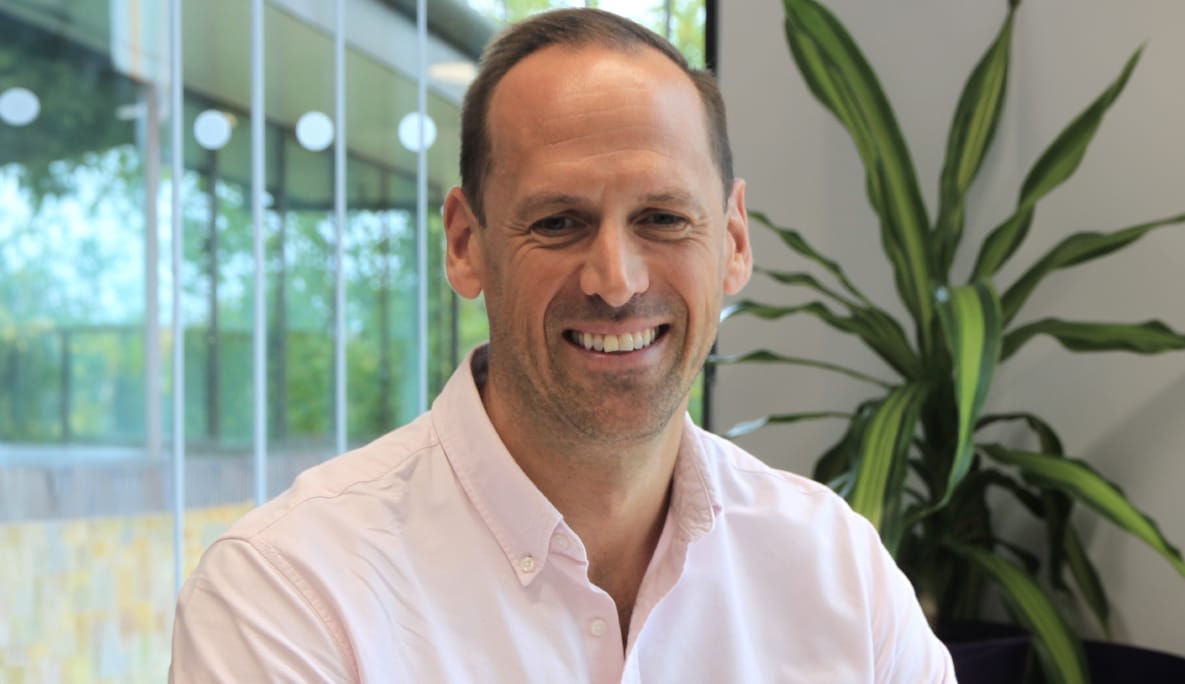

The £26 billion ($33 billion) People’s Pension, one of the largest master trust workplace pensions in the UK and forecast to reach £50 billion assets under management in the next five years, is modelling itself on Australia’s superannuation funds.
Dan Mikulskis, CIO of the People’s Partnership which oversees the pension fund, would like to set up an industry-owned asset manager modelled on Australia’s IFM Investors. He also likes the way Australia’s superfunds benchmark each other, and how they have built their own internal investment teams.
“We look outside the UK for our benchmark and the Australian superfunds are our closest cousins,” says Mikulskis who adds that the fund’s huge inflows will put it on a par with university scheme USS and NEST to become one of the biggest in the UK.
Since joining as CIO in September 2023, Mikulskis has spent most of his time developing the systems and processes behind the pension fund which was founded in 2012 off the back of auto-enrollment legislation. This has included building the team which now counts 900 staff working across the value chain in everything from customer service to administration.
Recently settled in new City of London offices close to the asset management community, he’s now turning his hand to investment strategy.
Most of the assets are invested in off the shelf index tracking funds, but Mikulskis has started to explore different products in a departure from a typical master trust. Around $15 billion (of the equity portfolio) was recently moved into climate indices, and now he is looking at how to move beyond index tracking to add value in fixed income and emerging markets.
“The huge choice of indexes means deciding which indexes to track is a strategic role. There are lots of choices we can make.”
Fixed income accounts for anything between 20-60 per cent of the (eight) different funds on offer and is focused on sovereign and investment grade global corporate bonds. He wants to push beyond standard products and approaches to include structuring bespoke mandates and leveraging the fund’s growing size and scale to shape a more adventurous approach to duration and credit, targeting parts of the market with more value for money.
“In fixed income, many of the products we use are higher quality and there isn’t much of a risk of defaults, but the returns are less.”
He says the delineation between active and passive has softened allowing a more creative approach. Strategies like buy and hold that involve more active decision making are now just part of a spectrum that includes custom indices and quant approaches.
He is also exploring different ways to access emerging markets which currently account for around 10 per cent of the equity allocation. Not only does he think emerging markets are cheap – “they were cheap a decade ago and have just got cheaper and cheaper” – he wants to carve out China where he says SOEs dominate. This could allow for increasing exposure to under-represented regions like the Middle East, South America and Africa.
“The term emerging markets is an early 80s label that doesn’t fit anymore. I’d like us to get more bullish on emerging markets and find a way of allocating that lets us unleash this. It’s difficult to get conviction in vanilla indices.”
The People’s Pension is still some way from developing an allocation to private markets, and one reason for Mikulskis’s caution is high investment management fees. The pension fund caps management fees at 50 basis points, and he doesn’t want to have to introduce a basket of investments with a higher fee. What he wants is a better split with alternative managers between economics and terms.
“In private markets, you can identify a good opportunity but end up paying a whole lot to the manager and it shouldn’t be the case. The end investors should benefit.”
Witness his decision not to join the Mansion House Compact. Names like Aviva, Scottish Widows, L&G, Nest, and Smart Pension have signed up to the endeavour by the UK government to get pension funds to invest at least 5 per cent of their assets under management in unlisted UK equities by 2030, but Mikulskis wasn’t keen.
“It is our choice where we invest, and we want to do it right. We want to dictate the terms and will allocate when the terms suit us and when the market is right,” he says.
He thinks the fund’s first foray into private markets will be in infrastructure, or possibly real estate, because these two asset classes are the most aligned around collaboration on fees, external co-investments and fund structures. “Open ever green structures are more prevalent in infrastructure than closed end funds which I don’t like.”
But for now he is prepared to wait it out. As the People’s Pension grows in scale, it will grow easier to swing fees in the fund’s favour and leave more of the return in the hands of members. He is also using the time to explore the possibility of setting up an industry-owned asset manager modelled on Australia’s IFM Investors, owned by a collective of 17 pension funds.
“This is one way to access private markets. We are talking to people about this, and trying to start the conversation.”
Despite the sizeable staff, there are only 20 people in the investment team. He says this will grow alongside AUM.
“We will get to 25 by the end of the year. It’s rule of thumb that you have one person per one-billion AUM, getting towards that.”
Once again, he is turning to Australia to see how to build internal teams and when to bring allocation inhouse. He also likes the Aussie comparison model that promotes competition in the sector via league tables, and has lead to underperforming funds merging with the most successful.
“The superfunds have a well-known and mature approach to compare performance.”
As he approaches his first year in the job, Mikulskis says his leadership will focus on cutting through short term noise and focusing on what the pension fund can realistically achieve. For example, introducing climate tracker funds will meaningfully reduce emissions in the portfolio and also chime with the fund’s competitive advantage, expertise and low cost priorities.
He wants to avoid being distracted by talk of uncertainty and risk, both of which are inherent to investment. “We could walk in tomorrow, and our assets could be down by £2 billion. This will happen at some point and it is part and parcel of what we do.”
His approach is to shift his gaze upwards and draw on evidence of the past to see how asset classes will behave and have faith in the fact that in the long run stock markets go up.
“I like to start with the last five years, and focus on that number. Drop off those columns and rows that are short term and diving in too deep.”








Leave a Comment
You must be logged in to post a comment.
Login