
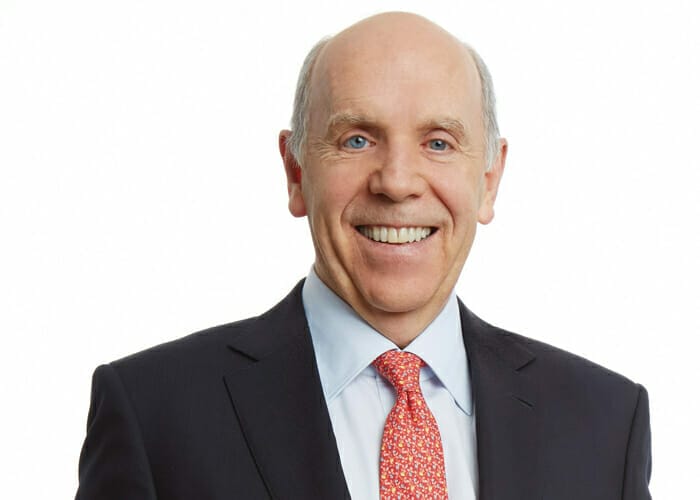

The Ontario Teachers’ Pension Plan is “on the cusp of unleashing a whole brand new level of innovation in the organisation that we have not seen in the past 15 years”, chief executive Ron Mock said.
The C$175.6 billion ($132.5 billion) fund was founded in 1990 on a platform of innovation and commitment to excellence and since then it has continued to innovate – in its investment approach, the vehicles it uses, the systems and processes it builds, and the service it gives its members.
“A critical part of our success is innovation. We never stop,” Mock said, speaking at the Bloomberg Investment Summit in New York. He added that innovation is defined in the fund’s values as “having the courage to forge new paths”.
“Because of the driver to innovate and our performance orientation, we are constantly innovating; for example, we started investing in infrastructure in 1999.”
Now the fund is looking to take this culture even further.
“[We’re evaluating] the way we look at and manage our portfolio, our private assets, our real-estate structure – a whole different way of integrating the entire balance sheet,” Mock told the summit. “The other thing we do, we borrow money; a lot of pension plans don’t do that, we employ leverage. And we have to manage liquidity and cash in very special ways.”
The investment team at OTPP is segmented according to specific asset groups or investment disciplines, such as capital markets, global strategic relationships, infrastructure and natural resources, investment operations, portfolio construction, private capital, public equities, and real estate, with offices in London, Hong Kong and Toronto. It uses integrated technology systems and management committees to enable the team to act as one, and manage risk and opportunities at a total fund level.
Value-added decisions are also co-ordinated at the total fund level and portfolio managers are rewarded for maximising value-added returns within the risk limit on total assets, not just their own portfolios.
One of the reasons OTPP is considered an innovative leader is its approach to understanding and measuring risk, and actively managing funding and investment risk together. It is one of few defined benefit schemes to be fully funded, with a funding ratio of 105 per cent, Mock said.
As at the end of 2016, the fund’s asset allocation was 28 per cent equities (public and private), 44 per cent fixed income, 6 per cent natural resources, 26 per cent real assets, 8 per cent absolute return strategies and -22 per cent money market. It has returned 10.1 per cent a year since inception.
OTPP believes in active management, which has contributed 78 per cent of the portfolio’s value above the benchmark over time, and the vast majority of investment management is in-house, helping to keep the expense ratio low, at 28 basis points. Even so, Mock said, external relationships remain critical to the fund’s success.
Talented people for engaged ownership
“We will happily pay higher fees in real estate and private equity,” he revealed. “If doing private equity in other parts of the world, you need to partner with people who are local. If we are getting true value, then we will pay,” he said. But he also stressed that the fund’s long-term process is about engaged ownership.
“In real estate, private equity and infrastructure – a lot of the private stuff we have done – the excess returns have all come from [engaged ownership],” Mock explained. “When we buy an airport, a high-speed train or a downtown office building, it’s our ability to get in…and have the talent to make it work for us that makes the difference. Engaged ownership is one of the keys to all of this and it allows us to go out and employ a lot of things and invest in certain ways that other plans have a more difficult time doing.”
OTPP makes clear that its people drive its success. It spends much time and money on developing, strengthening and retaining its intellectual capital to remain focused on industry leadership and innovation.
“Our approach to everything is about how we find and partner with the brightest and the smartest,” he said. “If going direct drive is better, then we had better have the staff or partnerships that have been there before. Everything we do is approached through partnerships. If we are investing in Canada or the US, then we can do it direct ourselves, but if we are going to do something in Asia, we look at the best four to five private equity funds there. We have to do that.”
He added that the fund often co-invests alongside the external partner.
About 45 per cent of the fund’s equities allocation is with private-equity partners around the world; OTPP also pays external managers in its hedge fund portfolio.
“You negotiate the best fee arrangement you can without crushing it, otherwise the equilibrium is off.”
Mock would be happy to pay fees to external providers but insists that any partnership structure allows internal staff to benefit from those relationships. If the governance structure of the fund then allows compensation to be “unleashed” he said, “it opens up some interesting future possibilities”.
“When your own staff gets into it and starts to understand it, I would argue, the risk-management capacity in your own organisation goes up,” he explained. “Risk management at the coalface [means] not buying stupid deals, and that’s where your own staff can seriously benefit from [partnerships]. You have to partner.”
OTPP investment innovations:
1992: first Canadian public-sector pension plan to introduce incentive compensation
1994: first pension fund to invest in a sports team – the investment grows over 18 years into a professional sports conglomerate (sold in 2012, earning five times the investment)
1994: first pension fund in Canada to create a long/short portfolio
1997: first pension fund to introduce risk budgeting system for investments
2000: first Canadian pension fund to buy a real-estate company, Cadillac Fairview
2000: first pension plan to post proxy votes on website in advance of annual company meetings
2001: first pension plan to provide a corporate guarantee for real-estate debt
2001: first direct investment in infrastructure and first investment in timberland








Leave a Comment
You must be logged in to post a comment.
Login