

Asset owners are increasingly concerned that the backlog of exits in private equity will begin to have implications for some GPs.
The mounting number of portfolio companies stuck in large buyout private equity funds waiting for exits is slowing investor distributions. It is also making it hard for some GPs to raise their next fund because investors who are unable to exit existing funds, are unwilling to commit to the next one.
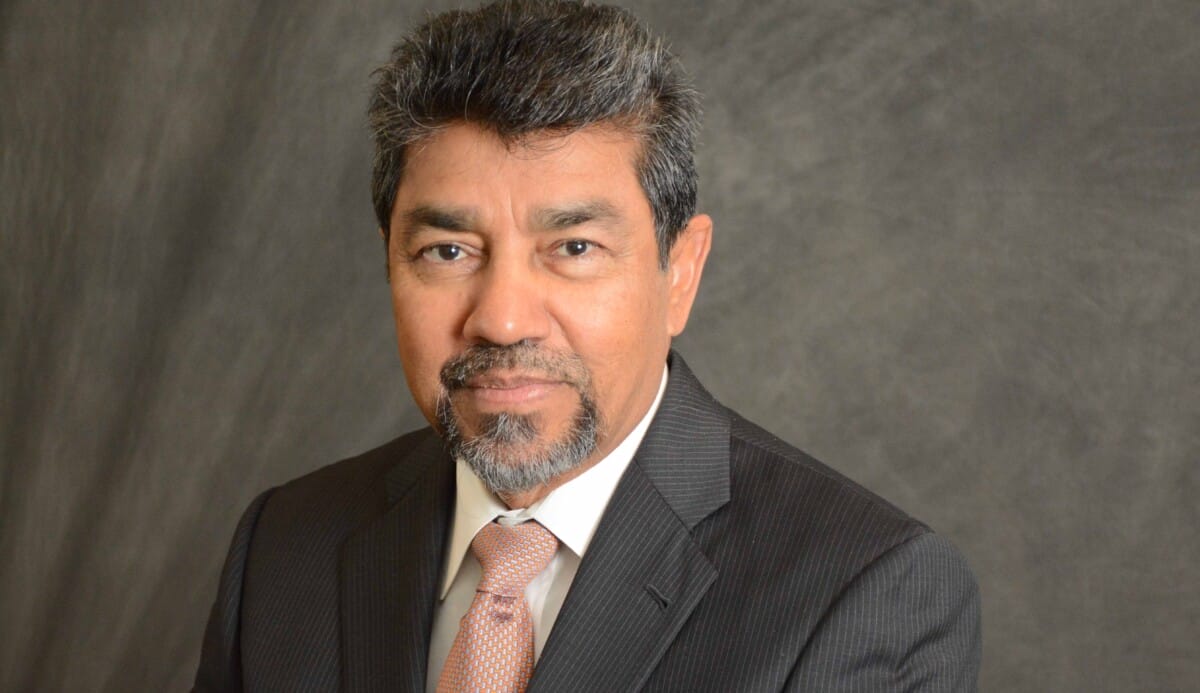
It’s a logjam that is now starting to put pressure on the business operations of private equity firms, and could lead some to fold, predicts Farouki Majeed, CIO of the $23 billion Ohio School Employees Retirement System. In another worrying trend, he also hears that some GPs are having to borrow money to operate their business because LP fees are drying up.
“I am hearing from people in the industry that a good number of private equity firms might fold because they are stuck with so many portfolio companies, and can’t raise the next fund. The fall in terms of inflows from fees, incentives and carry is seeing employees start to leave too,” he adds.
According to research from Bain & Company, GPs are sitting on a stock of 32,000 unsold companies worth $3.8 trillion. The consultancy says that for buyout funds, holding periods at exit now hover at around seven years, up from an average of five to six years between 2010 to 2021. In turn, lagging distributions to LPs are the main driver of a slow and difficult slog faced by many PE firms in fundraising.
Fortunately, Ohio, which has around 12 per cent of its assets in private equity, has not fallen victim to the lack of exits, says Majeed. The pension fund still has a positive private equity cash flow, and distributions are exceeding its annual drawdown. Although the pension fund experienced a dip in the number of private equity exits in 2023, it is still marginally positive, and exits picked up again in 2024 and 2025.
“It’s looking quite healthy for us and there are no liquidity problems,” he says.
Still, he says that the success of the allocation is beholden on a manager’s prowess.
Ohio mostly invests in closed-end funds managed by GPs, meaning that once the money is committed, how it is invested is entirely at the discretion of the managers. Around 10 per cent is invested in co-investments where Ohio is able to select the assets. Ohio invests with around 25 private equity managers spread across some 50 plus funds in a diversified, multi‑vintage approach.
Along with manager selection, he believes the other essential ingredient in the allocation’s resilience is due to a strategy that focuses on mid-market managers that put value creation, and improving growth and earnings, at the heart of the companies they target.
“Even if they sell it at the same multiple [they bought it], this way you can gain a fairly decent return,” he continues.
He notes it is a similar story in private credit where he sees redemptions and liquidity problems as even more acute. He forecasts a spike in defaults and investor vulnerability to the watered-down covenants that have accompanied the surge of money into the asset class which now has an estimated $2 trillion under management.
Whenever Ohio discusses its asset allocation, the idea of allocating more to private credit comes up. But Majeed has resolutely held the line, resisting the temptation to invest more than a target 5 per cent because he believes returns will be lower ahead.
“I know people who invested long after us, and now have a much higher allocation than us,” he reflects. “We have stayed at our target and resisted the temptation to increase the allocation – we have actually slowed down deployment over the last couple of years.”
Boosting the allocation to gold
In another portfolio change, Ohio is also building up its allocation to gold from one to three per cent via an internally managed ETF allocation. It sits within the opportunistic and tactical bucket, where the pension fund has the flexibility to invest in things that are not part of the strategic asset allocation.
Majeed explains that the allocation to gold stems from a belief that the diversification benefits of fixed income have become much less than they used to given interest rate volatility, and the upside risk to rates in the US. Although fixed income yields are higher, the risks of investing in Treasuries is higher too.
Gold provides a hedge against a myriad of risks like inflation, geopolitics, the deficit and debt concerns afflicting the US economy, plus the broad loss of confidence in fiat currencies.
It is the size of the US deficit that has him particularly worried. Reeling off figures, he flags the annual budget deficit of $1.9 trillion a year and accounting for 6 per cent of GDP, and a $39 trillion debt pile. He notices that auctions for longer dated Treasurers “are not going well” resulting in most issuance now being on the short side.
“It is a problem that is likely to persist because I don’t see things getting any better in terms of the deficit or government spending, given the US is now in another war. If America was a corporation it would be insolvent, but the US government can issue debt and print money.”
Infrastructure up, real estate down
In other strategies, Majeed is also integrating a new asset allocation in line with recently approved board recommendations.
Real estate will fall to 7 per cent of assets under management from 13 per cent (it’s currently 10 per cent) in an ongoing fund pruning in line with redemptions. Infrastructure will increase from 7 to 10 per cent in line with his belief that it offers steadier returns, and is less prone to GDP and interest rate fluctuations because of its long-term, contractual nature.
Still, he flags that not all infrastructure – namely airports – is immune from ebbs and flows in GDP. He is also concerned about putting more money into data centres where Ohio does have some exposure via funds that target digital assets.
America’s build-out of data centres will at some point run into problems because of access to energy. The sector is also facing pushback from local communities, he says
“It’s not going to be that easy. We will watch it carefully, but we are not running headlong into data centres.”
Reflecting if the emerging buzz around nuclear power will start to feed into investor strategies, he says Ohio invests with one infrastructure manager that mostly focuses on power generation and has a small allocation to nuclear. But he adds that Ohio isn’t big enough to consider a standalone strategy, and investment managers in the space are still rare.
Majeed, who is no stranger to the ups and downs of investment, concludes with an observation that today’s challenges are markedly different from the exuberance and overvaluation of the dot.com bubble or the leverage and subprime characteristics of the GFC.
The factors that have fanned market returns and supported financial assets for the past thirty years like globalisation and cheap labour have now been replaced by a more fractured world of balkanised regions, characterised by tariffs and wars, that will make investment much harder.
“Our ten-year return is 9.4 per cent. Will we earn this in the next ten years? No, on a benchmark basis, I think we will earn 6 per cent.”
Farouki Majeed will speak at the upcoming Fiduciary Investors Symposium held at Harvard University between June 1-3. Register for the event here.








Leave a Comment
You must be logged in to post a comment.
Login