
NY Common allocation review

The $210 billion New York State Common Retirement Fund is considering pushing its return target below 7 per cent as it embarks on a deep dive review of its asset allocation.

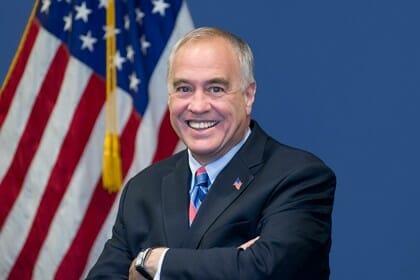
Thomas DiNapoli, New York State comptroller and sole trustee of New York Common, says any adjustment will be downward.

The fund has seen its return rate drop from 8, to 7.5 and then to 7 per cent over the past few years.

“We will make a decision to move below 7 per cent but haven’t said what or when. Everything we’ve seen is towards a downward adjustment and that has an asset allocation impact.”

The fund, which is the third largest in the US, has just started the process of a deep dive into its asset allocation, a practice that comes around every five years.

It has a March 31 fiscal year and recorded a 5.23 per cent return for the past year, the previous two years it generated more than 11 per cent per annum.

Sponsored Content

While DiNapoli says 7 per cent is not unreasonable, given the uncertainty of the future it will look to be more conservative.

“The good news is a lower return target would prepare us for a lower return environment. The bad news is that will impact the contribution rates of employers,” he says.

But one of the benefits of the sole trustee model, DiNapoli says, is that the comptroller is responsible for setting that contribution rate.

“A big strength of the model is I set the contribution rate, not in the legislature,” he says. “This is helpful for the health of the fund and there is less of a political struggle regarding budget relief and contribution rates. For New York the sole trustee model has been very protective for the fund.”

DiNapoli, who was first elected comptroller in 2007, also says the sole trustee creates a clear line of responsibility and being an elected fiduciary gives independence.

Under DiNapoli, the decision-making processes at the fund has become more streamlined and it has also strengthened transparency regarding transaction reporting. There is now an advisory council, an actuarial advisory committee, an audit advisory committee, an investment advisory committee and a real estate advisory committee all providing counsel.

The investment advisory committee, with an independent chair, reviews the investment policy statement and any amendments to it, and reviews and provides a recommendation to the comptroller on the proposed asset allocation plan developed by the chief investment officer after the completion of an asset liability study.

“There are lots of bells and whistles including the strategy sign off and advisory committees which vote on asset allocation,” he says. “I have final sign off, questioning staff on the merits of their recommendations.”

There are a handful of state pension funds governed under the sole trustee system in the United States and the structure has come under some scrutiny. In New York DiNapoli’s predecessor Alan Hevesi pleaded guilty to corruption charges surrounding a pay to play scheme connected with the pension fund.

“The ethics and integrity of a person applies the same to a board as to a sole trustee,” DiNapoli says. “If this state abandoned the model it would be a mistake.”

(Other funds with multiple board members, such as CalPERS, have also been embroiled in pay to play scandals in the past due to rogue individuals.)

Asset allocation changes

Within the current investment cycle the fund hasn’t made any big moves away from its strategic asset allocation.

“We have faith in our asset allocation. We have made some tactical moves but nothing big,” he says.

One of those tactical moves has been to lower the allocation to hedge funds from 4 to 2 per cent which DiNapoli says was due to concerns about performance, fees and transparency.

“How that shakes out in the next asset allocation is not yet determined,” he says.

The fund is also underweight fixed income with DiNapoli not concerned about liquidity due to its 90 per cent funded status.

“We have confidence in how we’ve been structured. We are going to ask a lot of hard questions,” he says of the asset allocation review, “but I can’t imagine we will do any hard shifts.”

The fund’s long term policy allocation is domestic equity (36 per cent), international equity (14 per cent), private equity (10 per cent), real estate (10 per cent), absolute return strategy (2 per cent), opportunistic funds (3 per cent), real assets (3 per cent), bonds and mortgages (17 per cent), cash (1 per cent), and inflation-indexed bonds (4 per cent).

DiNapoli says that real estate and private equity have been strong performers for the fund, but their allocations are capped via legislation.

The fund’s current allocations in those assets are a little under where they would ideally be due to resources.

“One problem we have when making an allocation is in our pacing and staff resources,” he says.

The fund is without a permanent CIO with Anastasia Titarchuk the interim CIO following Vicki Fuller stepping down last July. DiNapoli says an announcement on the CIO will be made “over the summer”. It manages fixed income and domestic public equities in-house.

Future focus

There are two main areas of focus for DiNapoli. The first is the continuing issues regarding transparency around hedge funds and other alternatives, although he says the fund has been able to “work with some class A partners who are responsible when we raise these issues”.

At the end of its 2018 fiscal year the fund had 303 private equity partnerships for about $57 billion in assets allocated. The total actively invested private equity allocation was $21.69 billion with an expense ratio of 2.38 per cent. The fund has 39 absolute return strategy partnerships, and a further 24 in opportunistic funds and 13 in real assets.

The other area of focus for the trustee is “getting results in a responsible, ethical way” which is where the fund’s incorporation of ESG comes in.

It has long seen climate change as a core risk and is a global leader in sustainability, establishing a low-carbon index for its US equities back in 2016. (New York’s actions louder than words.)

It now has $4 billion allocated to that low emissions index as well as $6 billion targeted to sustainable investments across asset classes and LEED Gold real estate investments, green bonds and private equity investments; as well as active ownership through engagement and public policy advocacy.

The fund recently doubled its commitment to sustainable investments to $20 billion over the next decade as part of the new and comprehensive climate action plan.(NY State Common’s climate plan)

“I embrace the goals of the advisory panel,” DiNapoli says. “How quickly we can do it is the question.”

Leave a Comment

How CPP is evolving risk management for a faster, more interconnected world

How CPP is evolving risk management for a faster, more interconnected world

In an environment where multiple risks are emerging and their effects are compounding on the portfolio, CPP Investments' chief risk officer Priti Singh says the $572 billion fund is rethinking risk management from the ground up, shifting from reaction to preparation and embedding risk thinking earlier in investment decisions. She speaks to Amanda White about the fund's risk approach.

Sort content by

AP2, AP6 merger on track; currency impacts returns

In a big year, AP2 introduces a new asset management model and completes the integration of sister fund AP6 but the fund's 2025 return feels the impact of a strong SEK on its global portfolio. Eva Halvarsson, AP2's outgoing CEO, discusses the allocation and mandate changes and opportunities it presents.

Chicago Teachers: Where succession fears put managers on watch

In a recent investment committee meeting, trustees at Chicago Teachers heard how succession risk at external managers can hit not only returns but also managers' ability to bring ideas into the investment process and consistency around portfolio construction and implementation.

Iceland’s LV mulls more EM exposures, PE co-investments after SAA review

Iceland’s LV is eyeing more emerging markets allocation and private equity co-investments after conducting an SAA review, which will be finalised in the first half of 2026. CIO Arne Vagn Olsen says the shift is designed to make the $11 billion pension fund future-ready.

Strategy and reporting under the microscope: Denmark’s ATP awaits review

Denmark's ATP is awaiting a review that will report on the strength of its investment strategy, and suggest how to simplify reporting. But additional transparency must not hurt the future returns for members, warns Allan Japhetson, head of investment strategy at ATP.

Complexity to clarity: How AP4’s tech overhaul slashed risk and costs

A new investment management platform at Swedish buffer fund AP4 has taken almost ten years to come to fruition. Increased efficiency, lower costs and risk make it worth the wait, says head of risk and operations Nicklas Wikström.

HOOPP: Light covenants in private credit are a growing source of concern

The boom in private credit has been accompanied by a spike in lighter covenants, reducing protection and guardrails for lenders says Jennifer Shum, senior managing director, structured and private credit at HOOPP, and warns of mounting risks in private credit.

Previous



