

Asset owners have identified that one of the long-term consequences of the Trump administration’s tariff policy and market fallout could manifest with investors retreating from a US-concentrated portfolio. It makes a timely moment for Norway to launch a new sovereign wealth fund specifically designed to plough investment into local companies.
The Norwegian Parliament has approved seed funding to invest NOK 15 billion ($1.4 billion) in a specialist Nordic small-cap equity fund with the potential to double the allocation over time. Three portfolio managers have started work in unlikely headquarters in the remote town of Tromso in northern Norway above the Arctic Circle, thousands of kilometres from Oslo.
The fund will be overseen by Norway’s domestic pension fund, Oslo-based NOK 381 billion ($35 billion) Government Pension Fund Norway (Folketrygdfondet) – Government Pension Fund Global’s smaller sibling – but has a delegated investment strategy.
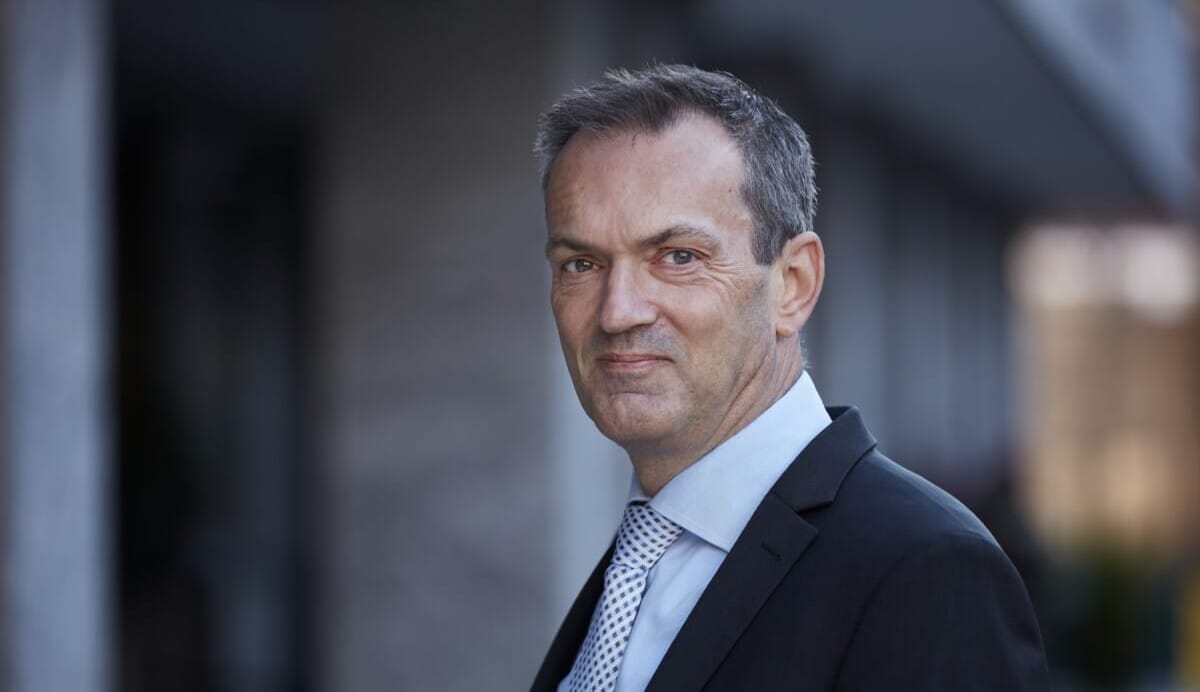
Government Pension Fund Norway CEO Kjetil Houg has played a pivotal role in creating the new fund and believes its birth chimes with emerging themes of investors putting more capital to work at home.
“Large investors should consider their geographical location; there is no reason to send money far away in the current climate,” he told Top1000funds.com in an interview.
The new pool of domestic investment could help boost liquidity in the local market and encourage Nordic companies like Sweden’s Spotify and payments fintech Klarna, which has just delayed listing in New York because of market volatility, to list locally rather than in the US, he suggests.
Houg also believes the fund has other characteristics that suit it to the current climate. He says active management is the only way investors can ensure the depth of knowledge and true understanding of corporate risk in an increasingly protectionist world. Nordic companies with small home markets are sheltered from the impact of tariffs, but active management can drill down to how most local companies, which are exposed to global trade because of the region’s open economies, will perform.
“More than 50 per cent of Norway’s GDP derives from exports and it’s the same in other Nordic countries. Tariffs are going to impact value creation within companies and certain sectors will be harder hit. Our main concern is market access to the European Union because Norway is outside the EU. If the EU decides to put tariffs on other countries it could harm Norway, so we must ensure a good dialogue with decision makers to secure our market access.”
The portfolio will be actively managed against a reference index of 344 Nordic small-cap companies with a total market value of NOK 1,506 billion, adjusted for free float.
The three largest sectors are industry, healthcare, and finance and just under half of the reference index consists of Swedish companies, followed by Danish (22 per cent), Finnish (13 per cent), Norwegian (9 per cent), and Icelandic (6 per cent) companies. Because many Norwegian companies are already included in the index for the Government Pension Fund Norway the new fund will have a relatively low exposure to Norway.
“The tracking error for the new fund will be slightly higher than the tracking error for the State Pension Fund Norway because small caps are more volatile,” says Houg. “We already invest in Nordic equity, so we know all the large companies and also some of the companies that will be candidates for the small-cap fund. We know the industries, the brokers and the analysts, so moving into small cap isn’t a giant step.”
Active management will also come with engagement. However, the new fund’s allocation to hundreds of small companies will make engagement less hands-on compared to the Government Pension Fund Norway’s large cap investments, where the investor takes a keen interest in company management and nomination committees.
“When it comes to voting at AGMs, the new fund will use a proxy. We are also working on a new digital voting process for our whole operation that will allow us to cover more companies in a more efficient way,” he says.
Contrary to the idea that companies are pushing back on engagement, Houg believes corporates in the region continue to welcome investor input. “We are a large owner in a small market and our engagement is welcomed and expected. Companies want owners that share their ambition and want to be challenged on their strategy and development. Companies listen to what we bring to the table.”
Government Pension Fund Norway sits on 14 different nomination committees and is working on board composition and recruitment. The fund invests 85 per cent of its assets in Norwegian large-cap stocks, where it can hold up to 15 per cent in a single stock. A stake that equates to enough influence to bend corporate strategy, but does not reach “strategic” ownership.
In a new policy, the Government Pension Fund Norway now pays out a 3 per cent dividend to the government annually. It acts as a valve on the investor’s outsized exposure to the Nordics.
Engagement is also growing around nature risk, where dialogue is focused on how companies are scenario planning. The investor is launching a new expectations document and exploring how to price nature risk.
“It’s extremely difficult to price nature risk because it’s a long-term liability. You must consider what is the right discount rate and how cash will evolve in the future. Our focus is on separating direct physical risk related to sea temperature and hurricanes and more indirect risk from changes in regulation and taxes.”
Yet unlike GPFG, neither of the locally invested funds follows up engagement with divestment.








Leave a Comment
You must be logged in to post a comment.
Login