
Missouri PSRS/PEERS develops cost cutting private markets strategy

The Public School and Education Employee Retirement Systems of Missouri (PSRS/PEERS) is increasing its private equity co-investment programme and boosting its direct lending to private companies in the hunt for cost-saving opportunities in private markets.

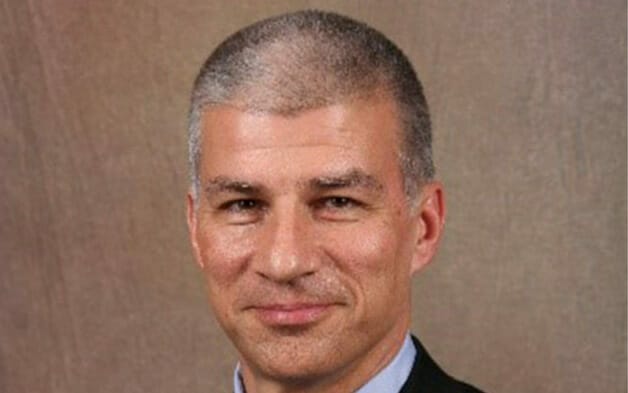
“Combined, we expect these programmes to save over $1 billion in fees over the next ten years,” says Craig Husting, CIO of PSRS/PEERS. “Private equity co-investment and private credit direct lending have become major portfolios for us, and we believe they have already and will continue to offer significant value.

We like the no fees no carry aspect of the co-investment and credit direct lending strategies, and right now we are seeing great deal flow. The performance is as good if not better than performance in our broader private markets portfolios.”

The strategy is the latest seam within Missouri’s bold push into private markets where the fund now targets a 40 per cent allocation (up from 35 per cent) split between private equity (21 per cent) real estate (11 per cent) and private credit.

Long-term, Husting expects approximately half of the private credit allocation to be in the direct-lending programme. Private equity co-investment currently represents approximately 15 per cent of the private equity portfolio but this is also set to grow.  “Long-term, we expect this to grow to approximately 25 per cent of the total private equity portfolio,” he says.

Indeed, private markets now play an essential role in Missouri’s ability to hit a high 7.3 per cent target return. “We expect our private markets program to strongly supplement the long-term investment returns of our System.”

Sponsored Content

The five-year annualized return for the period ending June 30, 2022 was 8.63 per cent or 8.44 per cent net of all fees and expenses. This exceeded 80 per cent of peer group funds as defined by the Wilshire TUCS universe of public pension plans with assets in excess of $1 billion while Missouri also took less risk than approximately two-thirds of comparable public funds.

Team spirit

Off the back of the co investment and direct lending programme, the in-house private markets team has now grown to ten people. “It’s a much more labour-intensive process than picking GPs,” says Husting who describes how the in-house team conduct deep dive analysis of the deal flow where being able to turn down investments is just as important as seizing opportunities. Missouri’s back-office team have also grown, responsible for monitoring co-investment cash flows coming in and out of the portfolio as well as tracking valuations on a quarterly basis. “Co-investment/direct lending as part of private markets has been a major growth area for our team,” he says.

Private credit

PSRS/PEERS first began investing in private credit direct lending in 2019 in opportunities developed through private equity relationships. “As our GPs purchased companies and financed debt on those companies, we were able to get a slice of the debt,” he says, adding the benefits of the allocation come via shorter duration investments and less risk that private equity. “In private equity, we look for returns in the high teens compared to high single digits in private credit.  We primarily invest in first line debt within our direct lending program with no leverage.”  Moreover, it remains a less crowded investment space since banks exited in the wake of the GFC and fewer public pension funds compete for assets.

Risks

The decision to increase the allocation to private markets was preceded by a detailed liquidity study. This involved stress testing the portfolio based on a number of market scenarios to ensure the pension fund could meet its benefit payments and capital calls in all environments. “The results of the study supported an increase in private markets,” says Husting. “The Board, staff and our external consultant were fully aligned in the decision.”

Board buy-in has been a particularly vital part of the process, nurtured by education around private investments, transparency and the gradual building of confidence. Given the amount of money ploughing into private markets he admits concerns about demand pushing prices up. But counters that opportunities in private markets are also growing compared to ten years ago.

Diversification within the portfolios is also essential. In private equity PSRS/PEERS won’t allocate small dollars to small funds and large dollars to large funds. Instead, each manager, from buyout to growth or venture, has the same bite size, typically around $60 million. Although it would be easier to give large allocations to bigger teams, he says some of the small private equity firms can produce as good if not better returns over the long term. “Our priority is the best manager,” he says.

PSRS/PEERS has been with the majority of its managers (94 in private equity) for ten years in a selection process that is based around GP funding cycles – in public markets manager selection can take up to 18 months. It’s a longevity that is also mirrored in PSRS/PEERS’ own investment team. Husting has been CIO for 23 years and six of the investment team have been in their roles for 15 years, anchored by PSRS/PEERS strong mission and culture, and incentivised by the  opportunity to invest boldly with limited  constraints. “We have the ability to invest in  relatively innovative structures which keeps the team energised. ”

Hedge funds

Alongside direct lending and private equity co-investment, Husting also voices his enthusiasm in the current investment climate for Missouri’s hedge fund allocation. It sits in the 60 per cent allocation to liquid public markets and is currently overweight at 9 per cent of total AUM compared to a target allocation of 6 per cent. In today’s volatile market of rising inflation and interest rates he has no plans to pare back.

In the year ending June 30th PSRS/PEERS hedge fund allocation returned zero while Treasury bonds declined 9 per cent and global equity declined almost 16 per cent. Husting was happy with the result. “We were pleased that our hedge fund portfolio protected on the downside in a difficult market, ”he says. “As market volatility continues to increase, we think it’s a good environment for hedge funds to offer value.”

PSRS/PEERS has an in-house staff that selects and monitors external managers in a stand-alone program with no fund-of-fund managers. This comprises around 16 managers in 21 assignments targeting a a beta of approximately .35. A second hedge fund portfolio, established in 2006, is an alpha overlay on the S&P 500 comprising 11 mandates with 9 managers.


Leave a Comment

Finland’s Elo: Larger equity allocations promise new media scrutiny

Finland’s Elo: Larger equity allocations promise new media scrutiny

As Finland's pension funds prepare to increase their equity allocations to unprecedented levels compared to global peers, they must also navigate a new and unfamiliar risk. Elo's chief investment officer Jonna Ryhänen explains the fund's investment approach going forward and how it will manage stakeholder and media scrutiny as they react to swinging volatility and returns.

Sort content by

Railpen, the open DB fund with locomotion

Despite the constant pull on Railpen chief executive Chris Hitchen’s expertise in other directions, most recently helping to run NEST, the UK government’s new low-cost pension scheme, he is resolute that his primary task is ensuring Railpen, inhouse manager of the £19-billion ($30.4 billion) pension scheme for Britain’s rail industry, successfully delivers on its monthly

USS powers into diversity

In the past few years the £34-billion ($54.7 billion) Universities Superannuation Scheme (USS) has substantially diversified its asset allocation, including a large alternatives allocation, and extended its investment team from 65 to 105. In the latest chapter of the fund’s investment department reincarnation, from October this year a separate but fully owned USS company, USS

Investing hybrid or armed wing of ministry?

France’s Caisse des Dépôts et Consignations (CDC) has just provided fresh ammunition for critics who say the state-backed investor distorts markets by acting as the “armed wing” of the French finance ministry. On October 17, Prime Minister Jean-Marc Ayrault unveiled a new public investment bank, jointly owned by the CDC and the government, to lend

Defined benefit thrives at Migros

Success stories at pension funds are a real rarity in crisis-ravaged Europe, with deficits hampering countless major international firms. The CHF16.9-billion ($18.1-billion) pension fund of Swiss supermarket cooperative, Migros, is firmly in the blessed minority of funds enjoying rude health. Migros Pensionskasse was even able to boost its surplus to $1.3 billion in 2011 while

LPFA drives single mammoth UK fund

The London Pensions Fund Authority (LPFA), among the largest of the United Kingdom’s Local Government Pension Schemes, is spearheading a bold idea. The £4.2-billion ($6.74-billion) scheme is pushing the notion of combining with London’s other 34 local authority funds into a single, giant scheme. The $32.13-billion superfund would pack more punch as a single investor,

Faith in ethical investing

Received financial wisdom holds that the price of virtue for ethical investors is lower returns. It all depends on the time frame, argues Tom Joy, director of investment for Britain’s Church Commissioners, who manage the Church of England’s £5.2-billion ($8.38 billion) pension fund. The Church Commissioners, as fund managers who are ultimately accountable to God,

Previous



