
IMCO World View: Accelerating deglobalisation v decelerating sustainability

Investors should expect more inequality, de-globalisation and volatility to influence their portfolios in 2025 alongside a heightened risk of unintended exposures. On the flip side, trends in the political environment that have supported sustainable investment have cooled, causing a temporary deceleration in momentum visible in the growing green and ESG investing backlash and US-China competition concerns.

That’s according to Canada’s IMCO, the $77.4 billion pension fund for Ontario’s public sector workers in its recently published World View 2025. IMCO uses its evolving framework of key world trends to distil high frequency news, developments and market movements into a guiding roadmap.

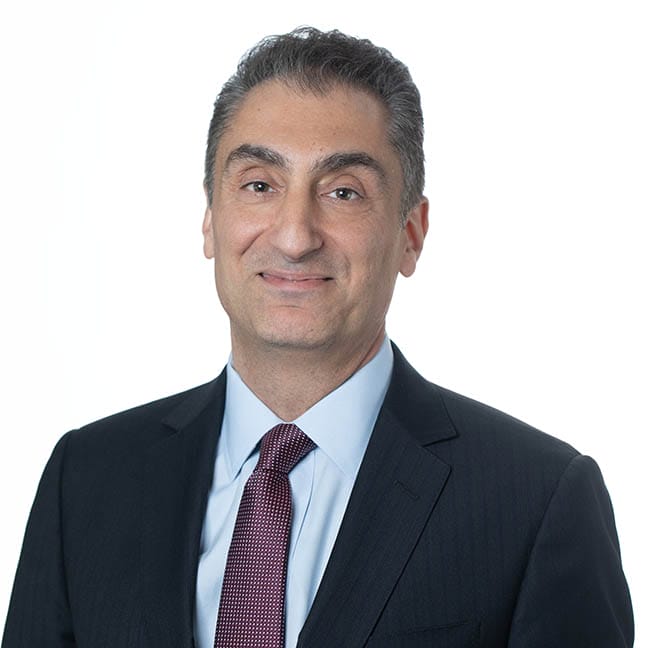
Importantly, these trends don’t evolve in a linear way but ebb and flow with more resonance in some years than others – although Nick Chamie, chief strategist and senior managing director in the total portfolio and capital markets division at the fund admits that this year the “Trump effect” has accelerated and decelerated the themes more than usual.

Accelerating trends include governments worldwide adopting interventionist policies aimed at reducing income disparities and reshaping socio-economic landscapes. Chamie says governments are acting to protect domestic jobs or bolster people on low incomes and lower the cost of living.

This means fiscal policy will increasingly be characterised by swings as governments introduce significant initiatives and stimulus into the economy. Policy will become the dominant force as opposed to the old orthodoxy of minimum government intervention. The days of governments just balancing the books and letting monetary policy do the fine tuning are in retreat, says Chamie who expects the impact will be felt in inflation, growth and stability.

If governments focus on stoking their own economies and addressing national interests inflation could become volatile and higher. At IMCO preparedness for this trend manifests in an important allocation to inflation-linked bonds to provide protection. Chopping and changing in government policy also underscores the value of diversification and spreading risk across different baskets, he says.

Sponsored Content

Chamie also observes accelerating trends around less free trade and countries prioritising domestic jobs at the expense of free trade, creating a much more fragmented world.  The impact could manifest in investment portfolios in emerging market allocations, for example.

“You can imagine tail winds for emerging markets will lessen in the new regime,” he says. “The fact that the US has outperformed global equity compared to the rest of the world by such a large margin shouldn’t be surprising.”

The need for investors to prepare for changes in government policy is particularly manifest in sustainability where IMCO carefully mitigates against ‘stroke of the pen risk’, designing an investment process that is not overly exposed to sudden changes in regulation or subsidy programs.

“We are always very careful to ensure that our sustainability program has resilience. Our underwriting process by which we evaluate risk always incorporates reducing and mitigating ‘stroke of the pen risk’.”

It’s all the more important given his prediction that global trends that have accelerated sustainable investment will decelerate in 2025. Chamie observes investor uncertainty around the level of resources to dedicate to climate change, and the policy and regulatory frameworks around sustainability. “Institutions are dropping out of and hesitating about joining alliances compared to previous years when sustainability had a strong tailwind attached to it.”

IMCO’s World View flags returning enthusiasm for private markets. When public markets dropped in 2022, many investors found themselves over allocated to private markets and a muted appetite for private investments in 2023 and 2024 followed. Today, he observes a shift, arguing that private markets will begin to regain the same tail winds as before.

In another, steady trend, index-based public market strategies will continue to underscore a shift in investor focus on long-term value creation. However, Chamie warns investors need to be cognisant of the concentration risks of passive investment.

“It’s easy in global equity to end up with a large concentration in the US of just a few names that are driving market returns. It’s very important to right-size these exposures and ensure awareness of just how volatile these markets can be. Investors that go all passive might be taking on more risk than they think.”

He said that active management helps mitigate this risk because it ensures the portfolio will look different to the benchmark.”

2025 will also require a flexible and agile approach to investment. IMCO doesn’t stay within specific asset class definitions when it looks for opportunities. The fund sees the world as one big ecosystem and recognises that many investments live in the space between public and private markets like structured transactions and private lending. Moreover new industries are evolving all the time.

Because the rate of change in the world has increased Chamie suggests investors adopt a flexible approach to ensure they tether to the strongest trends and mitigate the risks of the largest headwinds.

The latest trends also require an innovative approach and a preparedness to invest in new and different asset classes. For example, investors have built up their allocations to private credit after banks reduced lending to corporates. “The rise of private credit is an example of how investors need to incorporate new asset classes as they evolve,” he concludes.

Leave a Comment

The twin forces rewriting the rules of investing

The twin forces rewriting the rules of investing

Portfolios built for the old world will be severely tested as emerging forces rewrite the rules of investing. The Fiduciary Investors Symposium heard that geopolitical and macroeconomic upheaval, together with the disruption wrought by AI, should force asset owners to rethink the structure and composition of portfolios.

Sort content by

Understanding US/China relations

Understanding the fractious relationship between US and China is more important– and simultaneously more confronting – than it has been in the past, according to Stephen Kotkin, professor of history and international affairs at Princeton University. While the China investment challenge has always been to capture the aspirational middleclass, the high-profile historian says “the big money that’s going to be made in China is going to be made from the dislocation”.

Investors should backoff policy: Kay

Pension funds have “no business” engaging with policy makers but instead should influence change through stewardship, which is also the main function of asset managers, according to John Kay, Supernumerary Fellow in Economics at St Johns College, Oxford University.

UniSuper looks to China

The A$70 billion Australian superannuation fund for higher education and research workers, UniSuper, is keen on China. CIO John Pearce explains why.

Relationship built on knowledge transfer

A knowledge exchange between the State of Wisconsin Investment Board and its manager, Parametric, has seen the fund become comfortable understanding the instruments involved to manage a chunk of its total levered allocation in-house.

Urgent policy action needed on climate

Last month Ceres convened the largest group of businesses calling for climate legislation in at least a decade. Their message was loud and clear: Congress must put forward policy responses equal to the severity of the climate crisis including a national price on carbon.

HESTA maps investments against SDGs

The A$50 billion superannuation fund for health care professionals, HESTA, has embarked on a journey of aligning its assets with the SDGs. Measuring its current investments against chosen sustainable development goals revealed a need for standardised measurement tools.

Previous



