
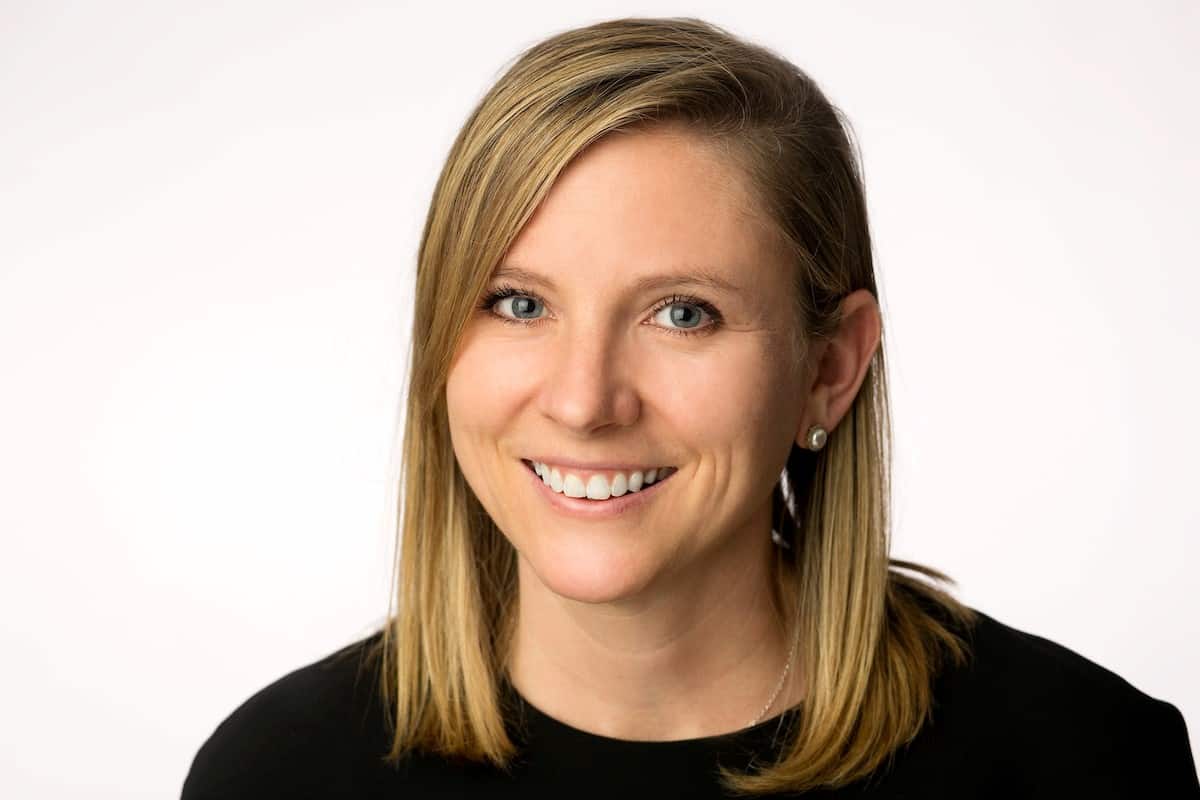

One recent Friday Elizabeth Burton, CIO of the Employees’ Retirement System of the State of Hawaii (HIERS), called three CIO peers with a quick question on contributions and cashflows at the $16.8 billion fund. All got back to her that day, and one emailed over the weekend offering additional suggestions. Out of all the calls Burton makes from her Honolulu office to asset managers, banks or the fund’s consultants it is those to her peer network she values most.
“The CIO community is very helpful,” she says noting that despite the pressure for returns, pension funds work to different benchmarks, mandates and reporting structures that softens the competitive edge.
It was a team spirit she particularly relied on when she took the helm at HIERS in October 2018, aged 36, after her predecessor Vijoy Chattergy’s abrupt departure which press reports have linked to losses after a low volatility strategy backfired.
“When I got the job, a couple of CIOs emailed me and said ‘call me over the summer; I can help you through the first 90 days,” she recalls.
Burton took over a portfolio split into risk buckets divided between broad growth (71.7 per cent) real return (3.2 per cent) principle protection (6.9 per cent) and crisis risk offset (15.3 per cent). The balance sits in an opportunity bucket of different strategies that she says don’t naturally fit anyway else. Today, much of her work is focused on building the allocation to crisis risk offset (CRO) to include new diversified strategies which will increase that bucket, making it “quite a bit larger” than its current 16 per cent target allocation. The rationale for the change comes with expectations for lower equity returns going forward, she explains.
“A new allocation to diversifying strategies will now sit within CRO. We are trying to look for additional sources of uncorrelated return at this point because we think returns from traditional betas are going to be more challenging.”
Diversifying strategies could include a new allocation to hedge funds beyond HIERS existing CTAs and risk premia allocations already in the CRO bucket.
“Some of the strategies I envision for the diversifying strategy do come under a hedge fund banner,” says Burton who used to run $55 billion Maryland State Retirement and Pension System’s $4 billion hedge fund portfolio.
“If hedge funds can give us access to an uncorrelated strategy that we can’t get in a more efficient wrapper then yes, they make sense.” She also believes they could slot easily into the allocation since they don’t belong in their own asset class and, referencing her own experience, says she values the expertise they engender.
“Hedge funds aren’t an asset class, so a top-down strategy doesn’t really work. They are also a great breeding ground for someone who wants to do top down asset allocation at a senior level. You have to have your eye on a bunch of different asset classes.”
Burton is also mulling other allocations. She believes an all-weather credit strategy expanded beyond HIERS existing, long-only corporate credit and distressed parameters to include opportunistic, private credit and speciality financed opportunities, would add value. She is also looking for more assets to fill the real return and real asset portfolio that comprises agriculture, timber and non-core real estate.
“We have some room to allocate more to real assets because we are underweight target. Inflation expectations are also somewhat different to what they were a couple of years ago so there may be some opportunity to reorient that portfolio and potentially earn an incremental return over what we were expecting.” Here she is looking at partnering with asset managers to access the best opportunities in “extension of staff” relationships.
The new allocation to diversified strategies will involve manager searches for new partners beyond Hawaii’s existing cohort. The fund currently has around 50-60 foundation managers across public markets, private equity, and real estate, a tally which increases by 100 when she adds in the private markets managers
“Because the CRO portfolio is growing and new diversifying strategies are being added, we would have to add additional managers. Our current managers don’t, for the most part, operate these strategies that we are looking to add.”
She’d also like to build out HIERS internal capabilities. The pension fund doesn’t run any assets internally and she believes the fund is uniquely placed to trade different markets between Asia and the US. That said, she does see the benefits of a small team. She likes how it enables getting in a “huddle,” everyone knowing the whole portfolio and an ability to move and work out details quickly. However, resources are stretched. “Everyone is at capacity and there isn’t a tonne of slack. I’d like to double the team in coming years.”
Stretching for returns against the backdrop of HIERS 55 per cent funded status, down from 94 per cent in 2000, is also a challenge. Burton says the deficit has changed her perspective on “how she allocates” and makes the long haul and not following fads even more important.
Hawaii recently increased state contributions and now regularly stress tests the portfolio. The fund returned 5.83 per cent for the fiscal year ended June 30 and has returned an annualised 9.07 per cent, 6.06 per cent and 9.2 per cent respectively, above equivalent benchmark returns of 8.08 per cent 5.3 per cent and 8.9 per cent.
Returns she hopes will be continue with another idea up her sleeve. She is currently reaching out to CIOs and portfolio heads with a new investment strategy shaped around cooperation she’s been developing for a couple of years.
“It might come to fruition in the next quarter,” she says. “I find people who have been in their seats for a long time are keen to help the next generation of leaders.”








Leave a Comment
You must be logged in to post a comment.
Login