
France’s FRR prepares to ramp up equity

Fonds de reserve pour les retraites (FRR), France’s €32.7 billion pension reserve fund is preparing to invest more in equity and illiquid assets as important reforms are extending its investment horizon out to at least 20 years. The 2010 pension reform had crimped FRR’s theoretical investment horizon to 2024, limiting its risk allocation and ability to invest in illiquid investments. When the fund undertakes its annual asset allocation it will incorporate new risk and long-term investment parameters, prompting new portfolio recommendations to its supervisory board. From January 2022, FRR will also become the Universal Reserve Fund.

The supervisory board meeting where the asset allocation review will be discussed was scheduled for mid April but has been postponed due to the coronavirus crisis and its operational consequences.

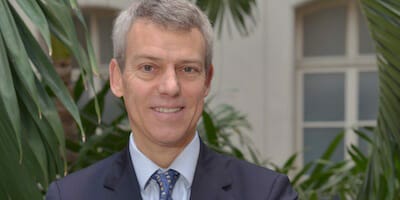
Olivier Rousseau, executive director of FRR, says the fund does not want to rush the revision of its investment model, and is prioritising a full discussion and exchange that only physical meetings allow.
“There is a good level of trust and cooperation and we see it as a precious intangible asset of FRR that must be preserved,” he said of the meeting.

As a result the fund is operating in what he calls an “intermediate context”.

“The asset allocation is no longer the 50 per cent in French government bonds and investment-grade credit but it is not yet the new one, we are moving progressively towards an asset allocation with less high quality bonds and more equities and a bit later more illiquids. As a result the transition towards the new targeted portfolio will be slower. But everything is done in close contact with the new chairwoman of the Supervisory Board and the French Treasury,” he said. “We still believe in our new model and maybe after some heavy volatility we will be able to rejoice for having been able to take more risk in a cheap equity market. It remains that this is a scary unheard of situation and we feel very much stressed that a lot of the current market decisions we have to make are dependent upon the epidemiologic situation and we are no experts about that.”

But Rousseau is an advocate of a reform process that comes to bear as grindingly low bond yields increasingly pose a “tragedy” for pension funds, particularly those forced to hold them due to regulatory conditions.

Sponsored Content

“Our restrictions were quite a hinderance. This will be a very positive change for us. Bonds no longer bring any returns so you can only justify holding bonds as a volatility reduction tool or insurance in a risk off climate. You have to dare to move into risk assets. We will now be free from some of the most onerous constraints that have saddled us over the last few years.”

The boosted risk allocation should see FRR’s equity allocation increase from current levels of 36 per cent to “at least 45 per cent,” he says. It won’t involve allocating to new mandates for now but will, instead, be filled by “putting more money in” to existing equity mandates. Rousseau also explains that private equity, which sits in the broader equity allocation, will get a boost via mandates or subscriptions into closed-end private equity funds. “Our equity allocation can be populated with listed equity or private equity.”

In a sliver-lining to the coronavirus-led, dramatic falls in equity in recent weeks and potential continued declines, building out the allocation in the coming year could be timely, says Rousseau. “In the current slump it is very uncomfortable short-term, but assuming the world is not coming to an end it will mean good entry points for additional equity investments.”

The listed equity portfolio is currently split 50:50 between active and passive mandates. Passive comprises smart beta and factor investments rather than tracking cap-weighted indices which he dislikes on the grounds that they don’t offer enough diversification and are poorly exposed to rewarded factors. By law, all FRR’s allocations are managed externally either via mandates (around 80 per cent) or a subscription into collective open, or closed end funds.

Around 12 per cent of the current equity portion comprises systematic put spread collar strategies that reduce equity risk in a strategy that also caps the upside. “We buy puts at around 97 and sell puts at around 91 and also sell calls at around 104 per cent of the current market price. We renew these every three-months,” he says, adding there are no major plans to change the strategy for now.

Illiquid investment

In a second seam of strategy in response to the reform process, along with private equity illiquid investment will be grown across private debt, real estate and infrastructure equity. Regarding private debt, he did not favour senior debt since spreads had contracted “and were too tight before the onset of the market krach,” but sees interesting opportunities in uni-tranche and mezzanine. Elsewhere, he has an increased appetite for real estate and infrastructure equity positions where the emphasis will be in closed end fund allocations. In property he’ll consider mandates.

“We could potentially launch a mandate here along with a mix of closed ended funds.”

French bias

FRR’s long-celebrated French bias, which includes investment in small-and mid-cap companies, private equity and French real estate will remain a feature in the new-look portfolio. It’s a local investment strategy he attributes to the growing importance of impact investment and says reflects a broader “de-globalization of investment activities” by many institutional investors. At FRR the trend is visible in an initial private equity programme, launched before the GFF, that focused on the US and Europe. Now mature, most of the allocation has been distributed and since 2015 a new private equity programme was launched with a specific French flavour.

“I can’t prejudge what will be decided, but it could be nice to have a combination of more private equity in France and more in Europe,” he says.

More products

ESG will also be a priority across the new portfolio in line with FRR’s key philosophy. “We believe carbon is still an under-priced risk. By making sure we decarbonise the portfolio now, we are reducing its susceptibility to nasty shocks when governments impose serious and heavy carbon taxes and quantitative restrictions on the extraction of fossil fuel reserves,” he says.

Unable to invest in house, he is particularly enthused by the number of asset managers coming up with ESG products. “It is one thing to strive to be a good ESG citizen, but if there isn’t the product offering from asset managers it makes it more complicated. We are now seeing more and more serious offerings of ESG strategies.”

It was particularly noticeable, he says, when the fund renewed active equity mandates for small caps France and Europe, and US large cap value and growth and small caps last year, and more recently Japanese active mandates. “In each of these cases, the proposals made by asset management houses in response to our RFP were much more concrete on ESG. Five years ago, it would have been difficult to populate mandates with managers offering the strong ESG strategies we see now.”

Rather than giving the fund’s active managers a “straight jacket” from which to select stocks, FRR asks active managers to select from a full carbon, full market cap index. “It’s their job to make the selection,” he says. It was this thought process that ultimately lay behind FRR’s decision to move its €1 billion allocation out of the MSCI Global Low Carbon Leaders index, a pioneering benchmark it helped develop in 2014 alongside Amundi and AP4, into smart beta and factor-based strategies with a focus on de-carbonisation. “We decided to divest from cap weighted indices and asked our managers to integrate the ESG process into factor and smart beta strategies instead,” he said. Here he particularly likes ESG momentum strategies. “The market values companies that are trying to improve. When you are already a perfect pupil your marks can’t get much higher.”

Rousseau has also grown circumspect of the wide variety of ESG products, and processes that rate them, given the immaturity of the sector, absence of data and standardized formats. The challenges in comparing like-for-like demand flexibility and pragmatism, he says. “ESG is still in its infancy. Look at all the indices that pretend to be ESG – they are very different. And look at the wide differences between ESG rating agencies too.” ESG integration is as much a priority across FRR’s 50 per cent fixed income allocation (of which 4 per cent are into green bonds) that will “come down significantly” as the equity and illiquids allocations grow, he concludes.


Leave a Comment

How CPP is evolving risk management for a faster, more interconnected world

How CPP is evolving risk management for a faster, more interconnected world

In an environment where multiple risks are emerging and their effects are compounding on the portfolio, CPP Investments' chief risk officer Priti Singh says the $572 billion fund is rethinking risk management from the ground up, shifting from reaction to preparation and embedding risk thinking earlier in investment decisions. She speaks to Amanda White about the fund's risk approach.

Sort content by

Previ: How high interest rates put profitability before diversification

Brazil's high interest rates mean the nation's oldest pension fund, Previ, has put profitability before diversification for years. CIO Claudio Goncalves is determined to change that, and is about to green light new allocations to US equity.

PGGM advances 3D investing strategy balancing impact, risk and return

The latest iteration of PGGM’s impact investing journey sees a core/satellite structure around 3D investing, more active management, a total portfolio approach and the hiring of fund managers that align to the mission. Amanda White spoke to chief fiduciary investments Arjen Pasma.

Brunel links push into private markets to ‘innovative’ investment model

In the last seven years, the private markets allocation at the UK’s Brunel Pension Partnership has grown to £8 billion ($10.7 billion). The fund's head of private markets Richard Fanshawe charts that growth but warns of a dearth of opportunity in the UK and uncertainties in the transition ahead.

TPA’s flexibility keeps OPTrust focused on ‘the mission that matters’

With investment markets uncertain, being an investor with a global view and the flexibility to take advantage of opportunities has seen OPTrust “doing well”, its chief investment officer James Davis says. An evolution of its total portfolio approach keeps it focused on the key metric that matters to members.

Stable value at TRS proves ballast in extraordinary times

Texas Teacher Retirement System, the $211.6 billion Austin-based pension fund, has an asset allocation that is built to withstand the “extraordinary times” and adverse climate investors face today. The fund's 21 per cent allocation to stable value to stand the test of recession has proven most robust.

Alabama Retirement Systems: Trump’s policies don’t work for pension funds

Alabama Retirement Systems' veteran CEO David Bronner explains how rapid policy changes with little thought to the long-term consequences coming out of the new Trump administration leave the pension fund "flying blind". The fund is prioritising cash.

Previous



