
Finland’s Ilmarinen prepares to increase risk ahead of new pension rules

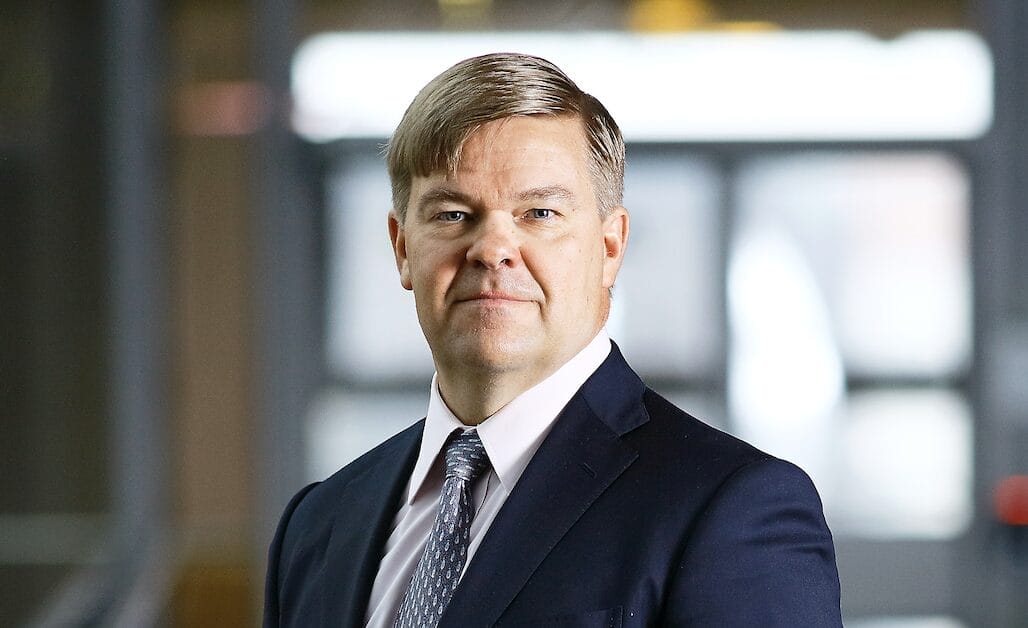
Mikko Mursula

Ilmarinen, Finland’s €63 billion ($73 billion) pension insurer, is laying the ground to increase its equity allocation by as much as 15 per cent in a jump which could see public and private equity, as well as other assets with a higher expected return, ultimately account for up to 65 per cent of the organisation’s total assets under management.

In an interview from Ilmarinen’s Helsinki offices, chief invetment officer Mikko Mursula says the team is busy scenario testing and running simulations, working towards an anticipated two-year deadline to increase risk and with it, long-term returns.

The new strategy is the consequence of pension reform decreed by the Finnish government which is acting on the wishes of labour unions, the owners of Finland’s private sector pension system that includes investors like Varma and Elo.

“The reform improves private-sector pension providers like Ilmarinen’s opportunity to pursue better long-term returns on pension assets by carrying higher risk in investment portfolios,” explains Mursula, who will become president and chief executive of the organisation this summer.

“The unions are the ones who have negotiated the changes – we are just the executor. Our task is to invest pension assets safely and to reach high enough returns within the solvency capital framework.”

To enable Finnish investors to reach the new risk targets, the government is changing the solvency capital framework under which companies like Ilmarinen operate. That framework is specific to Finland, and differs from the EU’s stipulation on how much insurance and reinsurance firms must hold to cover potential losses.

Sponsored Content

Historically, equity is Ilmarinen’s strongest performing asset class and Mursula believes that with a long enough horizon, the increased allocation will bring the higher returns stakeholders seek.

But that is not to say the new asset allocation won’t come without side effects, like a spike in volatility which he warns will show up in choppy annual returns. Witness 2022 when Ilmarinen’s equity investments lost 10.2 per cent versus a 28 per cent gain a year earlier in 2021.

“The volatility of our annual returns will be higher, and it is very important to keep this in mind,” he says.

Another open question hangs over how to allocate the remaining 35 per cent or so of the portfolio to ensure these investments don’t have too much correlation with listed equity.

“We have to harvest correlation advantages with a much smaller portfolio than we’ve done before and we don’t know yet what it will mean,” he says.

Hedge funds hit by macro winds

As the team lays the ground for the new allocation to risk assets, one diversifying portfolio could become more important. In recent years, Ilmarinen has developed an 8-9 per cent multi-strategy, strategic allocation to hedge funds. Wholly outsourced to external managers, it specifically targets correlation advantages.

The recently volatile market has provided a good operating environment for active investors, but Mursula reflects that one of the most challenging strategies in the current climate is macro which has thrown off a disparity between managers and frequent “surprises” because of the impact of tariffs.

“Within macro there are good performers but also bad performers,” he says. “The problem is, we don’t know how tariff policy will play out from one month to the next. If you make a call and take tactical bets, you may be right or wrong. Nobody knows because the information changes all the time.”

The hedge fund allocation is not part of the tactical asset allocation. But like other investors, in today’s investment climate, Ilmarinen has been more active from a tactical perspective across equity, fixed income and FX.

The team always keep the strategic asset allocation – and the fact they are managing money with long-term liabilities – front of mind, but he says in “this kind of environment”, it makes sense to do “a bit more tactically”.

Ilmarinen’s in-house portfolio managers also sit in the asset allocation team, and it falls on them to oversee tactical asset management too. They have been allocated a risk budget within which they can make tactical calls, mostly using derivatives rather than cash.

In FX, recent strategies have included short dollar/long euro positions and long Swiss franc/short dollar, while in equities and fixed income, they are altering exposure across specific stocks, regions and at a country level.

He notes that investors have grown more sceptical of the US in light of the policy backdrop, which has put pressure on the dollar.

“This is the reason investors outside the US are short US dollars –  it wasn’t the case last year or the year before.”

However, he clarifies that any strategy to short the US dollar does not refer to how Ilmarinen is in absolute terms.

“I am referring to our position relative to our benchmark,” he explains. “In the benchmark, we are always long the US dollar. We have got over 30 per cent of our allocation to US dollar assets so ‘going short’ is always relative to benchmark.”

New opportunities in defence

Elsewhere, Mursula reflects that new opportunities in defence will open up following NATO leaders agreeing to increase defence spending to 5 per cent of their countries’ economic output by 2035.

Ilmarinen changed its ESG guidelines in 2024 to open the door to investing more in defence.

However, building up the allocation since then has been difficult because opportunities are thin on the ground. There is a limited universe of public companies in listed markets in Finland, the Nordics or Europe, and the money chasing the sector means many of these companies are valued too highly to make compelling investments. Nor do private markets offer many opportunities, given many of these companies are state-owned.

“NATO’s budget for defence is about to go higher. It means companies need to fulfil demand so we may see investment in defence really start to happen,” he says.

Ilmarinen invests around 20 per cent of its assets in Finland. Of this, around 55 per cent of the global equity allocation is in Finland, but he notes this has fallen compared to what it used to be because of changes to the asset allocation and the declining performance of listed Finnish stocks.

Moreover, he says that many listed Finnish companies derive the vast majority of their annual turnover from overseas. “The business risk is not Finnish-centric,” he concludes.

Leave a Comment

Aware Super maps AI exposure as it sharpens whole-of-portfolio risk focus

Aware Super maps AI exposure as it sharpens whole-of-portfolio risk focus

Australia’s third-largest pension fund Aware Super is taking stock of its investment exposure to AI and the initial analysis suggests at least 15 per cent of the fund’s assets are exposed to the thematic. In a project deep dive, head of investment strategy Michael Winchester says finding the portfolio's true concentration around AI will require looking beyond simple dollar aggregation.

Sort content by

Finland’s Elo: Larger equity allocations promise new media scrutiny

As Finland's pension funds prepare to increase their equity allocations to unprecedented levels compared to global peers, they must also navigate a new and unfamiliar risk. Elo's chief investment officer Jonna Ryhänen explains the fund's investment approach going forward and how it will manage stakeholder and media scrutiny as they react to swinging volatility and returns.

PMT talks infra equity and how to balance stock concentration risk

Scenario testing has put inflation risk front and centre at PMT, the Netherlands’ third largest pension fund, and it's driving the investor to take stock of the inflation protection it gets from infrastructure. In an interview with Top1000funds.com, chief investment officer Hartwig Liersch unpacks the risk, as well as another initiative where it's balancing concentration risk in the equity allocation without hurting returns.

NZ Super cuts benchmark return expectation on US valuation concerns

A view that the US stock market is overvalued and equity risk premia will be lower over the long term has driven New Zealand Super to lower the return expectations for its reference portfolio following its recent five-yearly review of the benchmark. Co-chief investment officer Brad Dunstan also flags underweight commodity exposure as an area to address and explains why the fund remains sceptical of illiquidity premia despite seeing a growing case for private markets.

Sampension: Why there are many reasons to be optimistic

Now is not the time to reduce risk, argues Henrik Olejasz Larsen, chief investment officer of Sampension, Denmark’s $50 billion pension fund for public and private sector employees. In an interview with Top1000funds.com, he says corporate profits have not deteriorated, and although the market has been tested from multiple directions, the underlying optimism driving equities is strong enough to overrule the negative impact of geopolitical risk.

France’s Banque des Territoires looks for data centre opportunities

France’s Banque des Territoires, a subsidiary of Caisse des Dépôts, the country’s €323 billion state-owned financial institution, plans to invest more in data centres in France. The push is in line with government policy to build out AI infrastructure off the back of the country's access to cheap, green, nuclear energy that uniquely positions France to provide power to the AI industry while maintaining net zero credentials.

Why NYC pensions CIO hasn’t drunk the ‘TPA Kool-Aid’

Three decades of investing have given Monte Tarbox sharp eyes for recognising risk and opportunities, and he’s putting it to use as the new permanent chief investment officer of the $306 billion NYC Bureau of Asset Management. In an interview with Top1000funds.com, Tarbox outlines his vision for the fund, why he’s bullish on infrastructure but “nervous” on PE, and why he hasn’t drunk the TPA “Kool-Aid”.



