

In the largest investment a private foundation has ever made, the $12 billion Ford Foundation has just committed $1 billion over 10 years to mission-related investment (MRI) strategies that earn both financial and social returns.
It’s a change in strategy from one of the world’s most celebrated foundations, which was set up in 1936 by the son of the motor company’s founder, Henry Ford. The shift brings a fresh approach to endowment management and acts as a rallying call to others to follow suit.
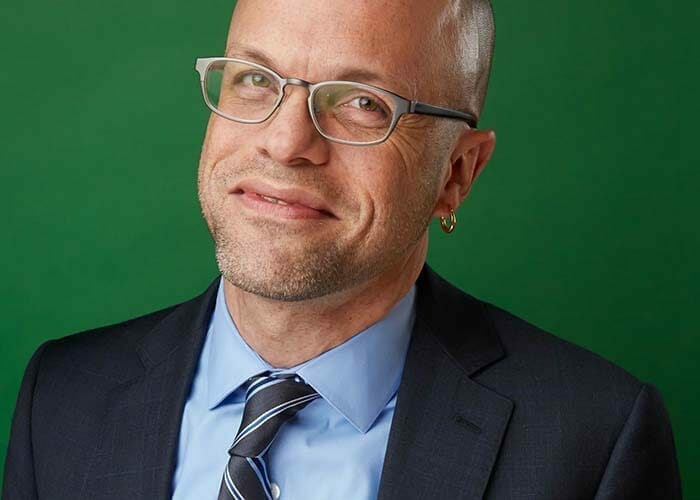
Top1000funds.com talks to Xavier de Souza Briggs, vice-president of the foundation’s economic opportunity and markets program.
Could you detail the background to your recent decision to commit $1 billion to MRI, and why the foundation has reached this decision now?
XB: Over the last five decades, the Ford Foundation has made more than $670 million in program-related investments (PRIs) as part of our programmatic work around the world. In addition to our experience as an impact investor through PRIs, we were motivated by the growth and maturation of the impact investment marketplace and by recent guidance issued by the US Treasury. That guidance clarified that private foundations in the US may consider their missions when making investment decisions.
My colleagues, our chief investment officer, chief financial officer and general counsel, worked closely with me and my team to determine the most prudent way to launch an MRI portfolio. Our great board of trustees, especially our investment committee, joined us on this journey every step of the way, asking tough questions and fulfilling their fiduciary duty to the fullest. While we are by no means the first foundation to embrace MRIs, we concluded that the time was right to make a strong statement as to where we see the market moving, to help it get there, and to encourage other institutional investors to find meaningful ways to make a social impact through their work.
Why have you decided to invest in these specific sectors?
We believe these two sectors, affordable housing in the US and financial inclusion in emerging markets, are great places to start for two main reasons. First and most importantly, relevance; both sectors align well with our larger strategy to combat growing inequality in the world. They offer crucial leverage points.
Second, experience; we have a strong history of grant-making and previous experience investing in these sectors. Third, investable opportunity; there are capable funds and fund managers with track records, achieving both financial and social returns, able to absorb significant new capital.
Could you outline your investment process? How will you choose and structure investments and how will you assess social value?
Our MRI team, led by a seasoned portfolio manager we are recruiting now, and with the support and oversight of our newly established MRI committee of trustees, will review each potential investment to determine if it meets our financial and social objectives. We will initially focus on the private markets, primarily private equity and real estate, and will invest with specialty impact fund managers with experience in our target sectors.
All investments will be approved by the MRI committee, a sub-committee of the board of trustees. Building on the monitoring practices in place with our PRI Fund, we also will spend time this year developing an impact evaluation and a monitoring framework to ensure that we have structures in place to evaluate, monitor and learn from these investments over time.
What returns are you targeting – financial and societal?
Financially, we are targeting attractive, risk-adjusted rates of returns. That is relatively straightforward. The social returns are a bit more complex, but we hope in time they will be more commonplace. Our goal is to deliver mission impacts directly over the long term and advance the foundation’s programmatic goals.
We hope that through the example of our MRI portfolio ramping up to achieve scale, we can demonstrate how prudent financial returns are possible while creating positive, measurable impact. This type of evidence base will further the development of the impact investment market. We are committed to transparency and plan to share our lessons learned with the field.
To what extent can financial markets advance social good?
Let’s be honest: The financial markets have a long history of driving change but a mixed history, at best, when it comes to advancing social good. Though the roots of the responsible investing movement go back to the birth of stock markets centuries ago, investing to achieve both financial and positive social returns is still a relatively nascent and contested idea for the mainstream marketplace.
However, the reality is that the scope and scale of our social challenges today demand more from our markets and underscore the need to use every tool we have. Also, from a bigger picture perspective, there is a growing interest in aligning our money with our values, both as consumers and investors.
Start with philanthropy, since it is inherently mission driven: The Foundation Center estimates that American grant-making foundations alone collectively hold about $865 billion in assets, while pension funds and sovereign wealth funds worldwide hold trillions.
If foundations were to take even a fraction of their endowments and put assets into MRIs, this would be a significant advance. But ultimately, we’re going to need every player – governments, foundations, financial institutions and other institutional investors – to step up if we are to meet our financing challenge. We see an incredible opportunity for entrepreneurs, especially those who are at the leading edge of creating businesses that deliver social impact, to be targets of this investing and to scale accordingly.
How will your strategy encourage other institutional investors to consider MRI, too?
We want to get more and more institutional investors thinking about how to make the best use of their assets. It is encouraging that many big players are already working on this, both here in the US and abroad – focusing on long-term value investing, considering what meaningful “double bottom-line” investing can mean for their results and reputation.
By sharing our strategy, experience, questions and results, we want to accelerate this clear trend. And beyond our MRI and PRI investing, through our ongoing grant-making to help build the marketplace, we will continue to strengthen market infrastructure, advance public policies to accelerate and deepen market development, and make the practice of impact investing more rigorous, tested and widely understood. We’re supporting standards development, for example, mechanisms for aggregation, performance measurement, matching capital supply and demand, and more – all the ingredients of a healthy marketplace able to function efficiently and flexibly at scale.
What are the biggest challenges around MRI for institutional investors?
First, there is a shortage of high-quality, representative and standardised data. At Ford, we are using our grant-making to support more and better data to help move the market forward. A second challenge is the lack of supportive policies that would help both retail and institutional investors fully and effectively engage.
In other words, there is untapped demand to do this kind of investing. There have been a number of policy wins over the past 18 months, and Ford remains supportive of impact investing policies through its engagement in the US Impact Investing Alliance. There are also longer-term challenges. In order to truly mainstream impact investing, for example, investment professionals and thought leaders who help shape the profession will need to look not only at risk, return and liquidity but also impact. This will require education and culture change, but the stirrings of change are there. There is much to build on.








Leave a Comment
You must be logged in to post a comment.
Login